Industrial robots are revolutionizing how businesses operate across warehousing, manufacturing, retail, hospitals, and airports. From AMRs (Autonomous Mobile Robots) and AGVs (Automated Guided Vehicles) to industrial robotic arms and collaborative robots, these technologies are reshaping efficiency, safety, and productivity.
AMRs and AGVs in Warehousing
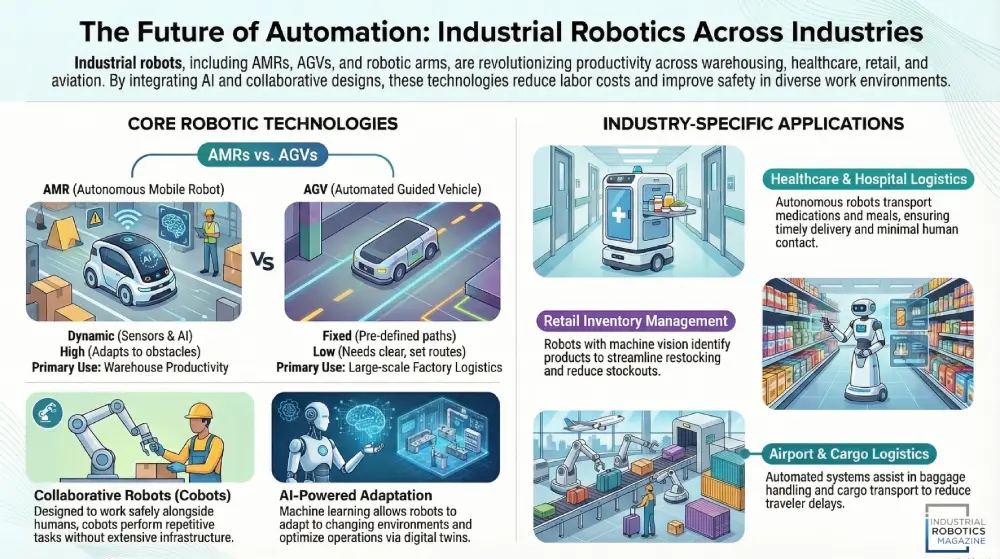
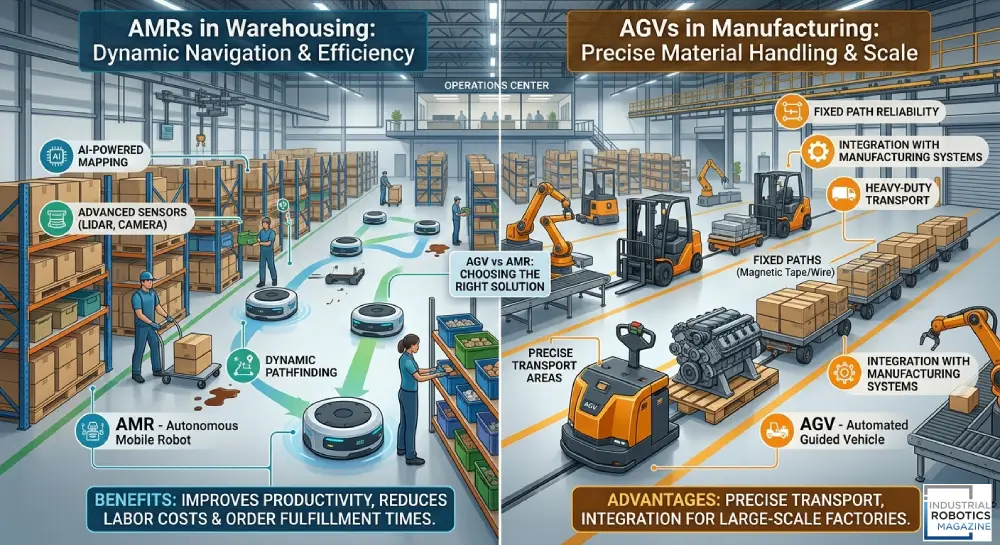
AMR robots for warehouse automation have become a cornerstone of modern logistics. Unlike traditional AGVs, which rely on fixed paths, AMRs navigate warehouses dynamically using advanced sensors and AI-powered mapping. Businesses benefit from how autonomous mobile robots improve warehouse productivity, reducing labor costs and order fulfillment times.
AGVs, on the other hand, remain essential in material handling for large-scale factories. Advantages of AGV systems in factory automation include precise material transport and integration with existing manufacturing systems. Companies often explore AGV vs AMR differences in manufacturing to choose the right solution for their operations.
Robotic Arms in Manufacturing
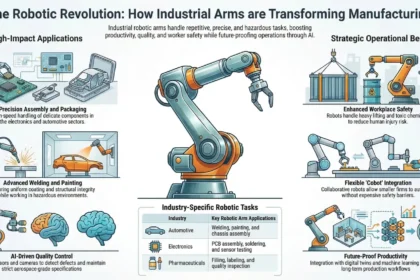
Industrial robotic arms are widely used in assembly lines, packaging, and palletizing. Industrial robotic arm applications in manufacturing include tasks like welding, sorting, and heavy lifting, allowing factories to increase output while reducing human errors. For small manufacturers, benefits of robotic arm automation for small factories are significant, offering scalable solutions without extensive infrastructure investment.
Collaborative robots, or cobots, are gaining traction for their ability to work safely alongside humans. Collaborative robots for small manufacturers help perform repetitive or precision tasks without compromising worker safety. Businesses often compare cobot vs traditional industrial robot when planning new automation strategies.
Retail and Service Robots
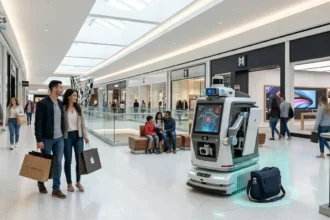
In retail, AMRs and robotic arms are transforming inventory management. Robotic warehouse automation solutions help retailers streamline restocking, order picking, and packaging. Robots equipped with machine vision can identify products, improving accuracy and reducing stockouts.
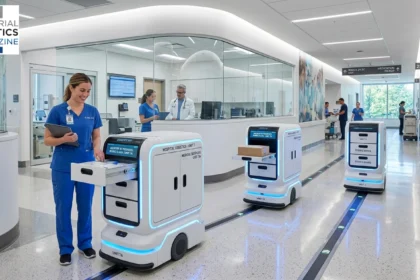
Hospitals are adopting robots to enhance logistics and patient care. Autonomous robots in healthcare supply delivery transport medications, meals, and equipment efficiently, minimizing human contact and ensuring timely deliveries. These systems are part of the broader trend of robots used in hospitals for logistics.
Airport Robotics
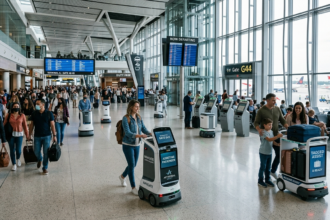
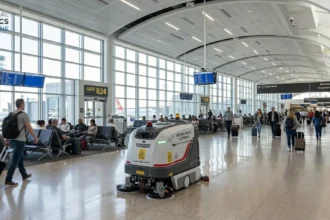
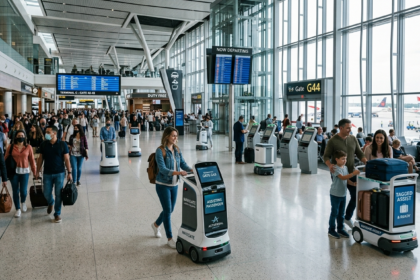
Airports are another sector benefiting from industrial robots. AMRs assist in baggage handling, while automated guided systems help transport cargo efficiently. Warehouse robots for airport logistics reduce delays and improve operational efficiency, creating a safer and smoother experience for travelers.
Emerging Trends Across Industries
Across all industries, robots are increasingly powered by AI and machine learning. AI powered industrial robots can adapt to changing environments, improving accuracy and decision-making. Additionally, digital twins in robotics manufacturing allow companies to simulate and optimize operations before deploying robots on the floor.
From warehouse automation with AMRs to hospital logistics and robotic arms in manufacturing, industrial robots are transforming industries worldwide. Businesses embracing these technologies can reduce labor costs, improve productivity, and create safer work environments. As robotics technology continues to evolve, companies across sectors must explore how robots improve efficiency in warehouses, factories, retail stores, hospitals, and airports.