Shopping centers experience heavy daily traffic and require constant monitoring to ensure safety and security. Traditional surveillance systems often depend on human staff and fixed security cameras. However, monitoring large areas continuously can be difficult and time-consuming. As a result, shopping centers are increasingly adopting robotic technologies to improve security operations.
Security and surveillance robots in shopping centers provide a smarter and more efficient solution. These robots use artificial intelligence, sensors, cameras, and autonomous navigation systems to monitor environments, detect suspicious activity, and support security teams. As a result, they improve safety, operational efficiency, and real-time threat detection.
What Are Security and Surveillance Robots
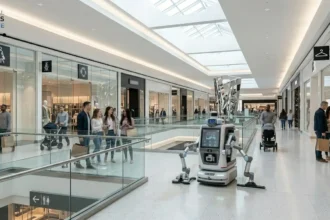
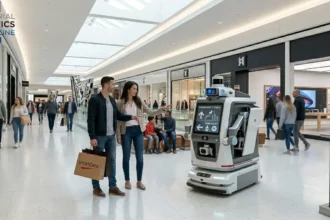
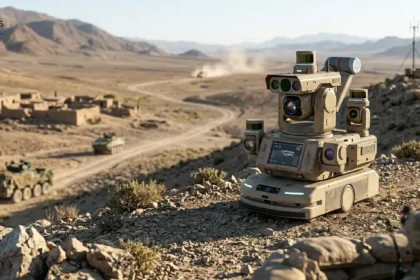
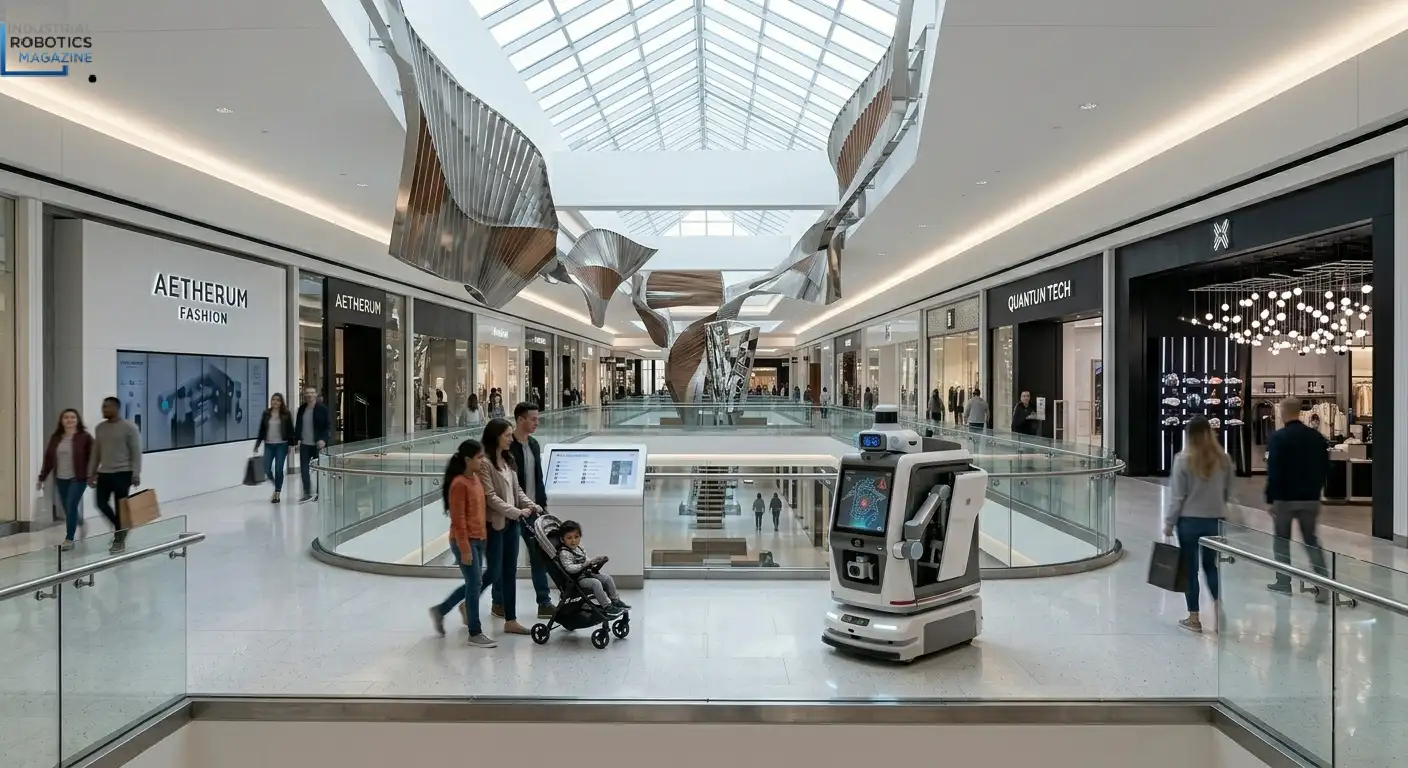
Security and surveillance robots are autonomous or semi-autonomous systems designed to patrol and monitor public environments. They can move independently through shopping malls while collecting and analyzing real-time data.
These robots are commonly used in:
- Shopping centers
- Airports
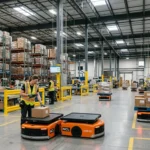
- Warehouses
- Public facilities
In addition, they help reduce workload for human security staff while improving monitoring capabilities.
How Do Security and Surveillance Robots Work
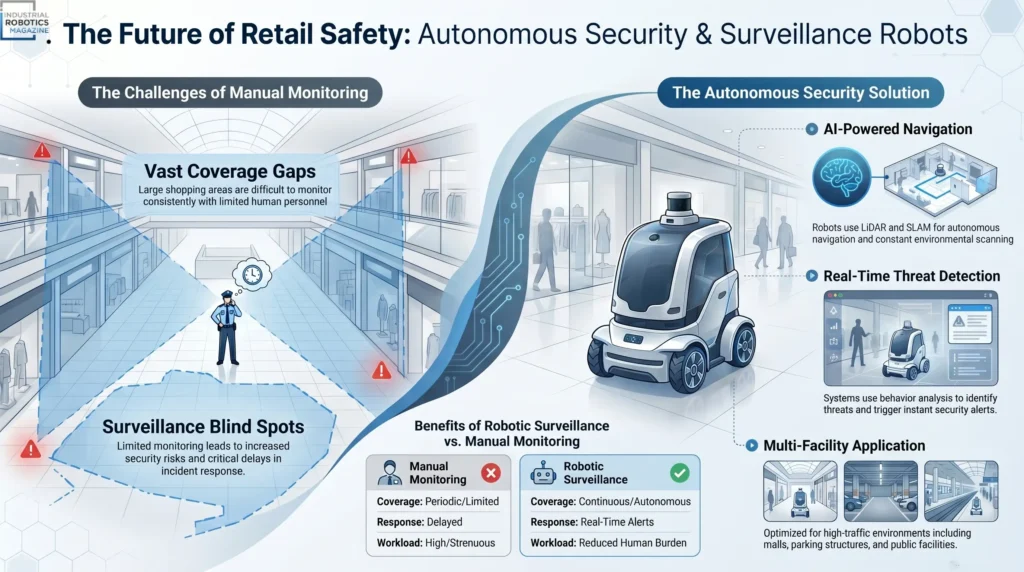
Security robots follow a structured monitoring process. First, sensors and cameras continuously scan the surrounding environment. Next, artificial intelligence analyzes movement, behavior, and unusual activity. Then, navigation systems allow the robot to patrol specific routes safely. Finally, the robot sends alerts and real-time information to security personnel.
As a result, shopping centers receive continuous and more accurate surveillance coverage.
Key Technologies Behind Surveillance Robots
Artificial Intelligence
Artificial intelligence helps robots identify suspicious activity and analyze environmental data in real time.
Machine Learning
Machine learning improves detection accuracy over time. For example, robots can learn normal movement patterns and identify unusual behavior more effectively.
Cameras and Sensors
Advanced cameras, motion sensors, and thermal imaging systems allow robots to monitor large areas efficiently.
SLAM and LiDAR Navigation
SLAM and LiDAR technologies enable robots to navigate crowded shopping malls safely while avoiding obstacles.
Security Robots vs Traditional Surveillance Systems
| Feature | Traditional Surveillance Systems | Security and Surveillance Robots |
|---|---|---|
| Monitoring Style | Fixed cameras and human staff | Autonomous mobile monitoring |
| Coverage Area | Limited to camera placement | Can patrol large areas dynamically |
| Real-Time Response | Slower human response | Instant AI-based alerts |
| Operational Hours | Limited by staff shifts | Continuous 24/7 operation |
| Threat Detection | Manual observation | AI-powered automated analysis |
| Navigation Ability | Static systems | SLAM and LiDAR navigation |
| Labor Requirements | High human involvement | Reduced workload for staff |
| Data Collection | Limited monitoring | Real-time environmental data |
| Efficiency | Moderate | High |
| Scalability | Requires more staff and cameras | Easily scalable with multiple robots |
Traditional surveillance systems rely heavily on fixed cameras and human monitoring. However, security personnel may miss important events due to fatigue or limited visibility.
Security robots provide continuous monitoring without interruption. They can patrol large spaces autonomously and respond to unusual activity faster. Therefore, they improve both security coverage and operational efficiency.
Real World Challenges
Security robots face several challenges in shopping centers. Crowded environments can make navigation more complex. In addition, privacy concerns may arise when using cameras and facial recognition systems in public spaces.
Battery life and communication reliability are also important considerations. Despite these challenges, advancements in robotics continue to improve system performance.
Real World Applications
Many shopping centers worldwide are testing robotic surveillance systems to improve safety and customer confidence. These robots patrol hallways, parking areas, and entrances while assisting security teams.
Companies such as Knightscope have developed autonomous security robots for commercial and public environments.
Benefits of Security and Surveillance Robots
Security robots provide several important benefits. They improve real-time monitoring and reduce workload for security staff. In addition, they increase surveillance coverage and operational efficiency.
These robots also improve emergency response and provide continuous patrol capabilities. As a result, shopping centers can maintain safer environments for customers and employees.
Future of Security Robots in Shopping Centers
The future of security and surveillance robots is highly promising. These systems will become more intelligent and autonomous over time. For example, future robots may predict suspicious activity before incidents occur.
Integration with smart building systems and AI-powered analytics will further improve security operations. In addition, advancements in robotics will enhance navigation, communication, and threat detection capabilities.
Conclusion
Security and surveillance robots in shopping centers are transforming modern security operations. They provide smarter, faster, and more efficient monitoring solutions while supporting human security teams. As technology continues to evolve, these robots will become an important part of retail and public safety systems.
FAQ
What are security and surveillance robots
They are robotic systems designed to monitor environments and support security operations using AI and sensors.
How do surveillance robots work
They use cameras, sensors, artificial intelligence, and navigation systems to patrol and monitor areas.
Where are security robots used
They are used in shopping centers, airports, warehouses, and public facilities.
Do security robots replace security staff
They assist security personnel but do not fully replace them.
Are surveillance robots reliable
Yes, they improve monitoring efficiency and provide continuous surveillance coverage.