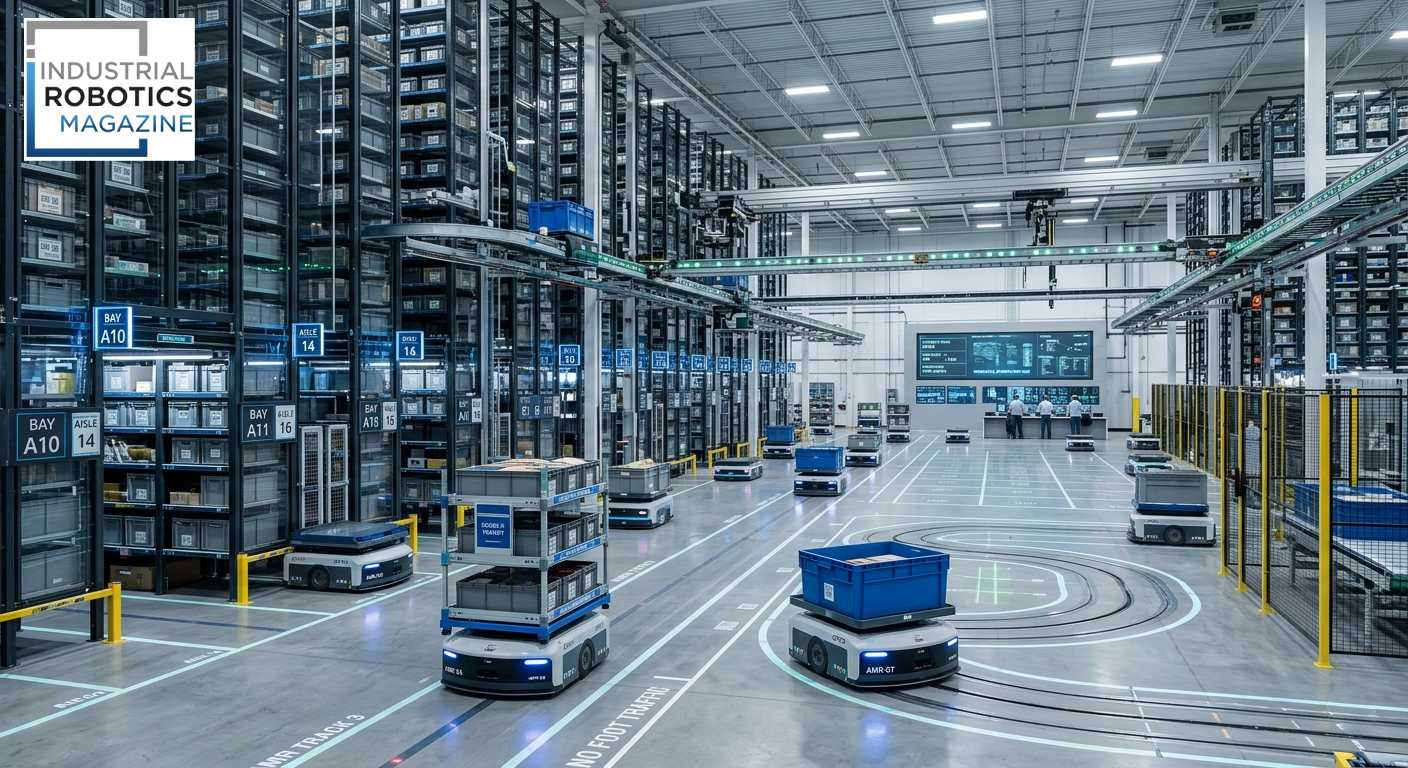
Warehouses are under more pressure than ever before. With the rise of e-commerce, same-day delivery expectations, and ongoing labour shortages, traditional warehouse operations are struggling to keep up. Many businesses are now turning to automation as a solution—but not just any automation. Artificial intelligence (AI) combined with autonomous mobile robots (AMRs) is redefining how warehouses operate. Leading robotics companies such as Boston Dynamics are advancing warehouse automation technologies.
In today’s competitive logistics landscape, speed and accuracy are no longer optional—they are essential. Customers expect fast order fulfillment, real-time tracking, and error-free deliveries. However, relying solely on manual labour makes it difficult for warehouses to meet these demands consistently. Human workers can become fatigued, workflows can become inefficient, and errors in picking or sorting can lead to delays and increased operational costs.
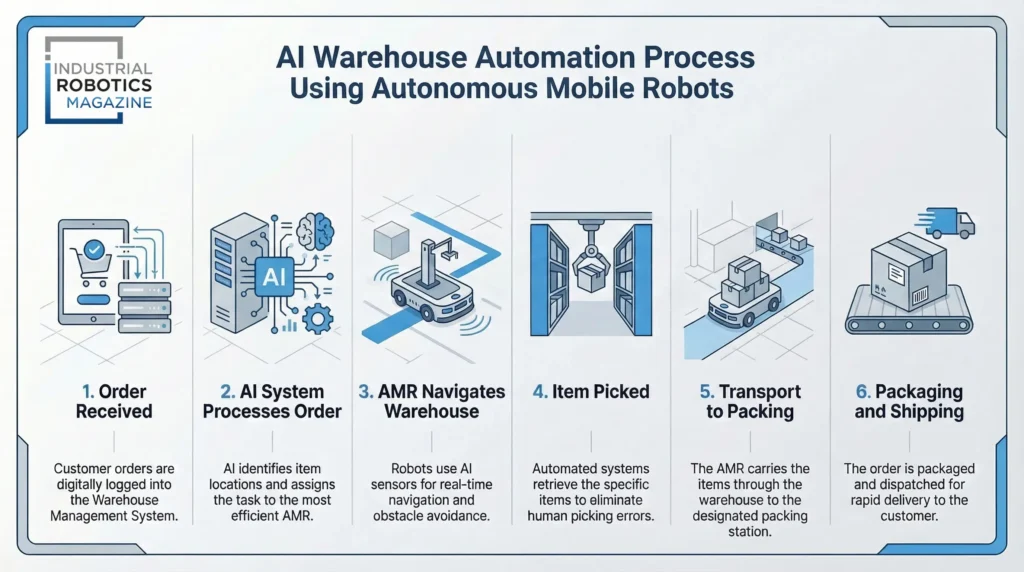
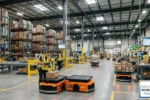
AI-powered warehouse automation uses autonomous mobile robots (AMRs) and intelligent systems to handle tasks such as picking, sorting, and transporting goods. These systems reduce reliance on manual labor, increase operational efficiency, and improve accuracy, making them essential for modern warehouse operations. By leveraging data-driven decision-making, these systems can also optimize routes, predict demand patterns, and improve inventory management in real time.
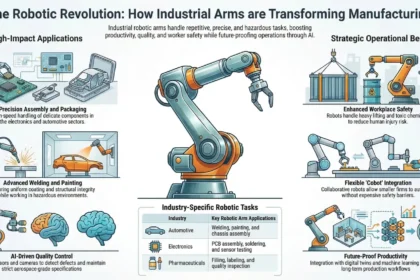
Additionally, automation allows warehouses to scale operations more effectively during peak seasons without the need for rapid hiring or extensive training. Instead of expanding the workforce, businesses can deploy additional robotic units to handle increased workloads. This flexibility not only improves efficiency but also provides long-term cost savings and operational stability. Companies like ABB Robotics are developing advanced robotic systems for industrial automation.
What Are Autonomous Mobile Robots?
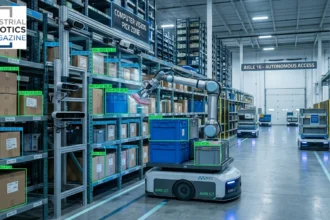
Autonomous Mobile Robots (AMRs) are advanced robotic systems that can navigate warehouse environments without direct human control. Unlike traditional automated guided vehicles (AGVs), AMRs rely on artificial intelligence, sensors, and cameras to make real-time decisions.
These robots are designed to move efficiently through dynamic environments, avoiding obstacles and adjusting routes as needed.
Key Features of AMRs:
- Real-time navigation using AI and mapping technology
- Obstacle detection and collision avoidance
- Dynamic route optimization
- Integration with warehouse management systems (WMS)
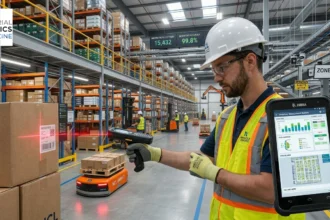
- Ability to operate safely alongside human workers
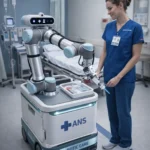
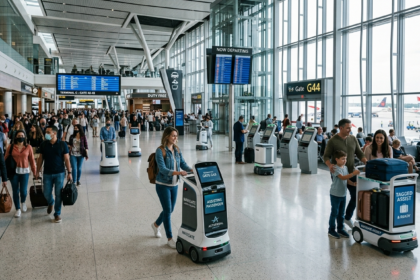
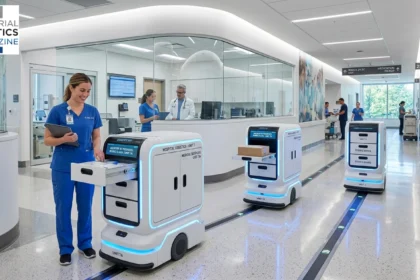
Because of these capabilities, AMRs are widely used in industries such as logistics, retail, manufacturing, and healthcare.
How Do AI Robots Improve Warehouse Operations?
AI-powered robots are transforming warehouse operations by automating repetitive and time-consuming tasks. This allows businesses to streamline workflows and focus human labour on higher-value activities.
Major Benefits of AI Warehouse Automation:
- Reduced Labour Costs: Automation minimizes the need for manual handling tasks
- Improved Accuracy: Robots reduce errors in picking, sorting, and inventory tracking
- Increased Efficiency: Tasks are completed faster with optimized workflows
- 24/7 Operations: Robots can operate continuously without breaks
- Enhanced Safety: Reduces workplace injuries caused by heavy lifting
Common Tasks Automated by Robots:
- Inventory transportation across warehouse floors
- Order picking and sorting
- Palletizing and depalletizing
- Packaging and material handling
By automating these processes, companies can significantly improve throughput and meet growing customer demands.
Real-World Example: AI Robots in Action
A major e-commerce fulfillment center implemented autonomous mobile robots to optimize its warehouse operations. Before automation, workers spent a significant amount of time walking long distances to retrieve items.
After deploying AMRs, the warehouse experienced measurable improvements:
- 40% increase in productivity
- 30% reduction in operational costs
- Higher order accuracy and faster delivery times
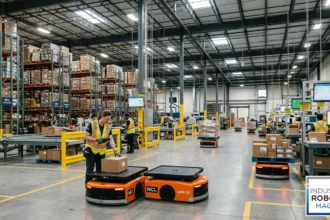
The robots handled transportation tasks, allowing workers to focus on picking and packing. This collaboration between humans and machines resulted in a more efficient and scalable operation.
AMRs vs Traditional Automation Systems
Understanding the difference between modern AMRs and traditional automation systems is essential when evaluating warehouse solutions.
| Feature | AMRs | Traditional Automation |
| Flexibility | High | Low |
| Setup Time | Quick | Long |
| Adaptability | Dynamic | Fixed |
| Cost | Moderate | High |
| Maintenance | Easier | Complex |
AMRs provide a more flexible and scalable solution, especially for warehouses that require frequent layout changes or handle varying demand levels.
How to Implement AI Robots in Warehouses
Implementing warehouse automation requires a strategic approach to ensure success.
Step-by-Step Implementation:
- Assess Current Operations: Identify inefficiencies and bottlenecks
- Define Automation Goals: Determine what tasks should be automated
- Select the Right Technology: Choose AMRs or robotic systems suited to your needs
- Integrate with Existing Systems: Ensure compatibility with WMS and software
- Train Employees: Prepare staff to work alongside automation
- Monitor Performance: Continuously optimize processes
A well-planned implementation ensures a smooth transition and maximizes return on investment.
Challenges of Warehouse Automation
While AI-powered automation offers significant benefits, it also comes with challenges that businesses must consider.
Key Challenges:
- High Initial Investment: Upfront costs for robots and infrastructure
- Integration Complexity: Ensuring systems work seamlessly together
- Workforce Adaptation: Employees need training and role adjustments
- Maintenance Requirements: Ongoing system updates and servicing
Despite these challenges, most companies find that the long-term benefits outweigh the initial costs.
Future of AI in Warehouse Automation
The future of warehouse automation is rapidly evolving with advancements in artificial intelligence and robotics.
Emerging Trends:
- AI-driven predictive analytics for inventory management
- Collaborative robots (cobots) working alongside humans
- Fully autonomous warehouses with minimal human intervention
- Integration with Internet of Things (IoT) devices
As technology continues to advance, warehouses will become smarter, faster, and more efficient, enabling businesses to stay competitive in a demanding market.
Final Verdict
AI-powered warehouse automation is no longer a luxury—it is becoming a necessity. Companies that adopt autonomous mobile robots gain a competitive advantage by improving efficiency, reducing costs, and enhancing accuracy.
As customer expectations continue to rise, businesses that fail to adopt automation risk falling behind. Investing in AI-driven robotics today is a strategic move toward long-term success.
FAQ Section
1. What are autonomous mobile robots used for in warehouses?
They are used for transporting goods, picking orders, and automating repetitive tasks to improve efficiency.
2. Are warehouse robots expensive to implement?
While the initial investment can be high, the long-term cost savings and productivity gains make them worthwhile.
3. Can robots replace human workers completely?
No, robots complement human workers by handling repetitive tasks, allowing humans to focus on decision-making and supervision.
4. How long does it take to implement warehouse automation?
Implementation timelines vary but typically range from a few weeks to several months, depending on complexity.
5. What industries benefit most from warehouse automation?
Industries such as e-commerce, retail, manufacturing, and logistics benefit significantly from automation.


2 Comments