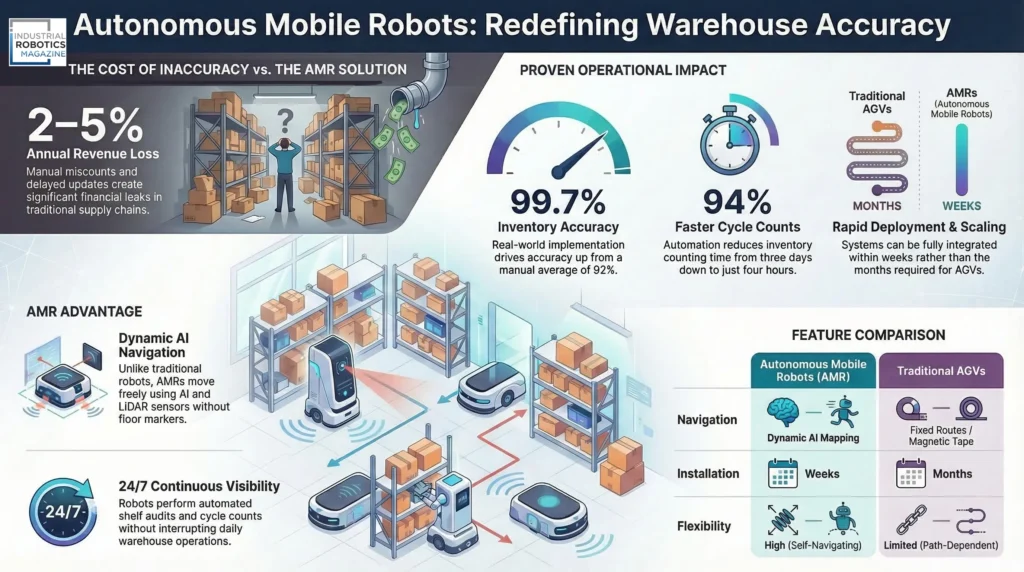
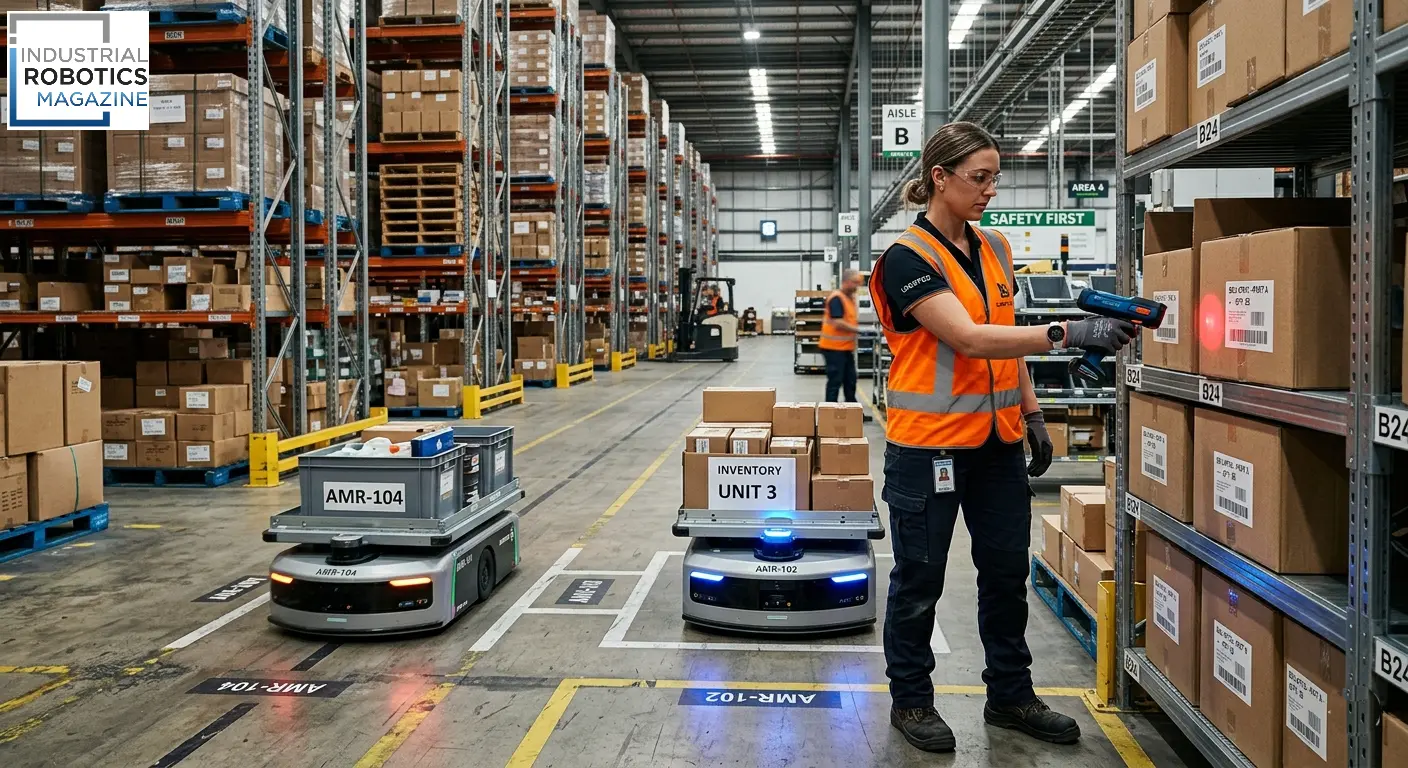
A typical warehouse loses 2–5% of annual revenue due to inventory inaccuracies—miscounts, misplaced goods, and delayed updates. Despite advanced software, manual scanning and human errors still disrupt supply chains.
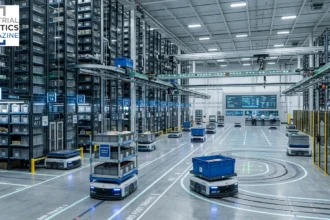
Autonomous mobile robots are intelligent warehouse robots that move through facilities independently to scan, track, and transport inventory. By combining sensors, AI navigation, and real-time data collection, they dramatically improve inventory management accuracy, reduce labor costs, and accelerate warehousing operations, helping businesses maintain real-time stock visibility.
Companies adopting these systems report inventory accuracy above 99%, faster cycle counts, and more efficient warehouse operations.
What Are Autonomous Mobile Robots in Warehousing?
Autonomous mobile robots (AMRs) are self-navigating robots used in industrial warehouses and distribution centers to automate repetitive tasks such as inventory tracking, item transport, and cycle counting.
Unlike traditional guided robots, AMRs use:
- LiDAR sensors
- Computer vision
- AI-based mapping
- Dynamic obstacle avoidance
This allows them to move freely through warehouses without fixed paths or floor markers.
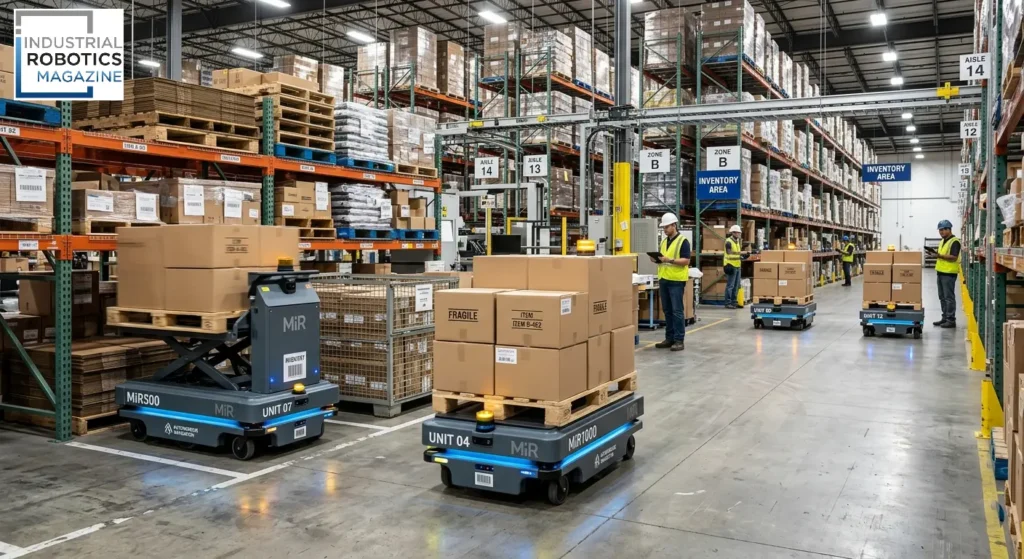
Key Capabilities of AMR Robots
AMRs perform several critical inventory management tasks:
- Automated cycle counting
- Barcode and RFID scanning
- Shelf inventory audits
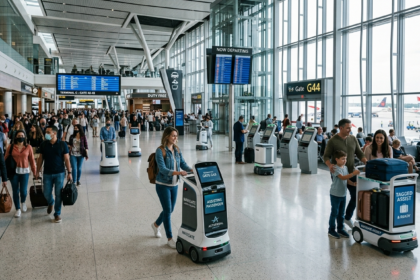
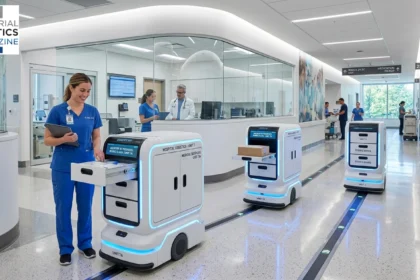
- Transporting goods between zones
- Real-time inventory updates to WMS systems
The result is a continuous, automated inventory monitoring system rather than periodic manual checks.
Suggested Internal Link:
Link here to an article on *“Warehouse Automation Technologies Explained.”
How Do Autonomous Mobile Robots Improve Inventory Management?
Inventory management is traditionally labor-intensive. Workers walk miles each day scanning products, counting items, and updating systems.
AMRs automate much of this work.
1. Continuous Inventory Visibility
AMR robots can scan shelves and pallets 24/7, updating warehouse management systems in real time.
Benefits include:
- Reduced stock discrepancies
- Faster restocking decisions
- Improved demand forecasting
- Reduced stockouts
2. Faster Cycle Counts
Manual cycle counting can shut down warehouse sections for hours. Robots can perform the same task without interrupting operations.
AMRs navigate aisles and automatically scan items using cameras and sensors.
3. Reduced Labor Dependency
Labor shortages remain a major challenge in warehousing.
Robots help by:
- Handling repetitive scanning tasks
- Reducing walking distances for workers
- Allowing staff to focus on higher-value tasks
4. Improved Warehouse Safety
Industrial robots minimize human exposure to:
- heavy lifting
- forklift traffic
- high shelves
This leads to fewer workplace accidents.
Suggested Internal Link:
Link here to *“AMR vs AGV: Which Warehouse Robot Is Better?”
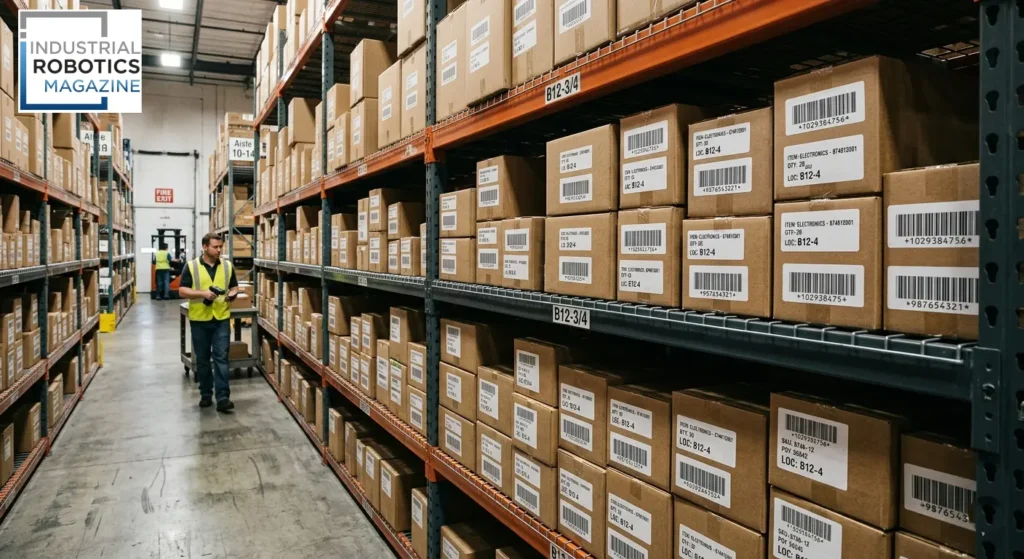
Autonomous Mobile Robots vs Traditional Warehouse Robots
Not all warehouse robots function the same way. Many facilities still rely on older automated guided vehicles (AGVs).
Below is a comparison.
| Feature | Autonomous Mobile Robots | Traditional AGVs |
|---|---|---|
| Navigation | Dynamic AI mapping | Fixed routes or magnetic tape |
| Flexibility | High | Limited |
| Installation Time | Weeks | Months |
| Obstacle Avoidance | Advanced sensors | Basic |
| Scalability | Easy to add more robots | Infrastructure changes required |
Because AMRs don’t require physical guides or floor infrastructure, they are much easier to deploy and scale in modern warehouses.
Real-World Example: Autonomous Mobile Robots Case Study
A global e-commerce fulfillment center implemented AMRs to improve inventory tracking across a 500,000-square-foot warehouse.
Before Automation
- Inventory accuracy: 92%
- Cycle counting time: 3 days per month
- Frequent stock discrepancies
After Deploying Autonomous Robots
- Inventory accuracy increased to 99.7%
- Cycle counting reduced to 4 hours
- Real-time stock updates across the system
How the System Worked
The robots continuously patrolled aisles scanning:
- barcodes
- pallet labels
- shelf markers
Collected data synced directly with the Warehouse Management System (WMS).
Warehouse workers received alerts when discrepancies appeared, allowing immediate corrections.
What Industries Benefit Most from Inventory Robots?
Although most people associate robots with e-commerce warehouses, many industries benefit from autonomous mobile robots.
1. E-commerce Fulfillment
High SKU counts and fast order processing require real-time inventory visibility.
2. Manufacturing
Factories use AMRs to track raw materials and finished goods across large facilities.
3. Retail Distribution Centers
Inventory robots help maintain accurate stock levels across multiple locations.
4. Pharmaceutical Warehouses
Strict regulatory requirements demand highly accurate inventory tracking.
5. Automotive Supply Chains
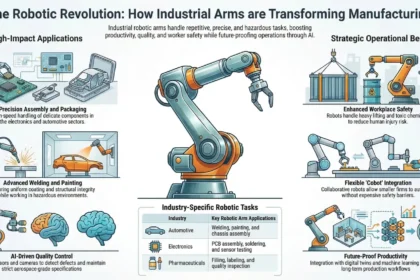
Automotive warehouses use robots to manage thousands of parts efficiently.
Challenges When Implementing Warehouse Robots
Despite the benefits, companies should consider several challenges before adopting AMRs.
Integration With Existing Systems
Robots must connect with:
- Warehouse Management Systems (WMS)
- Enterprise Resource Planning (ERP)
- Inventory databases
Initial Investment
AMR deployments require upfront spending on:
- robot hardware
- fleet management software
- integration services
However, many companies now use Robotics-as-a-Service (RaaS) models to reduce initial costs.
Warehouse Layout Optimization
Facilities may need adjustments such as:
- wider aisles
- optimized shelf labeling
- improved Wi-Fi coverage
The Future of Autonomous Mobile Robots in Warehousing
The next generation of AMRs will incorporate:
AI-powered decision-making
Robots will optimize warehouse routes automatically.
Advanced computer vision
Robots will recognize products even without barcodes.
Swarm robotics
Multiple robots will coordinate tasks in real time.
Digital twin technology
Warehouses will simulate robot performance before deployment.
Industry analysts predict warehouse robot adoption will grow dramatically through 2030, as businesses prioritize automation and supply chain resilience.
Autonomous mobile robots are transforming inventory management in modern warehouses.
By automating cycle counting, improving data accuracy, and reducing labor demands, these intelligent robots give businesses real-time visibility into inventory while boosting operational efficiency.
As supply chains grow more complex, AMRs are quickly becoming a core technology in industrial warehousing automation.
Companies that adopt them early gain a competitive advantage through faster operations, lower costs, and more reliable inventory control.