Modern military operations rely heavily on accurate and real-time information. However, traditional surveillance methods often involve human soldiers operating in dangerous environments. As a result, the risk to personnel remains high, especially in hostile or unpredictable conditions.
AI robots for battlefield surveillance and reconnaissance provide a safer and more efficient solution. These systems use artificial intelligence, sensors, and automation to monitor environments, gather intelligence, and detect threats. As a result, military forces can make faster and more informed decisions.
What Are AI Robots for Battlefield Surveillance and Reconnaissance
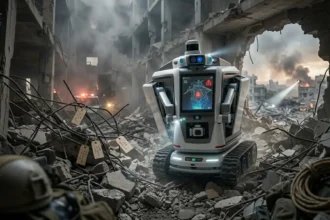
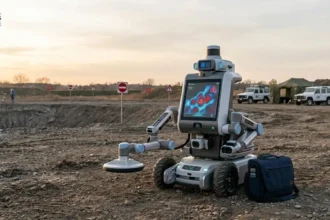
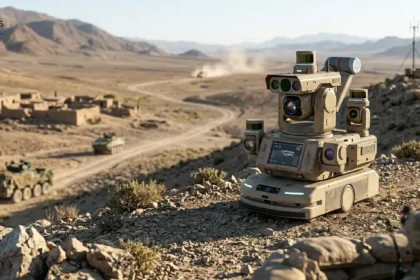
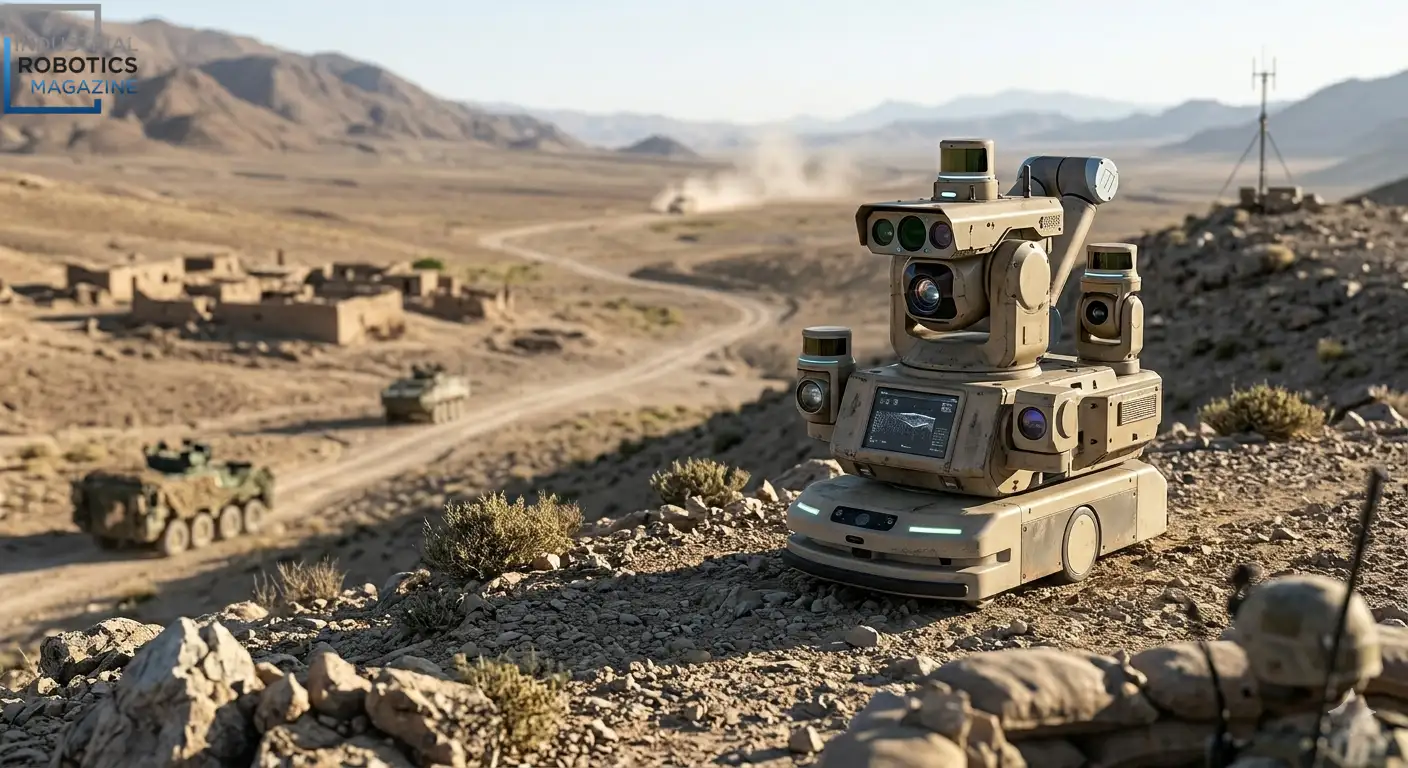
AI robots for battlefield surveillance and reconnaissance are autonomous or semi-autonomous systems designed to observe, monitor, and collect data in combat zones. They operate in high-risk environments where human presence is limited or dangerous.
These robots are commonly used in military reconnaissance missions, border surveillance operations, intelligence gathering tasks, and threat detection. In addition, they reduce the need for direct human involvement in hazardous situations.
How Do AI Surveillance Robots Work
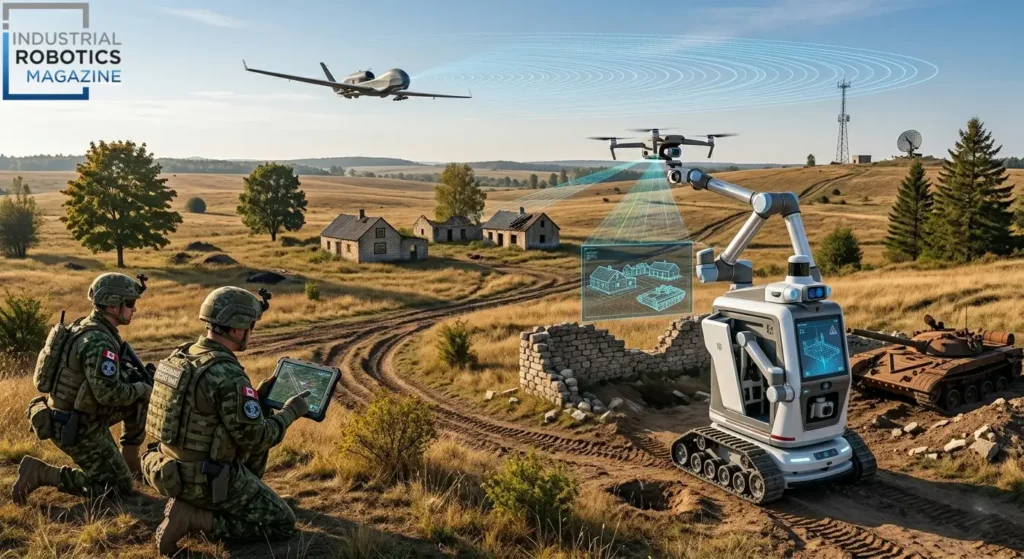
AI surveillance robots follow a structured process. First, they use cameras, sensors, and drones to scan the environment. Next, artificial intelligence analyzes the collected data in real time. Then, machine learning algorithms identify patterns and detect potential threats. Finally, the system sends alerts or reports to command centers.
As a result, surveillance becomes faster, more accurate, and more reliable.
Key Technologies Behind Surveillance Robots
Artificial Intelligence
Artificial intelligence enables robots to process large amounts of data quickly. It helps identify threats, movements, and unusual patterns.
Machine Learning
Machine learning improves system performance over time. For example, the robot can learn to distinguish between normal activity and suspicious behavior.
Sensors and Imaging Systems
Advanced sensors, including thermal imaging and infrared cameras, allow robots to operate in low visibility conditions. In addition, they provide detailed environmental data.
Communication Systems
These robots rely on sensors and advanced robot navigation systems to operate effectively.
AI Robots vs Traditional Surveillance Methods
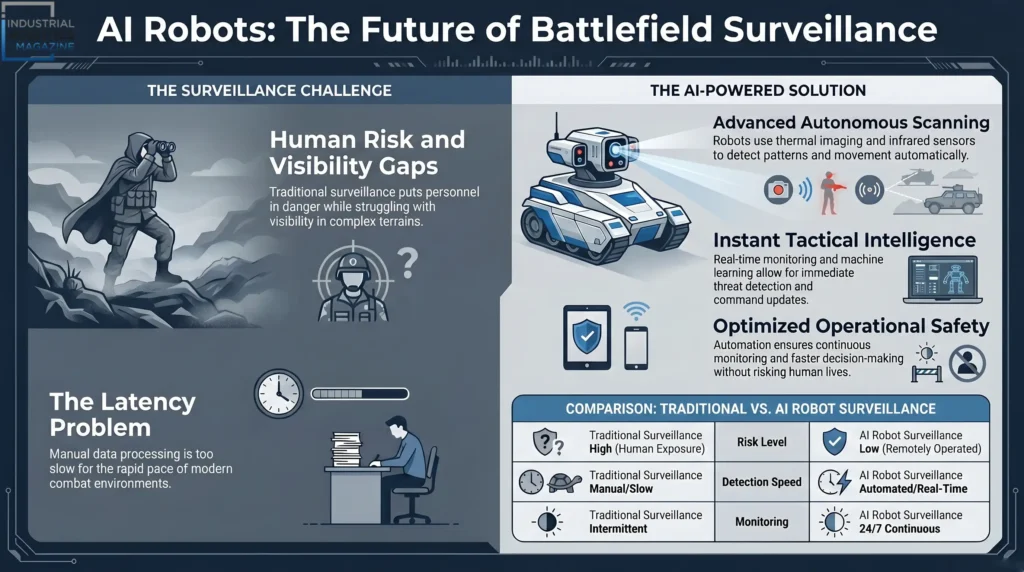
Traditional surveillance methods rely on human observation, which can be limited by fatigue and environmental conditions. As a result, they may miss critical information.
AI robots provide continuous monitoring without fatigue. They also analyze data faster and more accurately. Therefore, they improve overall surveillance effectiveness.
Real World Challenges
AI surveillance robots face several challenges. Complex environments, such as urban combat zones, can make navigation difficult. In addition, distinguishing between civilians and threats requires advanced algorithms.
Weather conditions and signal interference can also affect performance. Despite these challenges, ongoing advancements in AI continue to improve reliability.
Real World Applications
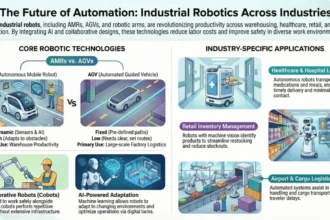
Similar technologies are also used in automation systems in robotics across industrial environments.They support border security by monitoring large areas and detecting unauthorized activity.
They are also used in reconnaissance missions to gather intelligence without risking human lives. Organizations such as North Atlantic Treaty Organization continue to explore advanced robotic systems for defense applications.
Benefits of AI Robots for Surveillance
AI robots offer several advantages. They improve safety by reducing human exposure to danger. In addition, they provide continuous monitoring and faster threat detection.
They also enhance decision-making by delivering accurate and real-time data. As a result, military operations become more efficient.
Future of AI in Battlefield Surveillance
The future of AI surveillance robots is highly promising. These systems will become more autonomous and intelligent. For example, future robots may predict threats before they occur.
Integration with drones and satellite systems will further enhance surveillance capabilities. In addition, advancements in AI will improve accuracy and reduce false alarms.
Conclusion
AI robots for battlefield surveillance and reconnaissance are transforming modern military operations. They provide safer, faster, and more efficient ways to gather intelligence and monitor environments. As technology continues to evolve, these systems will play a critical role in future defense strategies.
FAQ
What are AI surveillance robots
They are robotic systems that monitor environments and collect data using artificial intelligence and sensors.
How do these robots detect threats
They use AI, sensors, and machine learning to analyze patterns and identify unusual activity.
Where are these robots used
They are used in military operations, border security, and reconnaissance missions.
Do AI robots replace soldiers
They assist soldiers by reducing risk but do not fully replace them.
Are AI surveillance robots reliable
Yes, they provide continuous monitoring and higher accuracy than traditional methods.