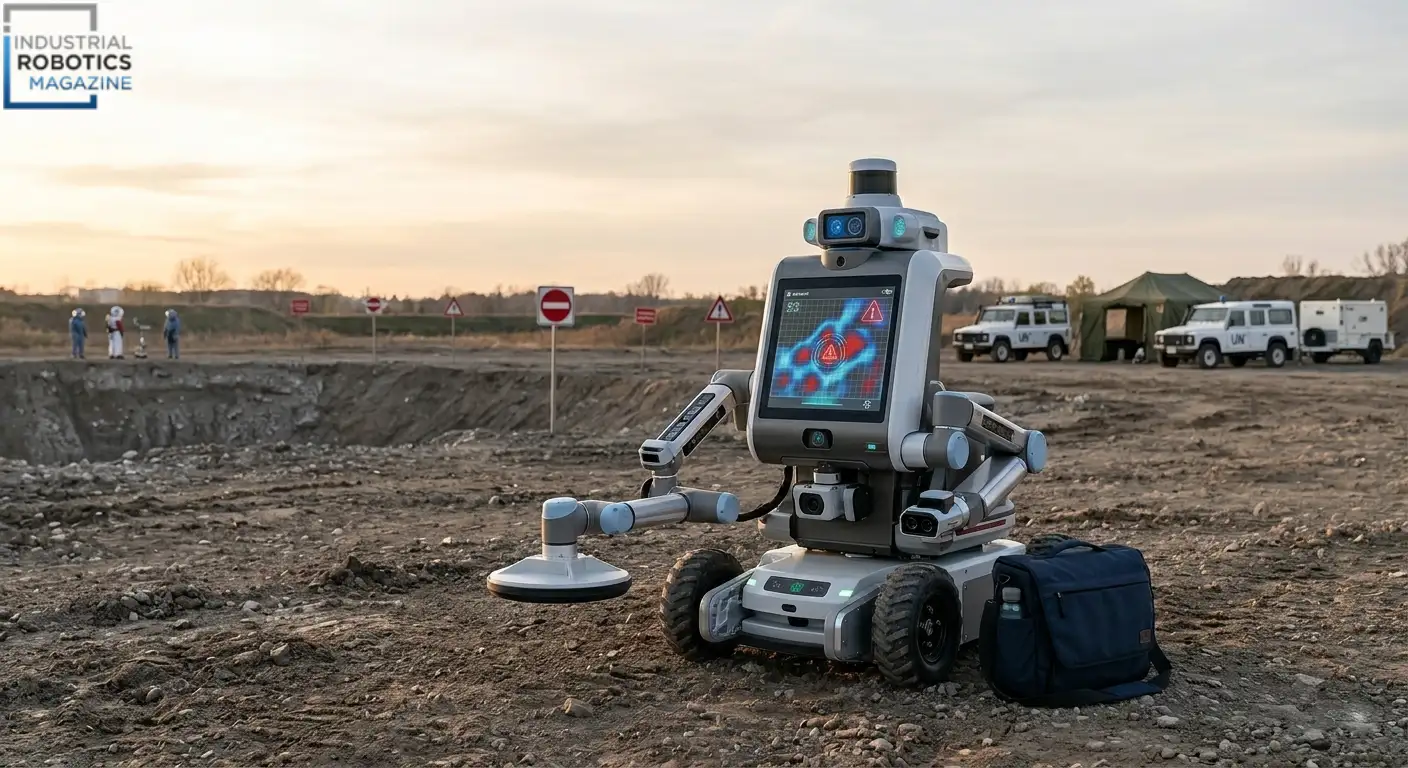
Landmines remain one of the most dangerous remnants of conflict zones. They pose a serious threat to civilians, military personnel, and humanitarian workers. Even years after conflicts end, unexploded mines continue to cause injuries and fatalities. Traditional mine detection methods rely heavily on manual labor, which is slow, risky, and often inefficient.
AI robots for mine detection and clearance provide a safer and more advanced solution. These robots use artificial intelligence, sensors, and automation to locate and neutralize mines without putting human lives at risk. As a result, they are becoming essential tools in modern military and humanitarian operations.
What Are AI Robots for Mine Detection and Clearance
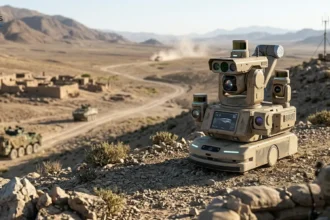
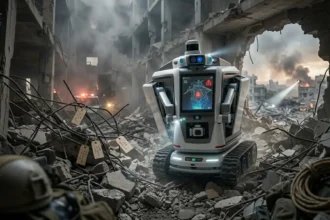
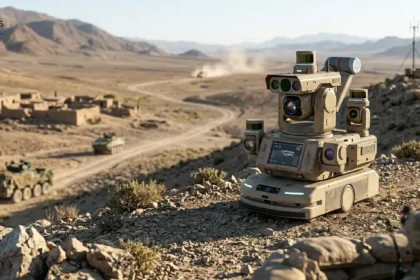
AI robots for mine detection and clearance are autonomous or semi-autonomous systems designed to identify and safely remove landmines. They operate in hazardous environments where human intervention is dangerous.
These robots are used in:
- Military operations
- Post-conflict zones
- Humanitarian demining missions
- Border security areas
In addition, they help speed up the clearance process while reducing risks for personnel.
How AI Robots for Mine Detection Work
AI robots follow a structured process to detect and handle mines.
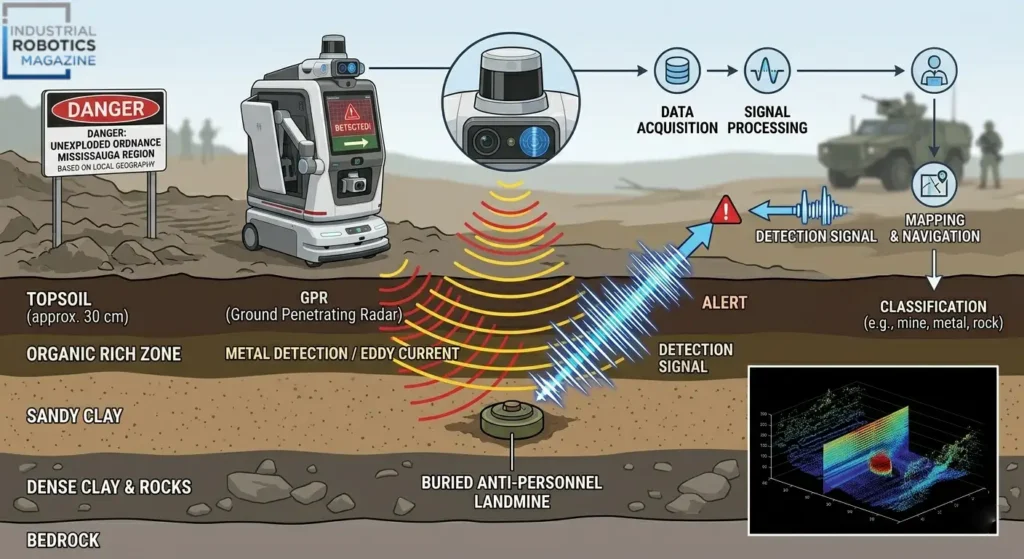
First, the robot scans the ground using sensors such as ground-penetrating radar and metal detectors.
Next, artificial intelligence analyzes the collected data to identify potential threats.
Then, machine learning algorithms improve detection accuracy by learning from past patterns.
Finally, the robot marks, reports, or neutralizes the detected mine.
As a result, detection becomes faster and more reliable compared to manual methods.
Key Technologies Behind Mine Detection Robots
Artificial Intelligence
Artificial intelligence allows robots to analyze large amounts of data quickly. It helps identify patterns that indicate the presence of mines.
Machine Learning
Machine learning improves detection accuracy over time. For example, the system learns to distinguish between harmless objects and actual explosives.
Ground Penetrating Radar
Ground penetrating radar enables robots to detect objects buried beneath the surface. This is essential for identifying hidden mines.
Sensors and Navigation Systems
Sensors help robots move safely across difficult terrain. In addition, navigation systems allow them to cover large areas efficiently.
AI Robots vs Traditional Mine Detection Methods
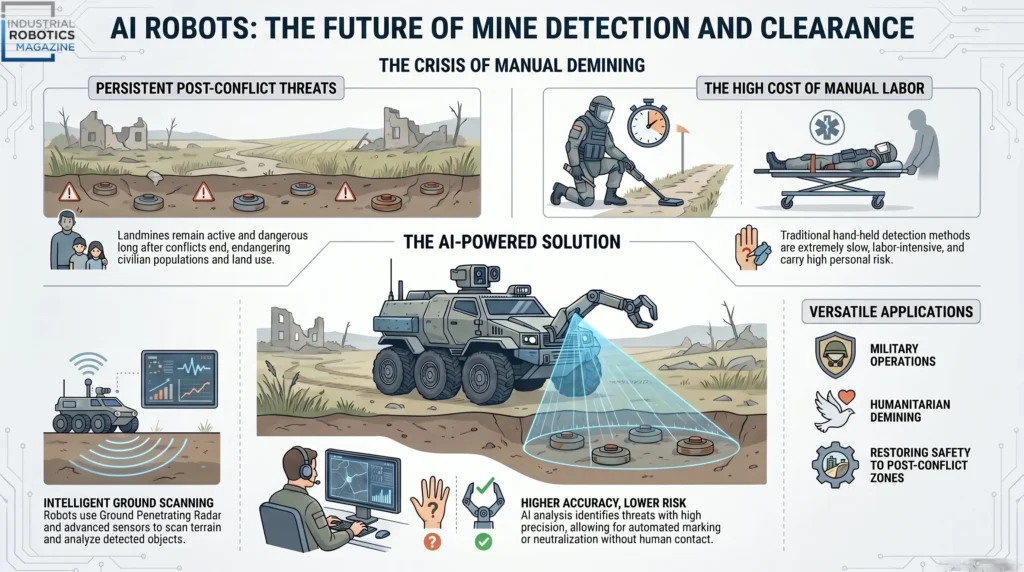
Traditional mine detection is slow and dangerous. It often requires trained personnel to manually scan the ground using handheld devices. As a result, the process can take years and involves significant risk.
AI robots, on the other hand, automation systems detection and reduce human exposure to danger. They provide faster results and higher accuracy. Therefore, they are becoming a preferred solution in modern operations.
Real World Challenges
AI robots for mine detection face several challenges. Terrain conditions can vary, making detection more complex. For example, rocky or uneven surfaces may affect sensor performance.
In addition, mines come in different shapes and materials. This requires advanced recognition systems. Weather conditions and environmental factors can also impact robot performance.
Despite these challenges, continuous improvements in AI and robotics are helping overcome these limitations.
Real World Applications
AI robots are widely used in humanitarian demining efforts. They help clear landmines in regions affected by past conflicts. This allows communities to safely return to their land.
Organizations such as the United Nations Mine Action Service (UNMAS) support global mine clearance efforts. By reducing human involvement in high-risk tasks, they improve both efficiency and safety.
Organizations such as United Nations Mine Action Service support the use of advanced technologies to improve mine clearance efforts.
Benefits of AI Robots for Mine Detection and Clearance
AI robots provide several important benefits. They reduce the risk to human life by minimizing direct exposure to mines. In addition, they improve detection speed and accuracy.
They also reduce operational costs over time. Furthermore, they allow large areas to be cleared more efficiently. As a result, communities can recover faster after conflicts.
Future of AI in Mine Detection
The future of AI robots in mine detection is promising. These systems will become more intelligent and autonomous. For example, future robots may use advanced imaging and predictive analytics to improve detection rates.
Integration with drones and other robotic systems may also enhance efficiency. In addition, global efforts will continue to focus on safer and faster mine clearance solutions.
Conclusion
AI robots for mine detection and clearance are transforming how dangerous environments are managed. They provide safer, faster, and more efficient alternatives to traditional methods. As technology continues to improve, these robots will play a critical role in reducing the risks associated with landmines and supporting global recovery efforts.
FAQ
What are AI robots for mine detection
They are robotic systems that use artificial intelligence and sensors to locate and manage landmines.
How do these robots detect mines
They use technologies such as ground penetrating radar, sensors, and machine learning to identify buried objects.
Where are these robots used
They are used in military operations, post-conflict zones, and humanitarian missions.
Do these robots replace human workers
They assist humans by reducing risk but do not completely replace them.
Are AI mine detection robots reliable
Yes, they offer higher accuracy and safety compared to traditional methods.