
In today’s fast-paced supply chain environment, warehouses must operate with speed, accuracy, and efficiency. As order volumes increase and customer expectations continue to rise, businesses are relying on technology to stay competitive. One of the most critical technologies enabling this transformation is the Warehouse Management System (WMS).
A WMS is a software solution designed to manage and optimize warehouse operations. From tracking inventory to coordinating order fulfillment, it acts as the central system that ensures everything runs smoothly. Without a WMS, warehouses often struggle with inefficiencies, errors, and delays that can negatively impact overall performance.
What is a Warehouse Management System (WMS)?
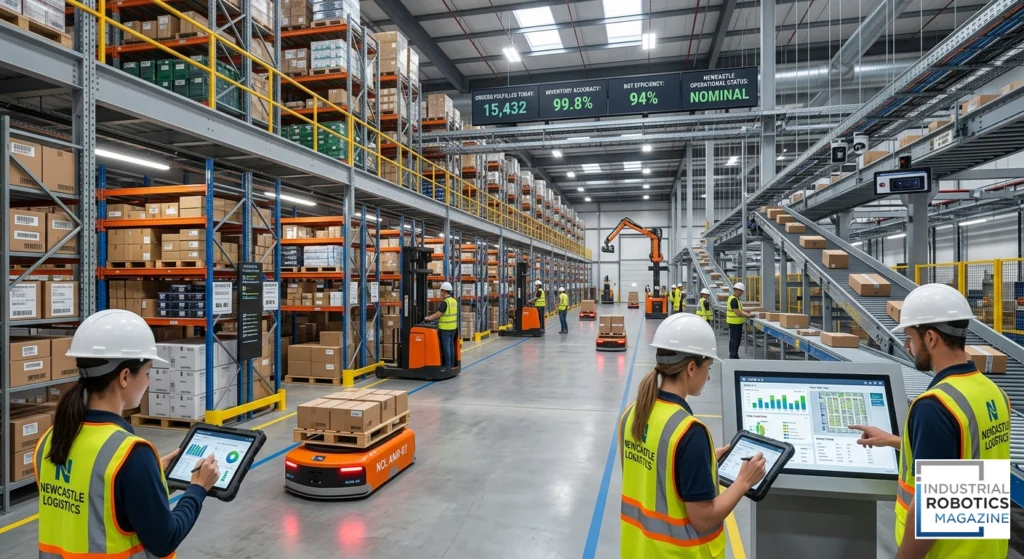
A Warehouse Management System (WMS) is a digital platform that helps manage daily warehouse activities. It provides real-time visibility into inventory levels, tracks the movement of goods, and supports key processes such as receiving, storage, picking, packing, and shipping.
By centralizing data and automating workflows, a WMS allows warehouse managers to make informed decisions. Instead of relying on manual processes, employees can use system-generated instructions to complete tasks more efficiently.
Key Functions of a WMS
1. Inventory Tracking and Visibility
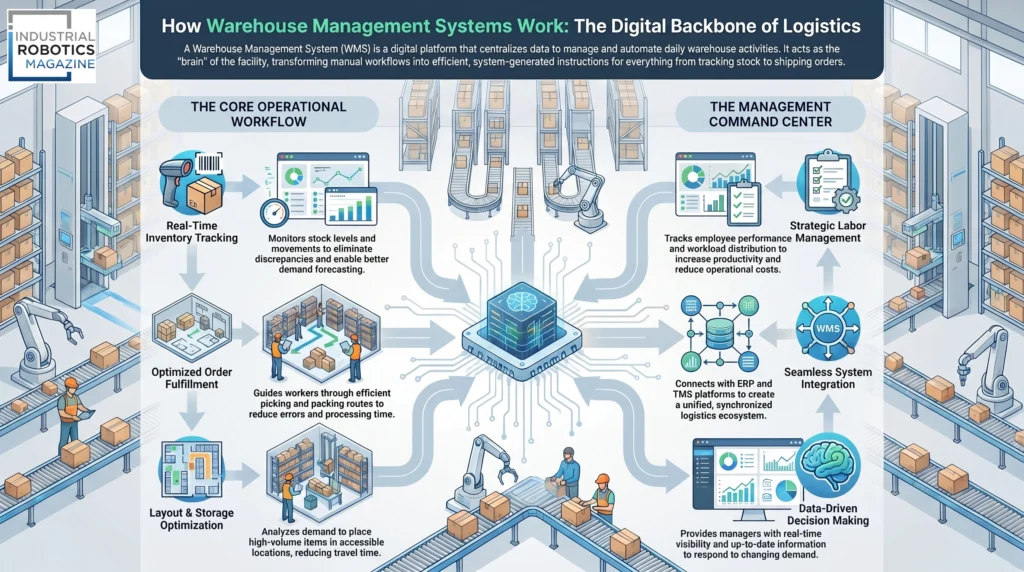
One of the primary functions of a WMS is tracking inventory in real time. The system monitors stock levels, locations, and movements within the warehouse.
Benefits:
- Reduces stock discrepancies
- Improves inventory accuracy
- Enables better demand forecasting
With accurate data, businesses can avoid overstocking or running out of critical items.
2. Order Fulfillment Optimization
A WMS streamlines the order fulfillment process by guiding workers through efficient picking and packing workflows. It determines the best picking routes and ensures that the correct items are selected.
Advantages:
- Faster order processing
- Reduced picking errors
- Improved customer satisfaction
This is especially important for e-commerce businesses that handle large volumes of orders daily.
3. Warehouse Layout Optimization
WMS software helps optimize warehouse layouts by analyzing product demand and storage patterns. High-demand items can be placed in easily accessible locations, reducing travel time for workers.
As a result, warehouse operations become more efficient, and productivity increases.
4. Labour Management
A WMS can track employee performance and workload distribution. Managers can use this data to allocate tasks effectively and identify areas for improvement.
Key benefits:
- Better workforce utilization
- Increased productivity
- Reduced operational costs
5. Integration with Other Systems
Modern WMS platforms integrate with other systems such as Enterprise Resource Planning (ERP) and Transportation Management Systems (TMS). This ensures seamless data flow across the supply chain.
Integration allows businesses to synchronize inventory, orders, and shipping processes, creating a unified logistics ecosystem.
Benefits of Using a WMS
1. Increased Efficiency
Automation of routine tasks reduces manual effort and speeds up operations. Employees can focus on higher-value activities instead of repetitive processes.
2. Improved Accuracy
By minimizing human error, a WMS ensures that orders are processed correctly. This leads to fewer returns and higher customer satisfaction.
3. Real-Time Data Access
Warehouse managers can access up-to-date information at any time. This enables faster decision-making and better response to changing demand.
4. Cost Reduction
Optimized workflows and improved resource utilization help reduce operational costs over time. Businesses can achieve more with fewer resources.
5. Scalability
As businesses grow, a WMS can scale with increasing demand. This makes it easier to expand operations without major disruptions.
Challenges of Implementing a WMS
While a WMS offers many benefits, there are some challenges to consider:
- High initial setup costs
- Training requirements for staff
- Integration complexity with existing systems
- Data migration and system configuration issues
However, these challenges are often temporary and can be managed with proper planning and support.
Emerging Trends in Warehouse Management Systems
The future of WMS is being shaped by advanced technologies. Some key trends include:
- AI-driven analytics for smarter decision-making
- Cloud-based WMS platforms for flexibility and scalability
- Integration with robotics and automation systems
- Use of the Internet of Things (IoT) for real-time tracking
These innovations will continue to improve warehouse efficiency and adaptability.
Final Thoughts
A Warehouse Management System is a critical component of modern logistics operations. By providing real-time visibility, improving accuracy, and optimizing workflows, a WMS enables businesses to operate more efficiently and effectively.
As supply chains become more complex, the importance of adopting a robust WMS will only increase. Companies that invest in these systems will be better positioned to meet customer demands and stay competitive in the evolving market.
FAQ Section
1. What does a Warehouse Management System do?
A WMS manages inventory, tracks goods, and optimizes warehouse operations such as picking, packing, and shipping.
2. Why is a WMS important?
It improves efficiency, reduces errors, and provides real-time data to support better decision-making.
3. Can small warehouses use a WMS?
Yes, many WMS solutions are scalable and suitable for both small and large operations.
4. What is the difference between WMS and ERP?
A WMS focuses on warehouse operations, while ERP manages broader business processes like finance and supply chain management.
5. What is the future of WMS?
The future includes AI, cloud computing, and integration with automation technologies to create smarter warehouses.