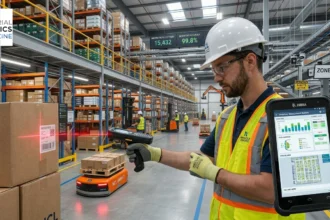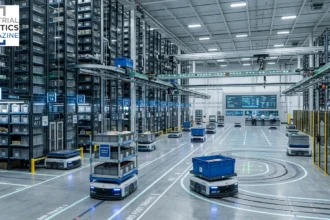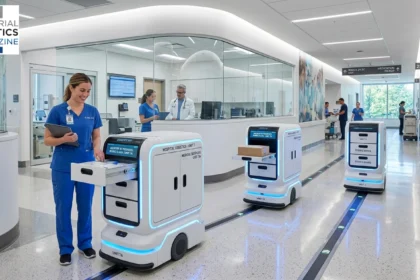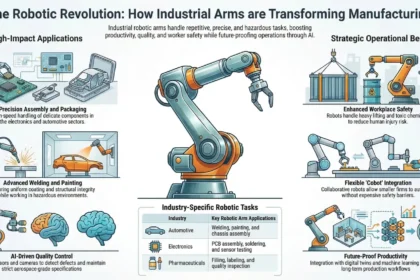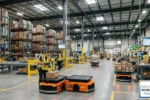
The warehousing and logistics industry is rapidly evolving, thanks to the adoption of industrial automation technologies like AMR robots for warehouse automation and AGVs (Automated Guided Vehicles). These systems help businesses optimize operations, improve efficiency, and reduce labor costs, making them essential tools for modern warehouses.
What Are AMRs and AGVs?
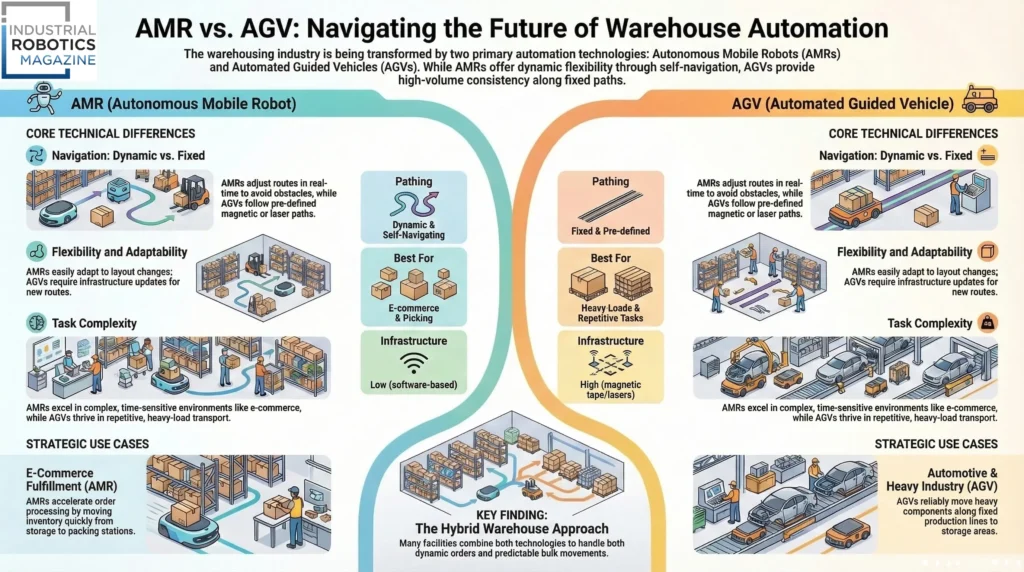
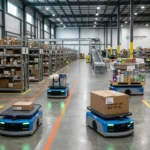
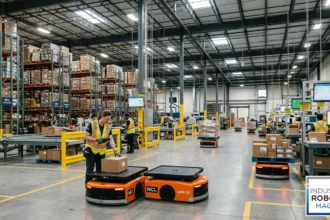
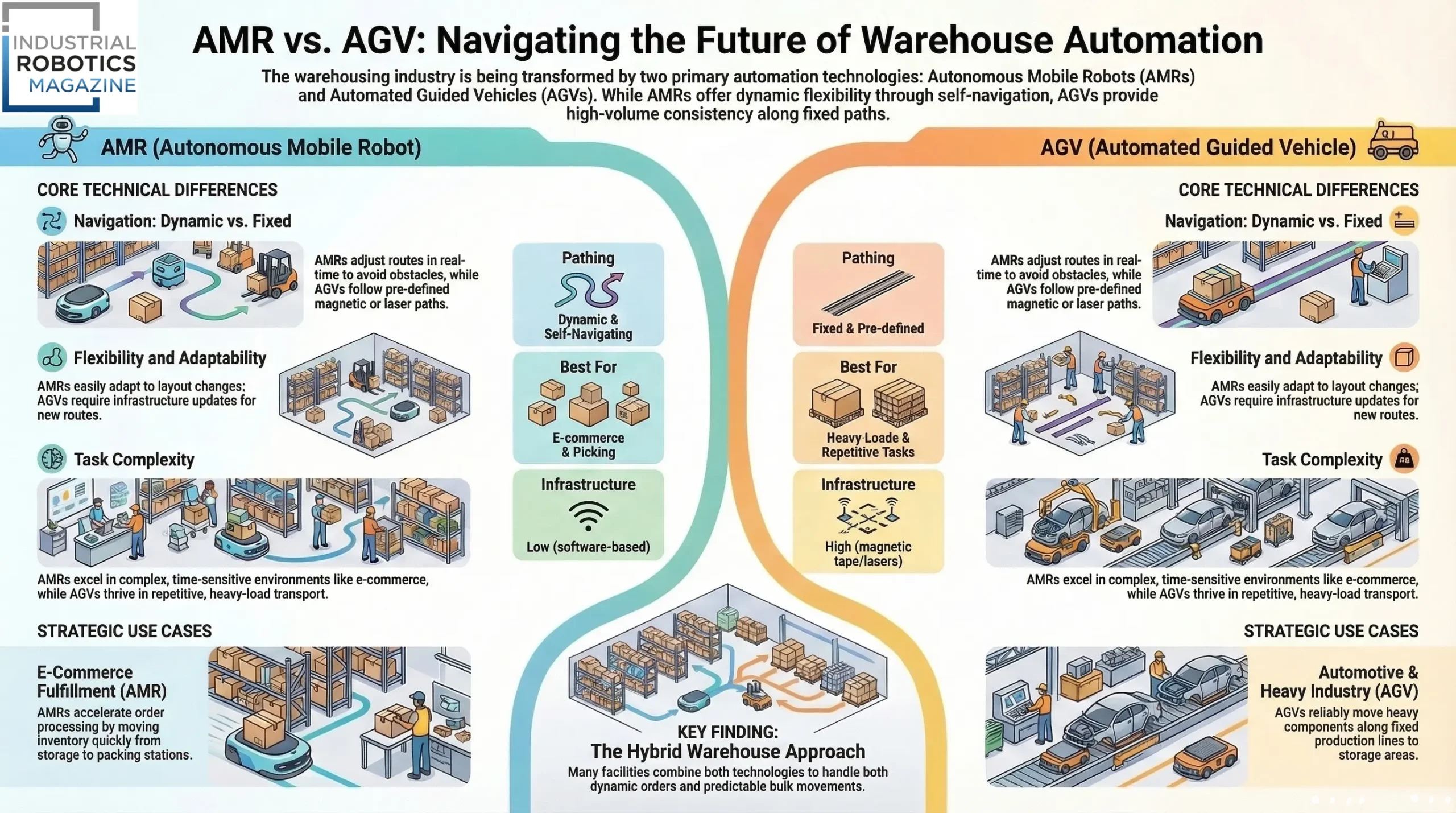
AMRs (Autonomous Mobile Robots) are intelligent, self-navigating machines designed to transport goods within warehouses and distribution centers. Unlike traditional AGVs, which follow fixed paths using magnetic strips or laser guidance, AMRs can dynamically adjust their routes in real-time. This flexibility allows them to navigate around obstacles, adapt to layout changes, and collaborate safely with human workers.
AGVs (Automated Guided Vehicles), on the other hand, are guided by pre-defined routes. They are highly reliable for repetitive material handling tasks but lack the adaptability of AMRs. Many warehouses still rely on AGVs for high-volume, predictable workflows where precision and consistency are critical.
Advantages of AMRs in Warehousing
AMRs bring a wide range of benefits to warehouse operations:
- How autonomous mobile robots improve warehouse productivity – AMRs can continuously transport goods without fatigue, enabling faster order fulfillment.
- Safety features in autonomous mobile robots – Sensors and navigation software ensure safe interaction with human workers, reducing workplace accidents.
- AMR fleet management software explained – Modern AMRs come with centralized software to monitor performance, assign tasks, and optimize routes, maximizing efficiency.
- Use cases of AMR robots in logistics industry – From picking and packing to transporting pallets, AMRs streamline multiple aspects of warehouse management.
For example, e-commerce fulfillment centers rely heavily on AMRs to handle high-volume, time-sensitive orders. AMRs can quickly move inventory from storage to packing stations, ensuring faster delivery and improving customer satisfaction.
Advantages of AGVs in Warehousing
While AMRs are flexible, AGVs still play a vital role in warehouses where consistency is key:
- Advantages of AGV systems in factory automation – AGVs excel in moving materials along fixed paths, such as from production lines to storage areas.
- AGV navigation technologies explained – AGVs can use magnetic tape, laser guidance, or GPS-based systems to follow precise routes.
- Cost of implementing AGV robots in warehouses – AGVs can be more cost-effective in predictable environments because they require less complex software.
AGVs are particularly useful for transporting heavy loads, palletizing goods, or moving items in large distribution centers with well-defined layouts. Many companies adopt a hybrid approach, combining AGVs for predictable tasks and AMRs for dynamic operations.
AMR vs AGV: Choosing the Right Solution
Warehouse managers often compare AMR vs AGV differences in manufacturing to select the right solution. The choice depends on:
- Flexibility needs: AMRs adapt to changing layouts; AGVs require fixed paths.
- Complexity of tasks: AMRs handle complex routes and dynamic orders; AGVs are ideal for repetitive transport.
- Implementation cost: AMRs may have higher upfront costs but provide long-term efficiency; AGVs can be cheaper initially for structured environments.
- Integration with existing systems: Both can integrate with warehouse management software, but AMRs often offer more advanced fleet analytics.
By understanding their warehouse’s unique requirements, businesses can implement a solution that maximizes efficiency, reduces labor dependency, and ensures faster order fulfillment.
Real-World Use Cases
- E-Commerce Warehouses – AMRs transport items from storage to packing stations, reducing manual labor and speeding up order processing.
- Automotive Parts Distribution – AGVs move heavy components along fixed routes between production and storage areas.
- Cold Storage Facilities – AMRs navigate safely in tight aisles with temperature-controlled goods.
- Hybrid Warehouses – Combining AMRs and AGVs enables warehouses to handle both dynamic and repetitive tasks efficiently.
Future Trends in Warehouse Robotics
The future of warehouse automation is exciting. AI-powered industrial robots are becoming smarter, optimizing routes, predicting maintenance needs, and improving workflow efficiency. Advanced AMRs with machine learning can analyze warehouse data to continuously improve performance, while AGVs evolve with better navigation technologies.
Other trends include integration with digital twins in robotics manufacturing, allowing warehouse managers to simulate operations before deploying robots, reducing downtime, and increasing productivity.
Both AMR robots for warehouse automation and AGVs in material handling are transforming the logistics industry. AMRs offer flexibility and dynamic navigation, making them ideal for fast-paced warehouses. AGVs excel in predictable, high-volume tasks, providing consistency and reliability. By leveraging these technologies, warehouses can improve efficiency, reduce labor costs, and enhance safety, creating a competitive advantage in the increasingly automated supply chain.
For modern warehouses, combining AMRs and AGVs can deliver the best of both worlds—dynamic adaptability and reliable automation—paving the way for smarter, faster, and safer operations.