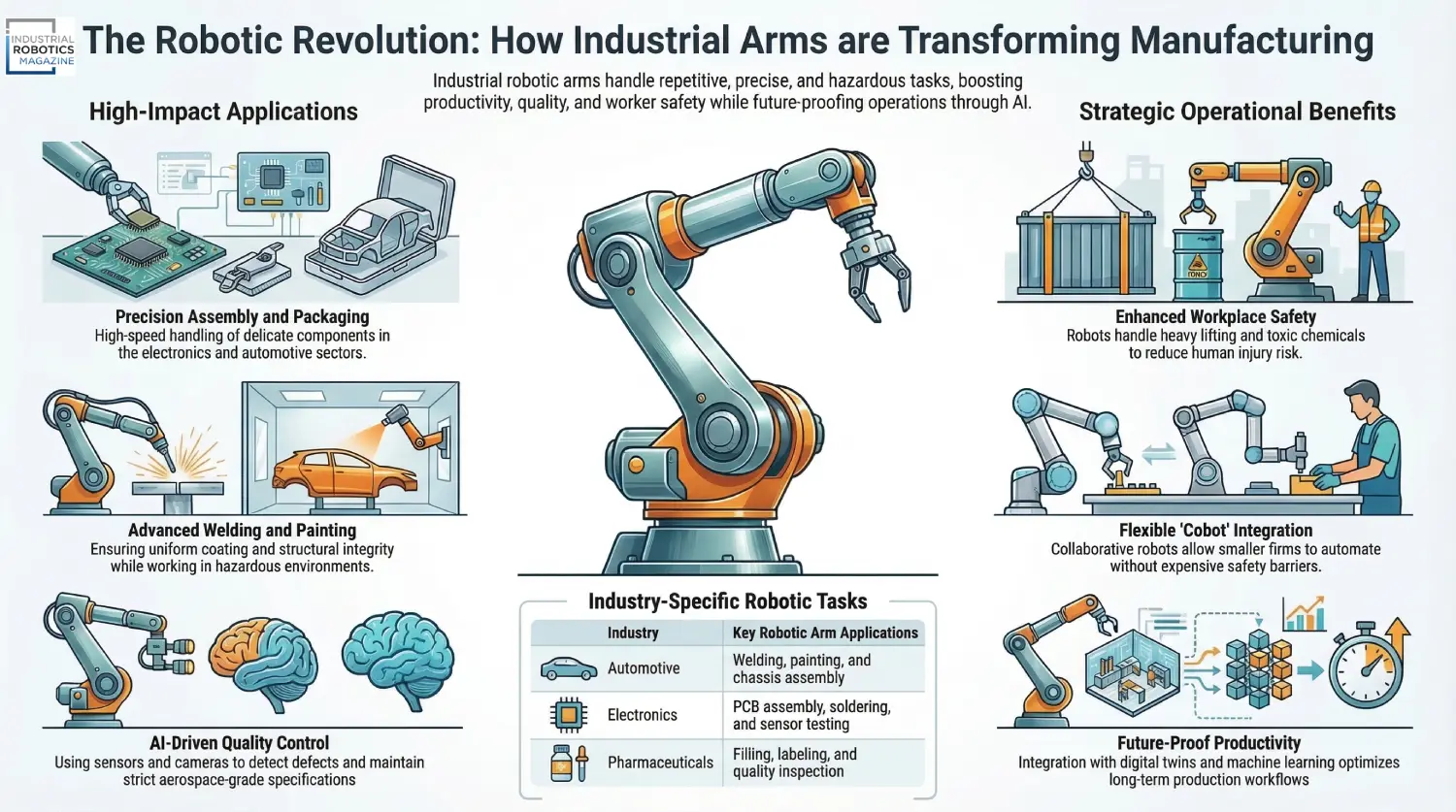
Industrial automation has transformed modern manufacturing, and at the heart of this revolution are industrial robotic arms. These versatile machines are designed to handle repetitive, precise, and often hazardous tasks, allowing factories to improve productivity, maintain consistent quality, and ensure worker safety. From automotive plants to electronics assembly, industrial robotic arm applications in manufacturing are broad and growing rapidly.
Applications of Robotic Arms in Assembly Lines
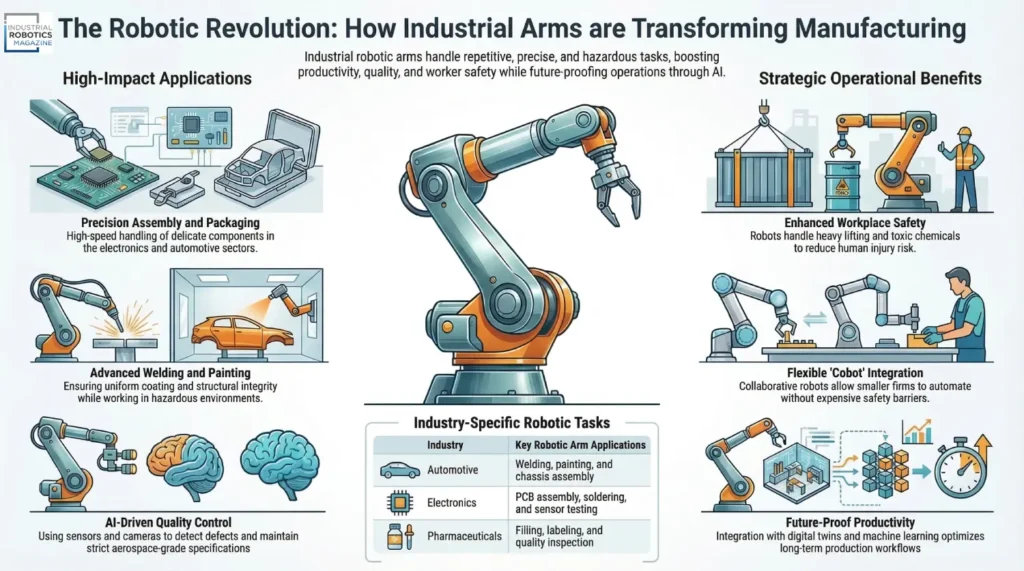
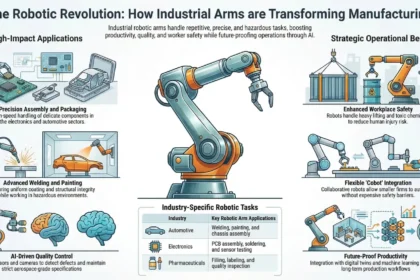
One of the most common uses of industrial robotic arms in manufacturing is in assembly lines. Robotic arms can perform high-speed, repetitive tasks with incredible precision. For example, in the automotive industry, robotic arms are responsible for assembling components such as engines, dashboards, and chassis parts. Robotic arm for palletizing and packaging is also a frequent application, where the arms lift, move, and stack products with accuracy and speed that exceeds human capability.
In electronics manufacturing, robotic arms handle delicate components like circuit boards, microchips, and sensors. Their precision minimizes the risk of damage, reduces waste, and ensures consistent product quality. Factories that adopt robotic arms can scale production without sacrificing accuracy, making them indispensable in high-volume industries.
Robotic Welding and Painting
Another major application is robotic welding. Robotic welding arm advantages in automotive industry include precise, consistent welds that improve the structural integrity of vehicles. Robots can also work in hazardous environments, such as high temperatures or areas with harmful fumes, keeping human workers safe from injury.
Similarly, robotic arms are extensively used for painting and coating tasks. They ensure uniform application, reduce paint wastage, and speed up production cycles. This is particularly useful in industries like automotive and appliance manufacturing, where product aesthetics and durability are critical.
Collaborative Robotic Arms
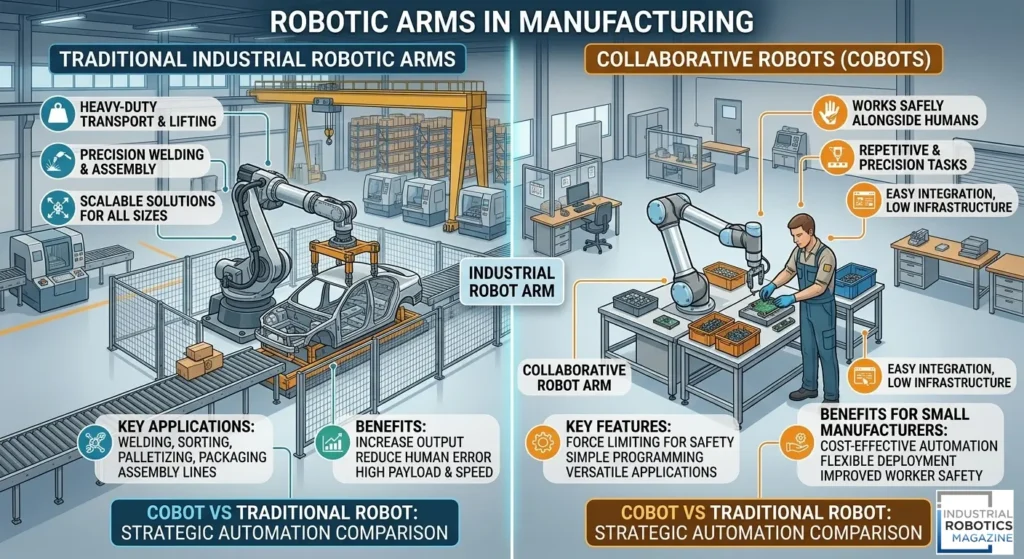
A newer trend in manufacturing is the rise of collaborative robots, or cobots. Unlike traditional industrial robotic arms, cobots are designed to work safely alongside human operators. Collaborative robots for small manufacturers allow companies with limited space or budget to automate tasks such as assembly, inspection, and packaging without extensive safety cages or barriers.
Cobots are increasingly popular in small- to medium-sized manufacturing enterprises because they are flexible, easy to program, and capable of handling repetitive or ergonomically challenging tasks. They also provide scalability, enabling businesses to expand automation gradually rather than investing in a full robotic infrastructure upfront.
Quality Control and Inspection
Industrial robotic arms are not limited to physical assembly; they also play a key role in quality control. How robotic arms improve manufacturing productivity extends to automated inspection tasks. Robots equipped with cameras, sensors, or laser scanners can detect defects, measure components, and ensure products meet strict specifications.
This application is particularly valuable in high-precision industries like aerospace and medical device manufacturing, where even minor defects can have significant consequences. Automated inspection with robotic arms reduces human error, accelerates production, and maintains high standards of quality.
Reducing Labor Costs and Increasing Safety
One of the primary motivations for adopting industrial robotic arms is reducing labor costs using industrial robots. By automating repetitive or dangerous tasks, manufacturers can allocate human resources to more strategic roles, such as design, maintenance, or process optimization. Robots also enhance workplace safety by taking on tasks in hazardous environments, such as handling chemicals, lifting heavy objects, or working near high temperatures.
Industries Benefiting from Robotic Arms
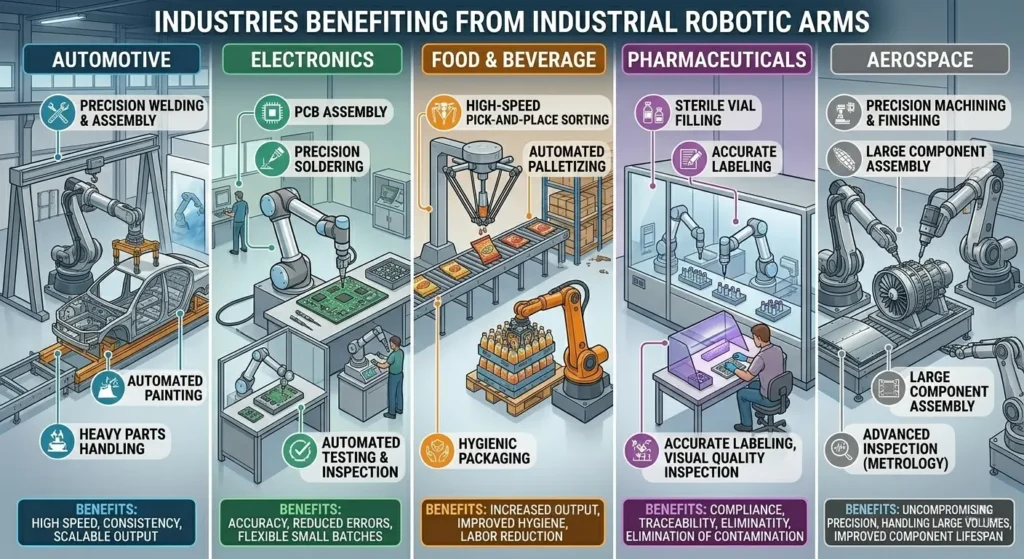
The adoption of industrial robotic arms for manufacturing is widespread across multiple industries:
- Automotive: Welding, assembly, painting, and parts handling
- Electronics: PCB assembly, soldering, and testing
- Food and Beverage: Packaging, sorting, and palletizing
- Pharmaceuticals: Filling, labeling, and quality inspection
- Aerospace: Component assembly, precision machining, and inspection
Future Trends
The future of robotic arms in manufacturing is closely tied to advances in AI, machine learning, and Industry 4.0 technologies. AI-powered industrial robots can learn from their environment, adapt to new tasks, and collaborate more efficiently with humans. Integration with digital twins in robotics manufacturing allows companies to simulate production processes, optimize workflows, and reduce downtime.
As robotic arms become more intelligent and versatile, manufacturers can expect even greater gains in productivity, efficiency, and safety. Companies that embrace these technologies now will be better positioned to compete in the increasingly automated global marketplace.
Industrial robotic arms are no longer optional in modern manufacturing—they are a necessity. From industrial robotic arm applications in manufacturing to collaborative robots and AI-driven inspection, these machines enhance productivity, reduce errors, and ensure worker safety. Whether in automotive, electronics, pharmaceuticals, or aerospace, robotic arms are helping manufacturers meet the demands of a fast-paced, precision-driven industry.
By investing in robotic arms, manufacturers not only improve efficiency and reduce labor costs, but they also future-proof their operations for the next era of industrial automation.