Hospitals today are facing increasing pressure to deliver faster, safer, and more efficient care. With rising patient demand, staff shortages, and growing operational complexity, traditional healthcare systems are struggling to keep up. As a result, many healthcare facilities are turning to automation to improve performance and maintain high standards of care.
Hospital automation using robots is transforming modern healthcare by improving efficiency, reducing human error, and enhancing patient outcomes. These robotic systems can handle repetitive and time-consuming tasks, allowing healthcare professionals to focus on more critical responsibilities such as diagnosis and treatment.
Additionally, automation enables hospitals to scale their operations more effectively. Instead of hiring large numbers of additional staff during peak times, facilities can rely on robotic systems to maintain consistent performance. Therefore, robotics is becoming a key component of modern healthcare infrastructure.
Why Hospitals Are Adopting Automation
However, hospitals are not adopting automation without reason. Several challenges make robotics a necessary solution:
- Increasing patient volumes and overcrowding
- Limited availability of healthcare professionals
- Rising operational and labour costs
- High demand for accuracy and speed in patient care
Furthermore, human workers are often required to perform repetitive tasks such as transporting supplies or cleaning rooms. Over time, this can lead to fatigue, reduced productivity, and a higher risk of errors. As a result, automation helps eliminate these inefficiencies and improves overall hospital performance.
What Is Hospital Automation Using Robots?
Hospital automation using robots refers to the use of intelligent machines to perform various tasks within healthcare facilities. These tasks can range from logistics and cleaning to patient monitoring and surgical assistance.
These robots use advanced technologies such as artificial intelligence, sensors, and real-time data processing to operate efficiently. In addition, they are designed to navigate complex hospital environments and adapt to changing conditions.
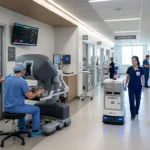
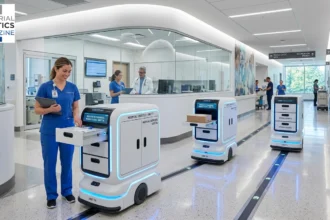
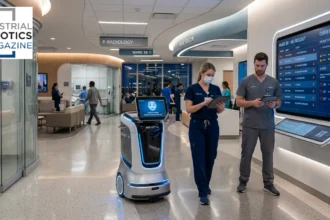
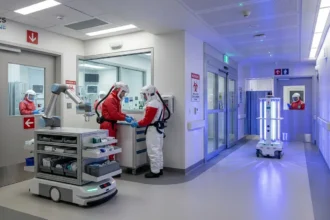
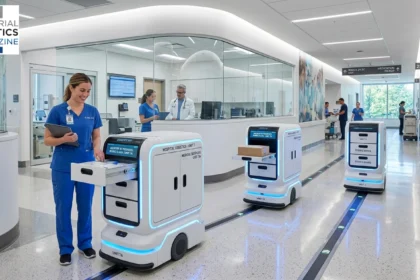
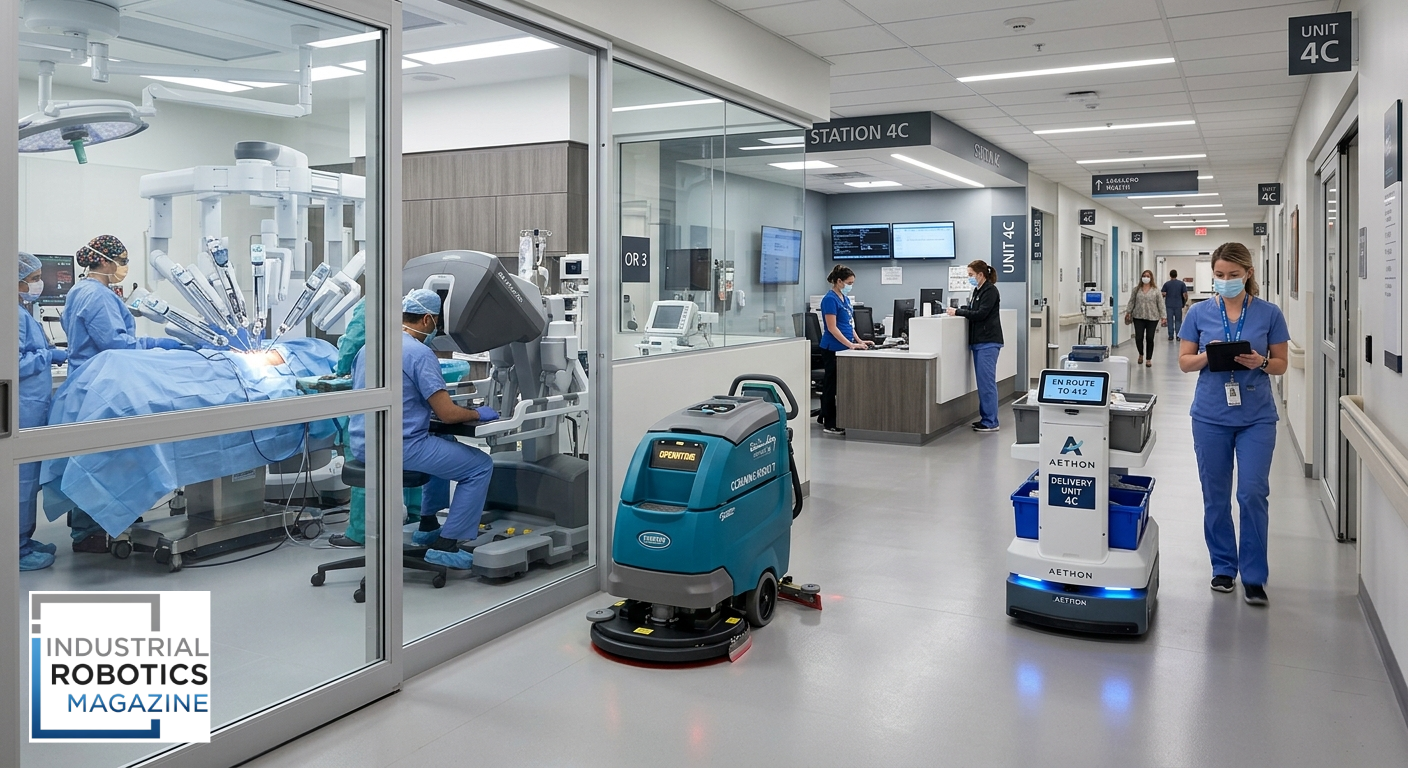
For example, delivery robots can transport medications and equipment across hospital floors, while disinfection robots can sanitize rooms using UV light. Furthermore, surgical robots assist doctors in performing highly precise procedures. This combination of technologies allows hospitals to operate more efficiently and safely.
What Are the Benefits of Hospital Automation Using Robots?
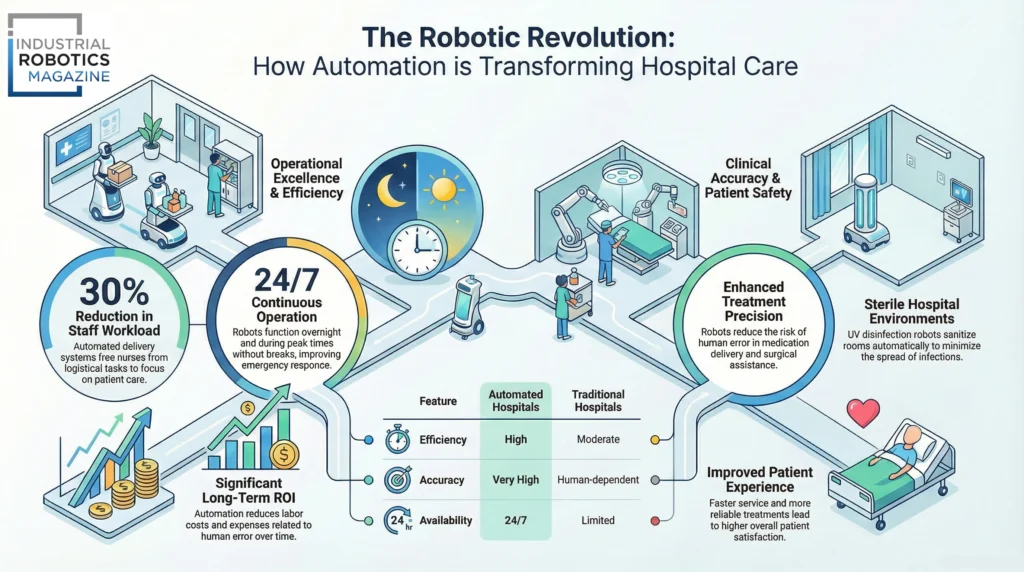
Healthcare facilities are increasingly adopting robotic automation because of its measurable and long-term advantages.
1. Increased Efficiency
One of the biggest benefits of hospital automation is improved efficiency. Robots can perform repetitive tasks much faster than humans, which helps streamline operations.
Key advantages include:
- Faster delivery of supplies and medications
- Reduced waiting times for patients
- Improved workflow across departments
As a result, hospitals can handle more patients without compromising the quality of care.
2. Improved Accuracy
Additionally, robots significantly reduce the risk of human error. Tasks such as medication delivery, inventory tracking, and patient monitoring require high levels of accuracy.
Benefits include:
- Fewer mistakes in critical tasks
- Better patient safety
- Consistent and reliable performance
Therefore, automation helps ensure that healthcare services are delivered with greater precision.
3. 24/7 Operation
Unlike human workers, robots can operate continuously without needing breaks or rest.
As a result:
- Hospitals can function more efficiently at all times
- Tasks can be completed overnight
- Emergency response times improve
This constant availability makes robots especially valuable in high-demand environments such as hospitals.
4. Enhanced Safety
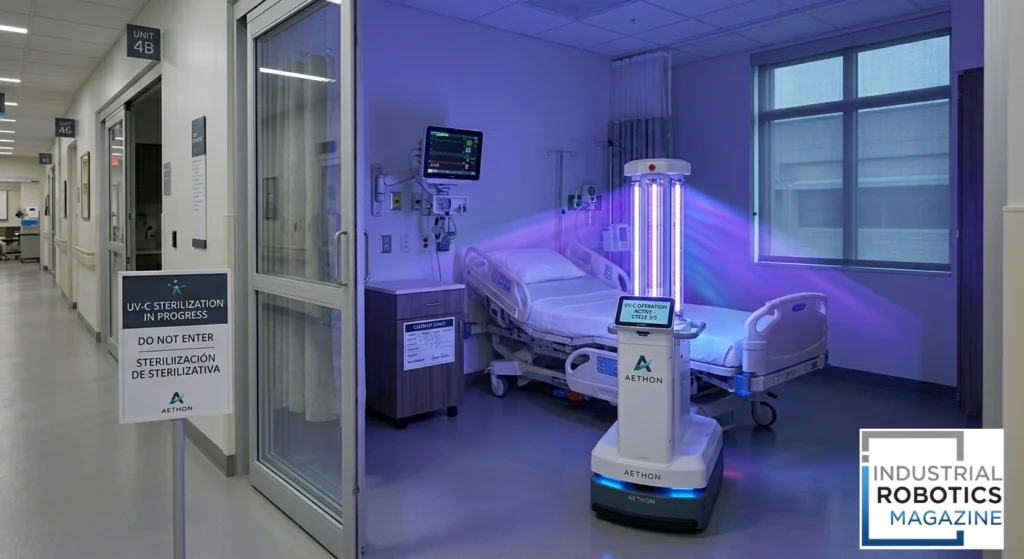
Furthermore, robots contribute to safer healthcare environments. By reducing direct contact between staff and patients, robots help minimize the spread of infections.
Examples include:
- UV disinfection robots that sanitize hospital rooms
- Contactless delivery systems for medications and supplies
In addition, robots reduce the need for healthcare workers to perform physically demanding tasks, lowering the risk of injury.
5. Cost Savings
Although implementing robotic systems requires an initial investment, the long-term cost savings are significant.
Savings come from:
- Reduced labor costs
- Lower error-related expenses
- Increased operational efficiency
Over time, hospitals can achieve a strong return on investment by improving productivity and reducing waste.
6. Better Patient Experience
Moreover, hospital automation improves the overall patient experience. Faster service, reduced waiting times, and improved accuracy all contribute to higher patient satisfaction.
Patients benefit from:
- Quicker access to care
- More reliable treatments
- Improved communication and support
As a result, hospitals can deliver a higher quality of care while maintaining efficiency.
Real-World Example: Automation in Hospitals
For example, a large hospital implemented robotic delivery systems to handle internal logistics. Previously, nurses spent a significant amount of time transporting supplies between departments.
After introducing robots:
- Staff workload was reduced by over 30%
- Delivery times became faster and more consistent
- Healthcare workers were able to focus more on patient care
Therefore, automation not only improved efficiency but also enhanced the overall quality of service provided by the hospital.
Hospital Automation vs Traditional Methods
| Feature | Automated Hospitals | Traditional Hospitals |
|---|---|---|
| Efficiency | High | Moderate |
| Accuracy | Very High | Human-dependent |
| Availability | 24/7 | Limited |
| Safety | Improved | Higher risk |
| Cost (Long-Term) | Lower | Higher |
This comparison clearly shows how automation provides a significant advantage over traditional hospital systems.
Challenges of Hospital Automation
However, there are still some challenges associated with implementing robotics in healthcare:
- High upfront investment costs
- Need for staff training and adaptation
- Integration with existing hospital systems
- Resistance to change from employees
Despite these challenges, most healthcare facilities find that the long-term benefits outweigh the initial difficulties.
Future of Hospital Automation
The future of hospital automation is rapidly evolving with advancements in artificial intelligence and robotics.
Emerging Trends:
- AI-powered diagnostics and decision-making
- Fully automated hospital workflows
- Collaborative robots working alongside humans
- Remote robotic surgeries
As these technologies continue to develop, hospitals will become more efficient, accurate, and patient-focused.
Final Verdict
Hospital automation using robots is no longer a luxury—it is becoming a necessity. By improving efficiency, accuracy, safety, and patient experience, robotic systems are transforming modern healthcare facilities.
Hospitals that adopt automation today will be better prepared to meet future challenges and deliver high-quality care in an increasingly demanding environment.
FAQ Section
1. What is hospital automation using robots?
It refers to using robotic systems to automate tasks such as delivery, cleaning, and patient monitoring.
2. How do robots improve hospital efficiency?
They complete tasks faster, reduce delays, and streamline workflows.
3. Are robots expensive for hospitals?
They require upfront investment but provide long-term cost savings.
4. Do robots replace healthcare workers?
No, they assist workers by handling repetitive tasks and improving productivity.
5. What is the future of hospital automation?
It includes AI integration, smarter robotics, and fully automated healthcare systems.