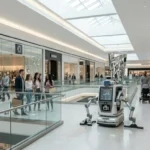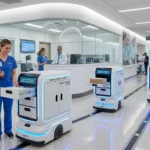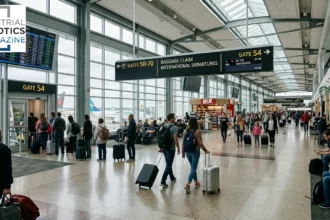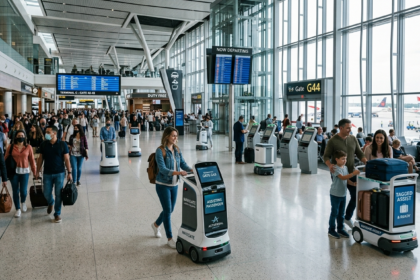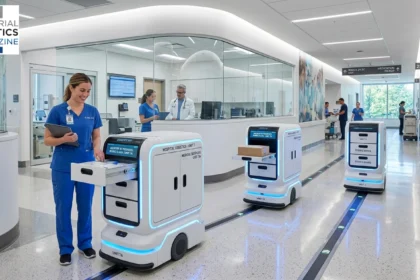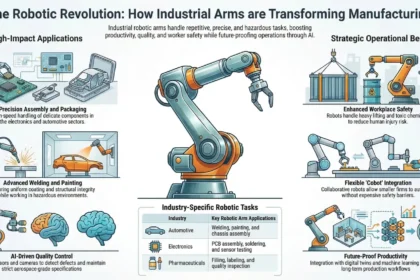
Airports are becoming increasingly complex environments as global travel continues to grow. With rising passenger volumes, stricter security requirements, and the need for operational efficiency, airports are turning to robotics to streamline processes and improve the overall travel experience. From automated check-in systems to autonomous cleaning robots, robotics is playing a critical role in modernizing airport operations.
Today’s airports are no longer just transportation hubs—they are highly coordinated ecosystems that rely on technology to function efficiently. Robotics, combined with artificial intelligence (AI) and real-time data systems, enables airports to handle large volumes of passengers while maintaining safety, accuracy, and speed.
What Are Airport Robotics?
Airport robotics refers to the use of automated machines designed to perform tasks that support airport operations. These robots can operate independently or alongside human staff, depending on their function.
They are commonly used for tasks such as baggage handling, cleaning, security screening, passenger assistance, and maintenance. By integrating robotics into daily operations, airports can reduce manual workload, improve consistency, and enhance service quality.
In many cases, these robots are equipped with sensors, cameras, and AI algorithms that allow them to navigate complex environments, recognize objects, and interact with passengers.
Key Types of Robots Used in Airports
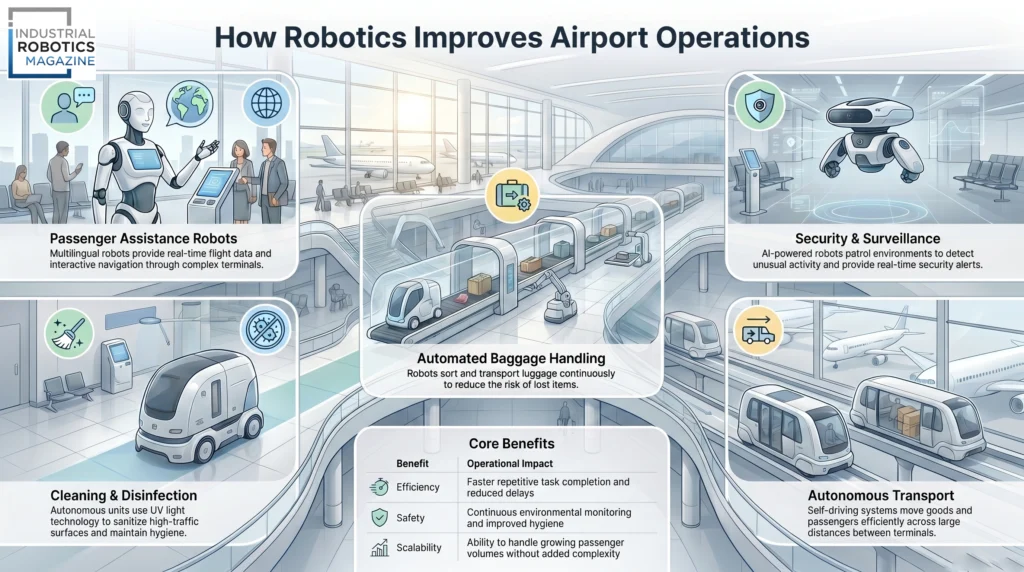
1. Passenger Assistance Robots
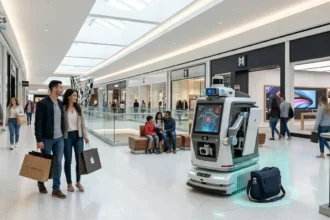
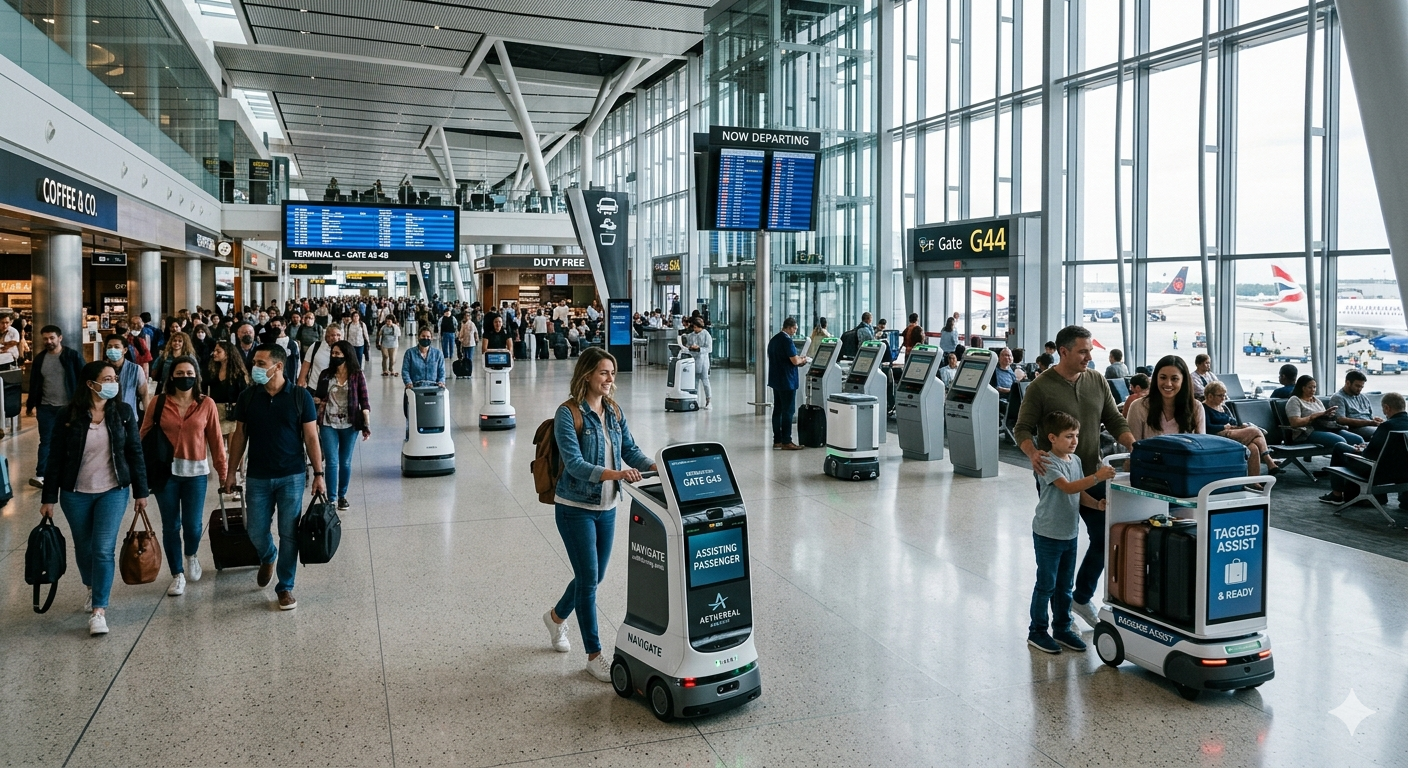
Passenger assistance robots are designed to help travellers navigate the airport. These robots provide directions, answer questions, and offer real-time flight information.
They are often equipped with touchscreens, voice recognition systems, and multilingual capabilities, making them accessible to a wide range of passengers. By improving communication and guidance, these robots enhance the overall passenger experience.
2. Cleaning and Disinfection Robots
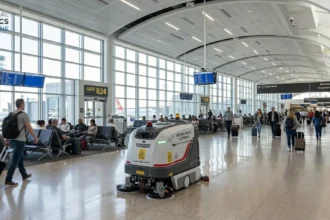
Maintaining cleanliness in airports is essential, especially in high-traffic areas. Cleaning robots are used to sanitize floors, restrooms, and common spaces efficiently.
Many of these robots use advanced technologies such as ultraviolet (UV) light to disinfect surfaces and eliminate harmful bacteria and viruses. As a result, airports can maintain higher hygiene standards while reducing the workload on cleaning staff.
3. Baggage Handling Robots
Baggage handling is one of the most critical operations in an airport. Robots are used to transport luggage, sort baggage, and ensure accurate delivery to the correct flights.
Automated baggage systems reduce the risk of lost or mishandled luggage while improving speed and efficiency. These robots can operate continuously, helping airports manage large volumes of baggage with minimal delays.
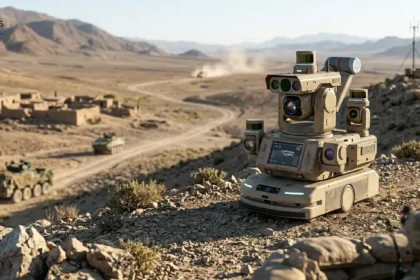
4. Security and Surveillance Robots
Security robots play a key role in monitoring airport environments. Equipped with cameras, sensors, and AI-based analytics, these robots can detect unusual activity, monitor crowds, and assist security personnel.
They can patrol terminals autonomously and provide real-time alerts in case of potential threats. This enhances overall airport security while allowing human staff to focus on critical decision-making.
5. Autonomous Mobility and Transport Robots
Autonomous robots are also used to transport goods, equipment, and even passengers within airports. These robots can navigate through terminals, avoiding obstacles and optimizing routes in real time.
They are particularly useful in large airports where distances between terminals can be significant. By improving internal logistics, these robots contribute to smoother and faster operations.
Benefits of Robotics in Airports
Improved Efficiency
Robots can perform repetitive tasks faster and more consistently than humans, reducing delays and improving workflow efficiency.
Enhanced Passenger Experience
From providing directions to speeding up services, robots help create a smoother and more enjoyable travel experience.
Increased Safety and Security
Robotic systems can monitor environments continuously, helping detect potential risks and improve overall safety.
Cost Reduction
Automation reduces the need for manual labor in routine tasks, allowing airports to allocate resources more effectively.
Scalability
As passenger numbers grow, robotic systems can be expanded without significantly increasing operational complexity.
Challenges of Implementing Airport Robotics
Despite the benefits, airports face several challenges when adopting robotics. One of the main issues is integration with existing infrastructure. Many airports rely on legacy systems that may not easily support modern robotic technologies.
Another challenge is ensuring reliable performance in dynamic environments. Airports are constantly changing, with varying passenger flows and unpredictable conditions. Robots must be able to adapt to these changes in real time.
Additionally, there are concerns related to cost, maintenance, and cybersecurity. Airports must invest in secure systems to protect sensitive data and ensure uninterrupted operations.
The Future of Robotics in Airports
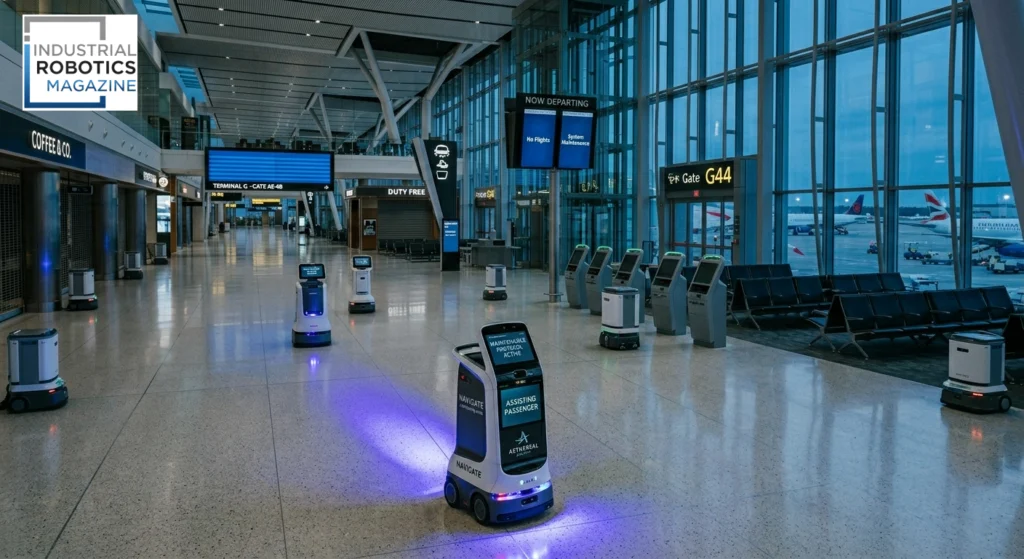
The future of airport robotics is closely tied to advancements in AI, machine learning, and the Internet of Things (IoT). These technologies will enable robots to become more intelligent, autonomous, and capable of handling complex tasks.
In the coming years, we can expect to see fully automated airport systems where robots coordinate with each other and with digital infrastructure to optimize operations. Smart airports will use real-time data to manage passenger flow, improve security, and enhance overall efficiency.
As technology continues to evolve, robotics will play an even greater role in shaping the future of air travel.
Final Thoughts
Robotics is transforming airport operations by improving efficiency, enhancing passenger experience, and strengthening security. From assisting travellers to managing logistics, robots are becoming an essential part of modern airports.
While challenges remain, ongoing advancements in technology are making robotics more reliable and accessible. As airports continue to innovate, robotic systems will be key to meeting the growing demands of global travel.
FAQ Section
1. What is airport robotics?
Airport robotics refers to the use of automated machines to perform tasks such as cleaning, security, baggage handling, and passenger assistance.
2. How do robots improve airport operations?
They improve efficiency, reduce delays, enhance safety, and provide better passenger support through automation and real-time data.
3. Are robots used in airport security?
Yes, robots are used for surveillance, monitoring, and detecting unusual activity to support security teams.
4. What types of robots are used in airports?
Common types include cleaning robots, security robots, baggage handling systems, and passenger assistance robots.
5. What is the future of robotics in airports?
Future airports will use AI and IoT to create fully automated systems that improve efficiency and passenger experience.