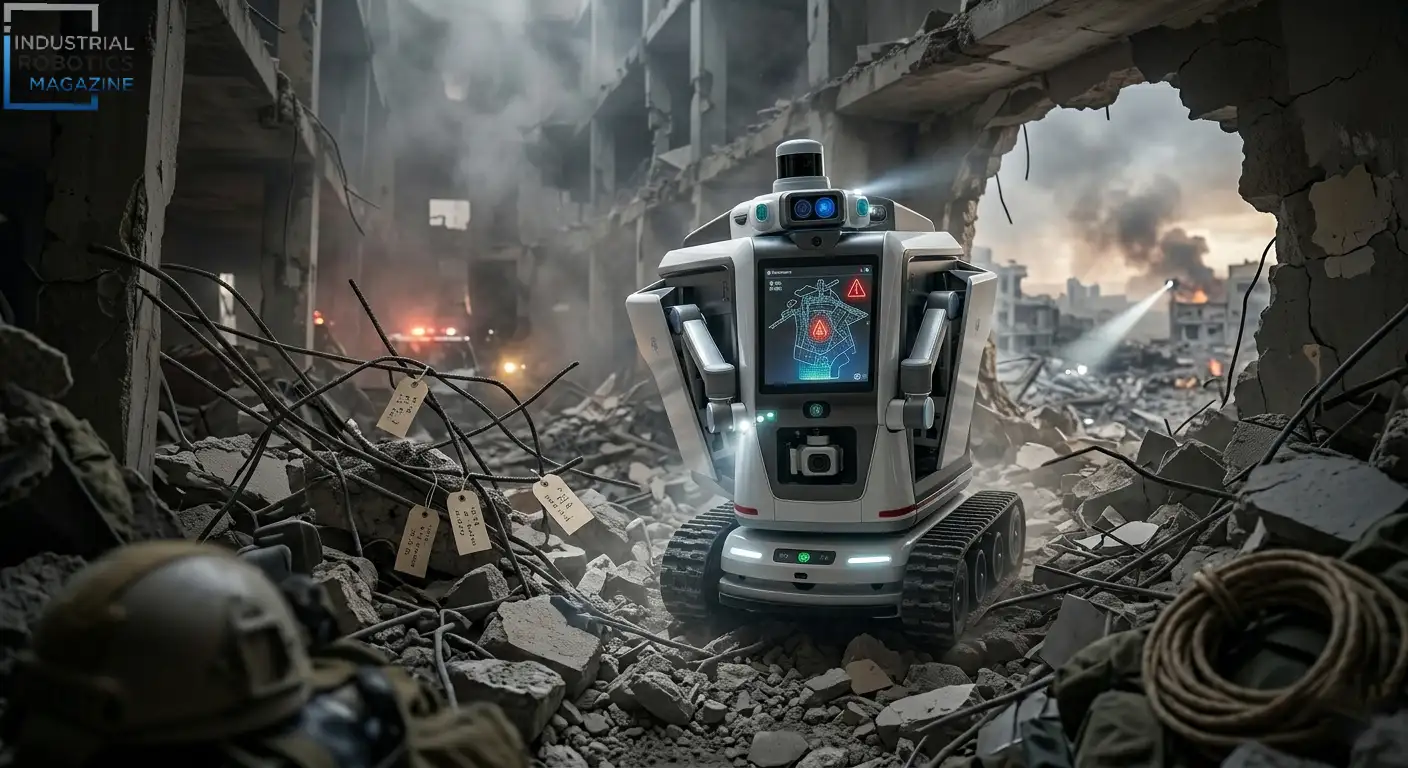
War zones are among the most dangerous environments for both civilians and emergency responders. Collapsed buildings, ongoing conflict, and unstable conditions make search and rescue operations extremely challenging. As a result, rescuers face high risks while trying to locate and save survivors.
Search and rescue robots in war zones provide a safer and more efficient solution. These robots use sensors and advanced robot navigation systems to operate in complex environments inlcuding sensors to locate victims, assess damage, and assist rescue teams. As a result, they help save lives while reducing risks for human responders.
What Are Search and Rescue Robots in War Zones
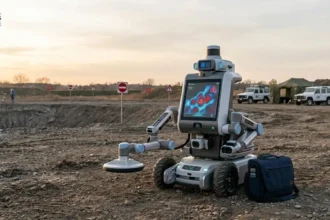
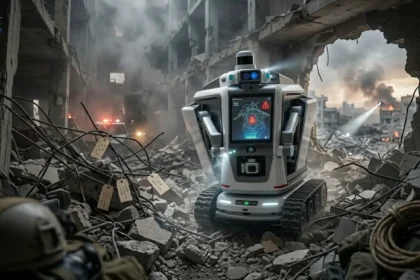
Search and rescue robots in war zones are autonomous or remotely controlled machines designed to operate in hazardous environments. They can navigate through debris, confined spaces, and unstable structures where humans cannot safely go.
These robots are used in:
- Disaster and war zones
- Collapsed buildings
- Hazardous environments
- Military rescue missions
In addition, they improve the speed and efficiency of rescue operations.
How Do Search and Rescue Robots Work
Search and rescue robots follow a structured process. First, they scan the environment using cameras and sensors. Next, artificial intelligence analyzes the data to identify signs of human presence. Then, thermal imaging and sound detection help locate survivors. Finally, the robot sends real-time information to rescue teams.
As a result, responders can act quickly and make better decisions.
Key Technologies Behind Rescue Robots
Artificial Intelligence
Artificial intelligence allows robots to process data and identify patterns. It helps detect survivors and assess dangerous conditions.
Machine Learning
Machine learning improves detection accuracy over time. For example, the system learns to recognize human shapes and movements.
Sensors and Imaging Systems
Advanced sensors, including thermal cameras and LiDAR, help robots detect heat signatures and navigate through debris.
Communication Systems
Rescue robots transmit real-time data to command centers. This ensures faster coordination during rescue missions.
Search and Rescue Robots vs Traditional Methods
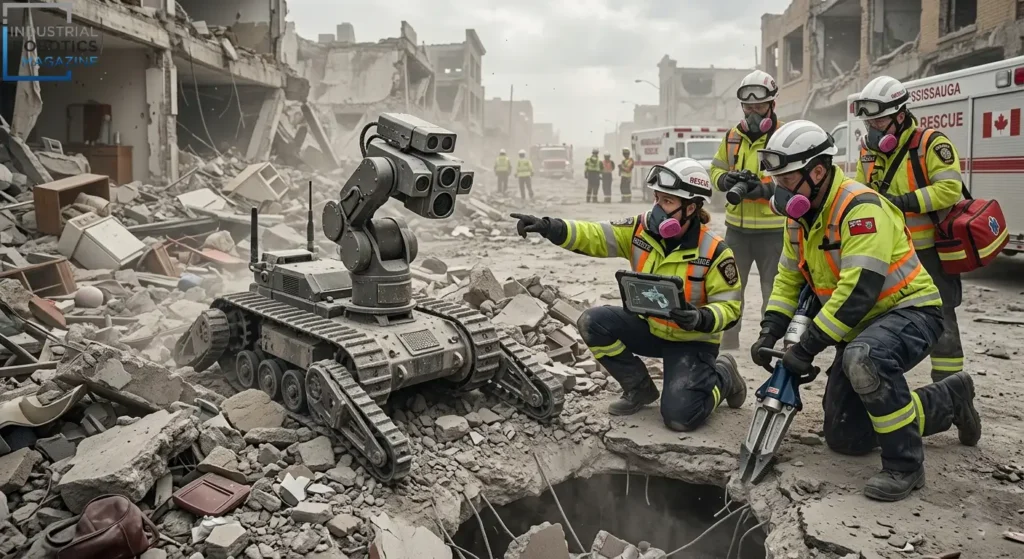
Traditional rescue operations rely heavily on human teams. However, these methods can be slow and dangerous. Rescuers often face risks such as collapsing structures and limited visibility.
Search and rescue robots reduce these risks. They can access hard-to-reach areas and provide accurate data quickly. Therefore, they improve both safety and efficiency.
Real World Challenges
Search and rescue robots face several challenges in war zones. Complex terrain and unstable structures can limit movement. In addition, communication signals may be disrupted.
Battery life and system durability are also important concerns. Despite these challenges, advancements in robotics continue to improve performance.
Real World Applications
Search and rescue robots are used in both military and humanitarian missions. They assist in locating survivors after explosions, building collapses, and natural disasters in conflict zones.
Organizations such as International Committee of the Red Cross support the use of advanced technologies to improve rescue operations in crisis areas.
Benefits of Search and Rescue Robots in War Zones
Search and rescue robots offer several advantages. They reduce risks for human responders and improve survival rates. These robots collect real-time data similar to AI robots for battlefield surveillance and reconnaissance.Finte
They also improve coordination during rescue missions. As a result, operations become more efficient and effective.
Future of Rescue Robotics in War Zones
The future of search and rescue robots is highly promising. These systems will become more autonomous and intelligent. For example, future robots may predict structural risks and locate survivors more accurately.
Integration with drones and AI systems will further improve rescue capabilities. In addition, global efforts will continue to focus on safer and faster rescue operations.
Conclusion
Search and rescue robots in war zones are transforming emergency response operations. They provide safer, faster, and more efficient ways to locate and assist survivors. As technology continues to evolve, these robots will play a critical role in saving lives and improving rescue strategies.
FAQ
What are search and rescue robots
They are robotic systems designed to locate and assist survivors in hazardous environments.
How do rescue robots find survivors
They use sensors, AI, thermal imaging, and sound detection.
Where are these robots used
They are used in war zones, disaster areas, and emergency situations.
Do these robots replace human rescuers
They assist rescuers but do not replace them.
Are rescue robots reliable
Yes, they improve speed, safety, and accuracy in rescue operations.