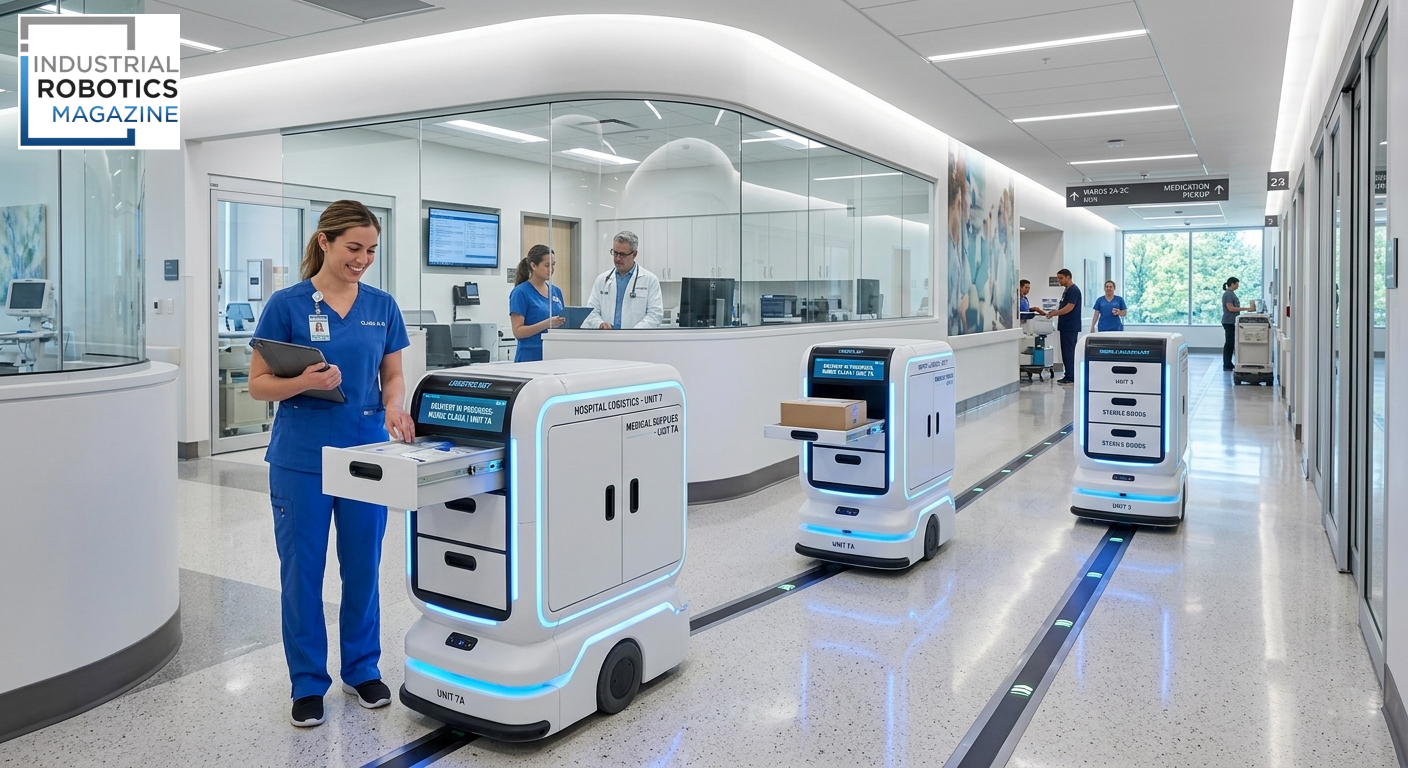
As hospitals continue to adopt robotics to improve efficiency and patient care, managing multiple robots within a healthcare environment has become increasingly complex. This is where fleet management systems play a critical role. Fleet management systems for hospital robots are designed to coordinate, monitor, and optimize the performance of robotic units across medical facilities. By integrating advanced software, data analytics, and real-time communication, these systems ensure that robotic operations run smoothly, safely, and efficiently.
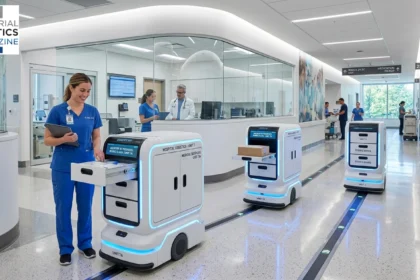
Modern hospitals often deploy a variety of robots, including delivery robots, disinfection units, surgical assistants, and rehabilitation devices. Without a centralized system, coordinating these robots can lead to inefficiencies, delays, and potential safety risks. Fleet management systems address these challenges by providing a unified platform that controls and monitors all robotic activities within the hospital environment.
What Is a Fleet Management System in Hospital Robotics?
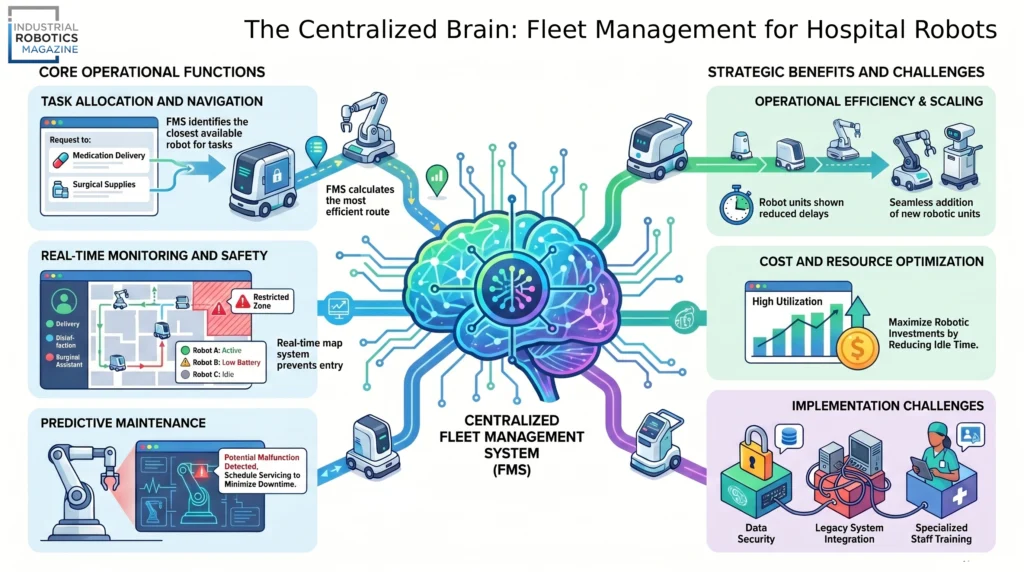
A fleet management system is a centralized software platform that oversees multiple robots operating within a hospital. It enables administrators to track robot locations, assign tasks, monitor performance, and ensure optimal utilization of robotic resources.
These systems typically rely on cloud-based infrastructure, artificial intelligence, and real-time data processing to manage robot fleets effectively. By collecting data from each robot, the system can make informed decisions about task allocation, navigation routes, and maintenance scheduling.
In essence, fleet management systems act as the “brain” behind hospital robotics, ensuring that all robotic units work together seamlessly rather than operating independently.
Core Functions of Fleet Management Systems
1. Task Allocation and Scheduling
One of the primary functions of a fleet management system is assigning tasks to robots based on availability, priority, and proximity. For example, if a robot is needed to deliver medication, the system identifies the nearest available unit and assigns the task instantly.
This dynamic scheduling improves efficiency by reducing wait times and ensuring that critical tasks are completed promptly. Additionally, the system can prioritize urgent tasks, such as emergency deliveries, over routine operations.
2. Real-Time Monitoring and Tracking
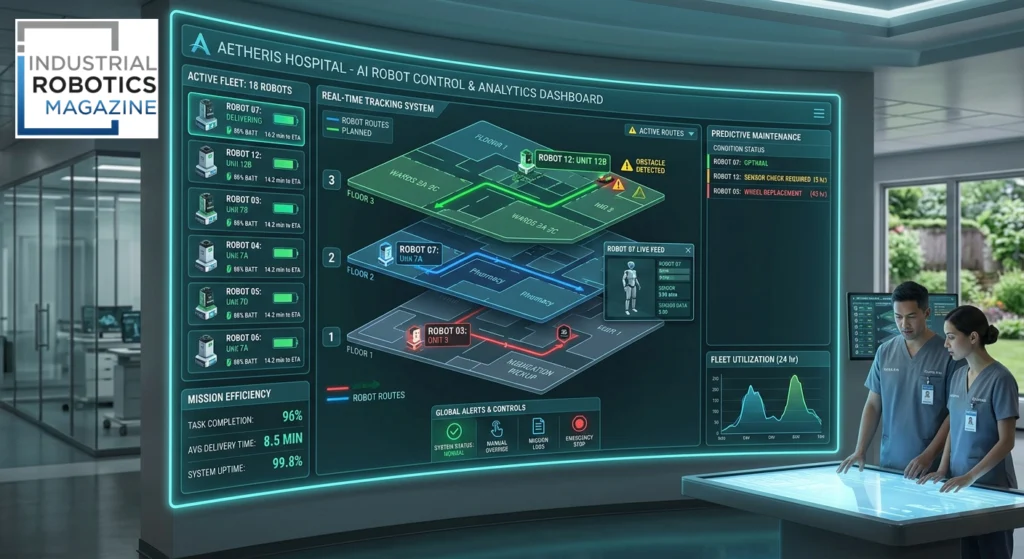
Fleet management systems provide real-time visibility into the status and location of each robot. Hospital staff can monitor robot activity through dashboards that display movement, task progress, and system performance.
This level of transparency allows administrators to quickly identify issues, such as delays or malfunctions, and take corrective action. Real-time tracking also enhances safety by ensuring that robots operate within designated areas and avoid restricted zones.
3. Navigation and Route Optimization
Hospitals are complex environments with dynamic layouts, including crowded hallways, patient rooms, and restricted areas. Fleet management systems use advanced algorithms and sensors to optimize robot navigation.
By analyzing traffic patterns and environmental data, the system can determine the most efficient routes for each robot. Over time, machine learning enables the system to improve route planning based on historical data, reducing travel time and avoiding congestion.
4. Performance Analytics and Reporting
Data collected from robot operations is used to generate performance insights. Fleet management systems analyze metrics such as task completion time, robot utilization rates, and system efficiency.
These insights help hospital administrators make data-driven decisions to improve operations. For instance, if certain robots are underutilized, tasks can be redistributed to maximize efficiency. Similarly, identifying bottlenecks allows for process optimization.
5. Maintenance and Diagnostics
Regular maintenance is essential to ensure the reliability of hospital robots. Fleet management systems can monitor robot health and detect potential issues before they become critical.
Predictive maintenance features use data analytics to schedule servicing based on usage patterns and system performance. This minimizes downtime and extends the lifespan of robotic equipment.
Benefits of Fleet Management Systems in Hospitals
Improved Operational Efficiency
By automating task allocation and optimizing routes, hospitals can significantly reduce delays and improve workflow efficiency.
Enhanced Safety and Compliance
Centralized control ensures that robots operate within safety guidelines and avoid restricted areas, reducing risks in sensitive healthcare environments.
Cost Optimization
Efficient use of robotic resources reduces operational costs by minimizing idle time and improving task completion rates.
Scalability
As hospitals expand their use of robotics, fleet management systems allow for seamless integration of additional units without disrupting existing operations.
Better Resource Utilization
Hospitals can maximize the value of their robotic investments by ensuring that all units are actively contributing to daily operations.
Challenges in Implementing Fleet Management Systems
Despite their advantages, fleet management systems come with certain challenges. Integration with existing hospital infrastructure can be complex, particularly when dealing with legacy systems. Ensuring compatibility between different types of robots from various manufacturers is another common issue.
Additionally, data security is a critical concern, as these systems handle sensitive operational and patient-related information. Hospitals must implement strong cybersecurity measures to protect against potential threats.
Training staff to effectively use fleet management platforms is also essential. Without proper training, the benefits of the system may not be fully realized.
The Future of Fleet Management in Hospital Robotics
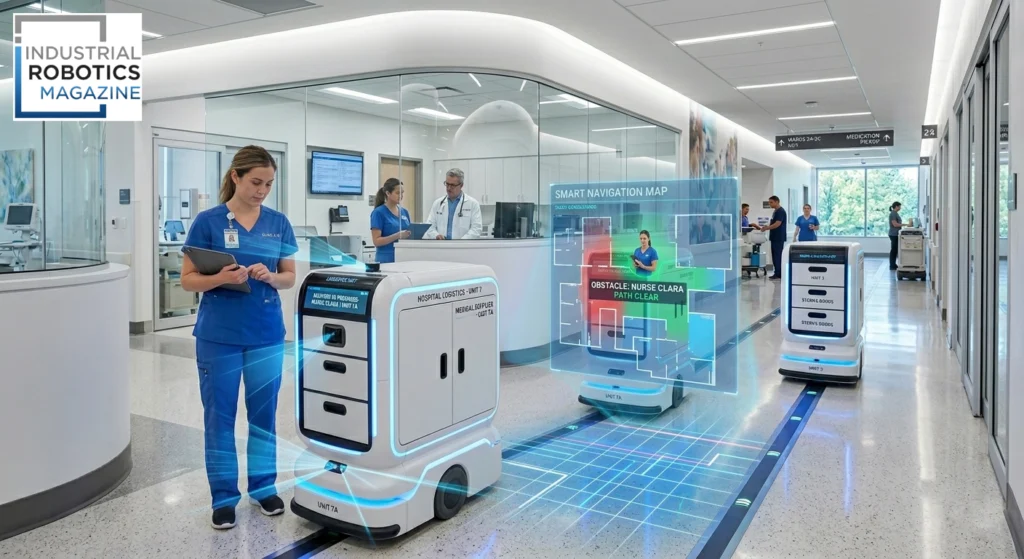
The future of fleet management systems in hospital robotics is closely tied to advancements in artificial intelligence and connectivity. As AI becomes more sophisticated, fleet management systems will be able to make more autonomous decisions, further improving efficiency and reliability.
Integration with technologies such as the Internet of Things (IoT) will enable seamless communication between robots, medical devices, and hospital infrastructure. This will create fully connected healthcare environments where robots can operate with minimal human intervention.
In the coming years, we can expect fleet management systems to become more intuitive, scalable, and capable of handling increasingly complex operations. These advancements will play a key role in shaping the future of healthcare automation.
Final Thoughts
Fleet management systems are a critical component of modern hospital robotics. By providing centralized control, real-time monitoring, and data-driven optimization, these systems ensure that robotic operations are efficient, safe, and scalable.
As hospitals continue to adopt robotics, the importance of effective fleet management will only grow. With the right systems in place, healthcare facilities can fully leverage the potential of robotics to improve patient care, streamline operations, and meet the demands of an evolving healthcare landscape.
FAQ Section
1. What is a fleet management system for hospital robots?
A fleet management system is a centralized platform that monitors, controls, and coordinates multiple robots within a hospital. It helps assign tasks, track robot activity, and optimize operations in real time.
2. Why are fleet management systems important in hospitals?
They improve efficiency, reduce delays, and ensure safe robot operation. By coordinating multiple robots, hospitals can streamline workflows and enhance overall patient care.
3. How do fleet management systems assign tasks to robots?
These systems use algorithms and real-time data to assign tasks based on factors such as robot availability, location, and task priority, ensuring the most efficient execution.
4. Can fleet management systems improve hospital efficiency?
Yes, they significantly improve efficiency by optimizing routes, reducing idle time, and ensuring that robots complete tasks quickly and accurately.
5. Are fleet management systems safe to use in healthcare environments?
Yes, they are designed with safety protocols that ensure robots operate within restricted zones and follow hospital guidelines, minimizing risks to patients and staff.
6. What types of robots are managed by these systems?
Fleet management systems can manage delivery robots, disinfection robots, surgical assistants, and rehabilitation robots within a single platform.
7. What challenges come with implementing fleet management systems?
Common challenges include system integration, compatibility with different robot types, staff training, and ensuring strong data security measures.
8. What is the future of fleet management systems in hospitals?
Future systems will use advanced AI and IoT integration to enable more autonomous decision-making, better coordination, and smarter healthcare environments.




One Comment