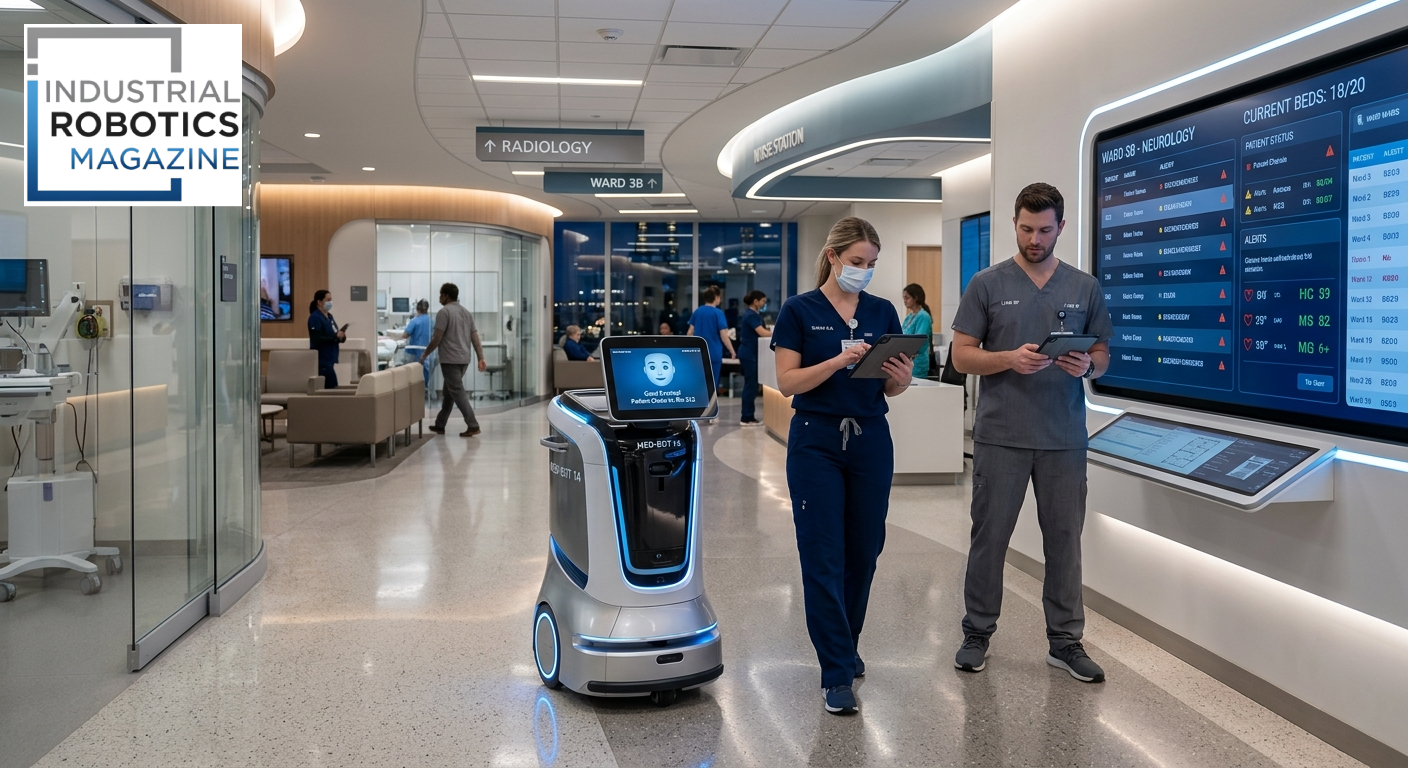
The healthcare industry is rapidly evolving with the adoption of advanced technologies, and robotics is playing a central role in transforming hospital operations. However, the true potential of hospital robots is only realized when they are fully integrated with hospital information systems (HIS). This integration allows robots to communicate with digital infrastructure, access real-time data, and perform tasks more intelligently and efficiently. As hospitals continue to digitize workflows, connecting robotic systems with existing IT platforms is becoming essential for improving patient care and operational efficiency.
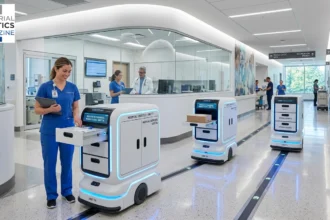
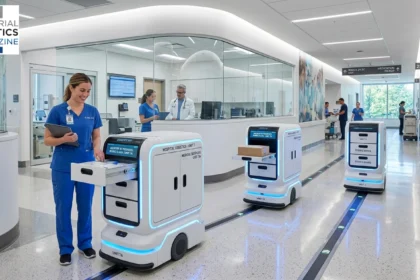
Hospital information systems manage a wide range of data, including patient records, scheduling, inventory, and clinical workflows. When robots are integrated with these systems, they can access and respond to this data in real time. For example, a delivery robot can retrieve medication orders directly from a pharmacy system, ensuring accurate and timely delivery without manual intervention. This level of coordination reduces errors, improves workflow efficiency, and enhances overall healthcare service delivery.
What Does Integration Mean in Hospital Robotics?
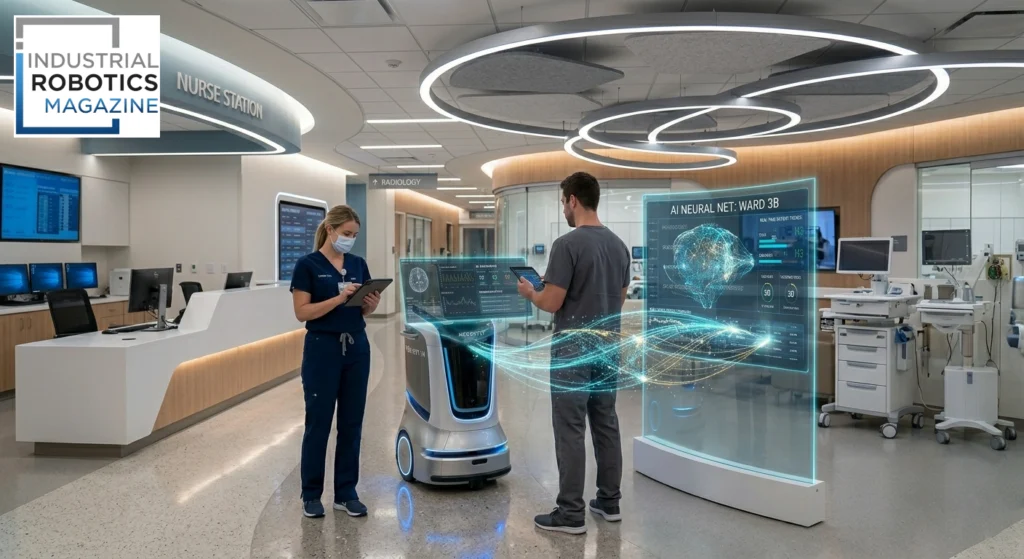
Integration refers to the seamless connection between robotic systems and hospital software platforms such as electronic health records (EHR), enterprise resource planning (ERP) systems, and logistics management tools. This connection enables robots to exchange data with these systems, allowing them to make informed decisions and perform tasks autonomously.
Instead of operating as isolated machines, integrated robots become part of a larger digital ecosystem. They can receive task instructions, update system records, and communicate status information back to hospital staff. This creates a more synchronized and efficient environment where human workers and robots collaborate effectively.
Key Components of Integration
1. Electronic Health Records (EHR) Connectivity
One of the most important aspects of integration is connecting robots to electronic health records. EHR systems store patient data, treatment plans, and medication schedules. By accessing this information, robots can perform tasks such as delivering medication or transporting lab samples with greater accuracy.
For example, a robot can automatically retrieve a patient’s medication schedule from the EHR system and ensure that the correct drugs are delivered to the right location at the right time. This reduces the risk of human error and enhances patient safety.
2. Real-Time Data Exchange
Integrated systems rely on real-time data communication between robots and hospital platforms. This ensures that robots always have access to the most up-to-date information.
Real-time data exchange allows robots to adapt to changing conditions. For instance, if a patient room is reassigned or a delivery is urgently required, the system can immediately update the robot’s task. This flexibility is essential in dynamic hospital environments.
3. Workflow Automation
Integration enables automation of routine hospital workflows. Tasks such as transporting supplies, delivering medications, and managing inventory can be handled by robots without manual intervention.
By automating these processes, hospitals can reduce workload on staff and allow healthcare professionals to focus on more critical tasks, such as patient care. Additionally, automation improves consistency and reduces delays.
4. System Interoperability
Hospitals often use multiple software systems from different vendors. Ensuring interoperability between these systems and robotic platforms is a major challenge.
Standardized communication protocols and APIs (Application Programming Interfaces) are used to enable seamless integration. These technologies allow robots to communicate with various systems, regardless of the manufacturer or software platform.
5. Security and Data Privacy
Since hospital information systems handle sensitive patient data, security is a critical component of integration. Robots must comply with healthcare regulations and data protection standards.
Encryption, authentication protocols, and secure data transmission methods are used to protect information. Ensuring strong cybersecurity measures is essential to prevent unauthorized access and maintain patient confidentiality.
Benefits of Robot Integration in Hospitals
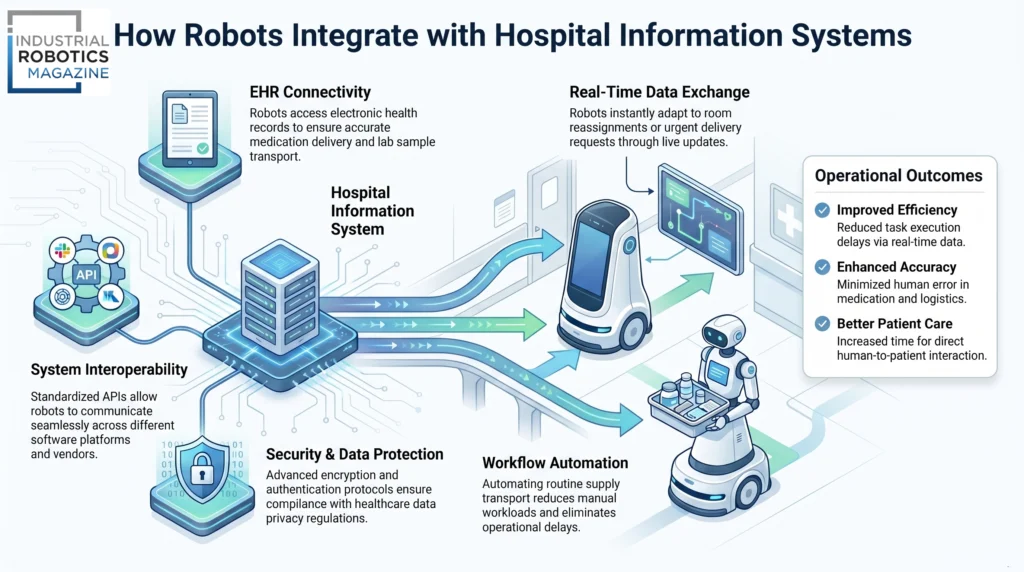
Improved Efficiency
Integration allows robots to operate based on real-time data, reducing delays and improving task execution speed.
Enhanced Accuracy
Access to centralized data ensures that robots perform tasks correctly, minimizing errors in medication delivery and logistics.
Better Patient Care
By automating routine tasks, healthcare professionals can dedicate more time to direct patient interaction and treatment.
Streamlined Operations
Integrated systems create a unified workflow, reducing duplication of tasks and improving coordination across departments.
Data-Driven Decision Making
Hospitals can use data collected from robotic operations to analyze performance and optimize processes.
Challenges in Integration
Despite its advantages, integrating robots with hospital information systems presents several challenges. One of the main issues is compatibility between different systems. Hospitals often rely on legacy software that may not easily integrate with modern robotic platforms.
Another challenge is the complexity of implementation. Setting up integration requires technical expertise, careful planning, and collaboration between IT teams and robotics providers. Additionally, ensuring data security and compliance with healthcare regulations can be difficult.
Cost is also a factor, as integration may require investment in new infrastructure, software, and training. However, the long-term benefits often outweigh these initial costs.
Future Trends in Integration
The future of hospital robotics integration lies in advanced technologies such as artificial intelligence, cloud computing, and the Internet of Things (IoT). These technologies will enable more seamless and intelligent connections between robots and hospital systems.
AI will allow robots to make more autonomous decisions based on data analysis, while IoT will enable real-time communication between devices across the hospital. Cloud-based platforms will provide scalable solutions for managing large volumes of data and coordinating multiple robotic systems.
As these technologies continue to evolve, integration will become more efficient, secure, and accessible, paving the way for fully connected smart hospitals.
Final Thoughts
The integration of robots is a crucial step toward modernizing healthcare operations. By connecting robotic systems with digital infrastructure, hospitals can improve efficiency, accuracy, and patient care.
Although challenges exist, advancements in technology are making integration more feasible and effective. As healthcare continues to embrace automation and digital transformation, integrated robotic systems will play a key role in shaping the future of medical services.
FAQ Section
1. What does the integration of robots with hospital information systems mean?
It refers to connecting hospital robots with digital platforms such as electronic health records (EHR), scheduling systems, and inventory management tools so they can access and exchange data in real time.
2. Why is integration important in hospital robotics?
Integration allows robots to perform tasks more efficiently and accurately by using real-time hospital data, reducing errors and improving workflow coordination across departments.
3. How do robots use hospital data systems?
Robots can access information such as medication orders, patient locations, and delivery requests through integrated systems, enabling them to complete tasks like transporting supplies or delivering medications automatically.
4. What are the main benefits of integrating robots with hospital systems?
Key benefits include improved efficiency, reduced human error, better resource management, faster task execution, and enhanced patient care.
5. Are there security risks with integrating robots and hospital systems?
Yes, because sensitive patient data is involved. However, hospitals use encryption, authentication, and secure networks to protect data and ensure compliance with healthcare regulations.