Introduction
Service robots for hospital reception are becoming more useful as hospitals deal with crowded front desks, confused visitors, long wait times, and overloaded staff. Hospitals are complex spaces, and patients often need help finding departments, checking information, or navigating appointments before they even receive care.
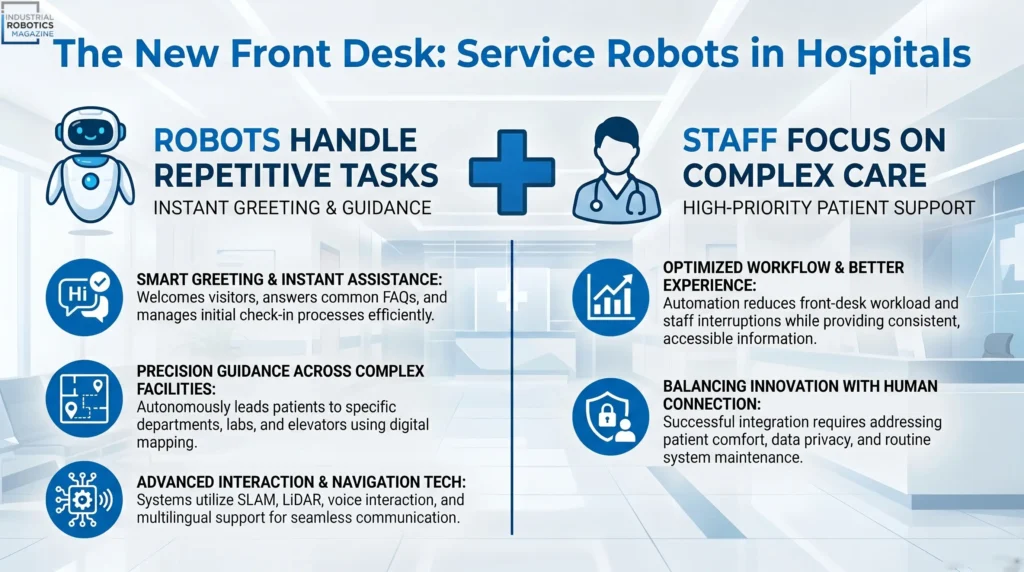
Service robots for hospital reception help hospitals by greeting visitors, answering common questions, guiding patients to departments, supporting check-in workflows, and reducing pressure on front desk staff. These robots improve patient experience, reduce repeated staff interruptions, and make hospital navigation easier for patients, families, and visitors.
The real value is not that these robots look futuristic. The value is that they remove repetitive guidance tasks from busy staff while giving patients faster, clearer support.
What Are Service Robots for Hospital Reception?
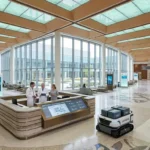
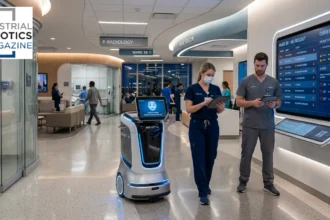
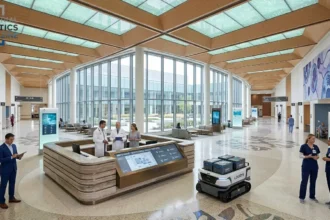
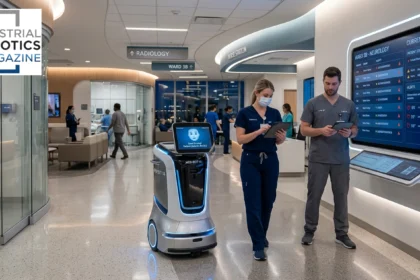
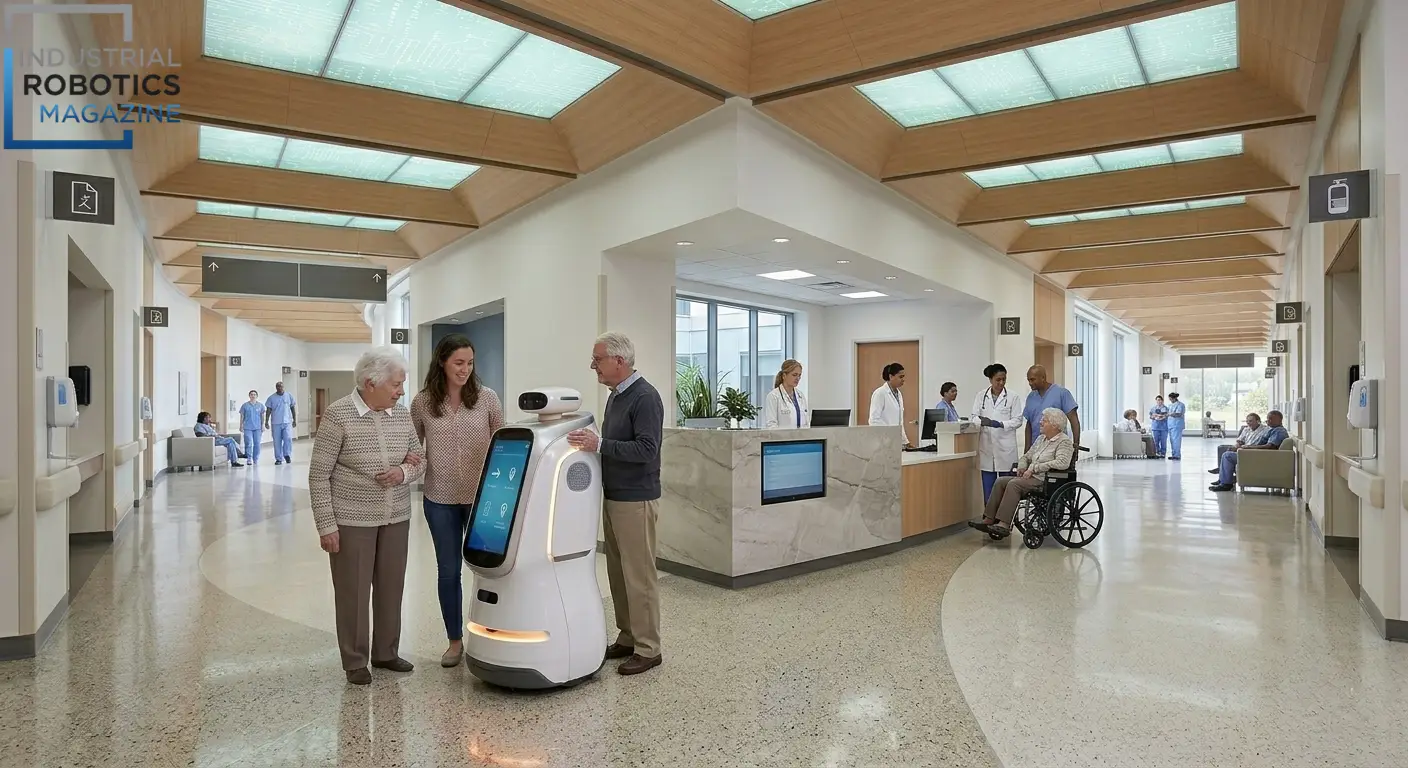
Service robots for hospital reception are interactive robots designed to support patients, visitors, and hospital staff in front-facing areas. They are often placed in lobbies, reception zones, outpatient departments, waiting areas, and major hallway intersections.
These robots may help with:
- Greeting patients and visitors
- Giving directions
- Answering basic questions
- Explaining department locations
- Supporting check-in instructions
- Providing multilingual assistance
- Reducing front desk congestion
- Guiding people to elevators, clinics, labs, or imaging areas
They are not meant to replace reception staff. That idea is lazy and wrong. Their purpose is to handle repeated, low-complexity questions so human staff can focus on patients who need real help.
Why Are Hospitals Using Reception and Guidance Robots?
Hospitals are stressful environments. A visitor may be anxious, late, confused, elderly, unfamiliar with technology, or unable to understand hospital signs. That creates pressure at the reception desk.
1. Front Desk Staff Are Overloaded
Hospital reception teams answer the same questions all day:
- Where is cardiology?
- Where is the lab?
- How do I get to radiology?
- Where is the elevator?
- How do I check in?
- Where is patient registration?
These questions matter, but they are repetitive. A guidance robot can handle many of them without pulling staff away from more urgent work.
2. Hospitals Are Difficult to Navigate
Large hospitals often have:
- Multiple floors
- Similar-looking corridors
- Separate wings
- Different clinics
- Busy elevator areas
- Confusing signage
A robot that guides patients step by step can reduce missed appointments, late arrivals, and visitor frustration.
3. Patient Experience Starts Before Treatment
Bad hospital navigation creates a bad first impression. If a patient is already stressed before seeing a clinician, the care experience begins poorly.
Reception robots help create a smoother arrival process by making information easier to access.
How Do Hospital Guidance Robots Work?
Hospital guidance robots use a combination of sensors, maps, software, and interactive interfaces. These systems are part of wider robotics and automation research focused on safe and useful robot deployment.
Some robots stay near reception and answer questions. Others physically guide visitors through the hospital.
Common Features
- Touchscreen interface
- Voice interaction
- Digital hospital maps
- Multilingual support
- Department directory
- Appointment guidance
- Wayfinding instructions
- Obstacle detection
- Autonomous movement
More advanced robots may use SLAM, LiDAR, cameras, and real-time mapping to move safely around hospital spaces.
Internal link placement:
In this section, link to your SLAM/LiDAR blog using this anchor text:
SLAM and LiDAR navigation in hospital robots
What Tasks Can Service Robots Handle at Hospital Reception?
Reception robots work best when the task is predictable and repeated often.
| Task | How the Robot Helps | Benefit |
|---|---|---|
| Greeting visitors | Welcomes patients and families | Improves first impression |
| Wayfinding | Gives directions or guides people | Reduces confusion |
| Basic questions | Answers common hospital FAQs | Reduces staff interruptions |
| Check-in support | Explains where or how to check in | Speeds up reception flow |
| Multilingual help | Provides information in multiple languages | Improves accessibility |
| Department lookup | Finds clinics, labs, imaging, pharmacy | Reduces missed appointments |
This is where many hospitals waste staff time. If a question is asked 200 times a week, it should not require a human answer every single time.
Service Robots for Hospital Reception vs Human Staff
Robots are good at consistency. Humans are good at judgment, empathy, and complex problem-solving. A strong hospital does not confuse those roles.
| Function | Human Reception Staff | Service Robot |
|---|---|---|
| Emotional support | Strong | Limited |
| Complex problem-solving | Strong | Limited |
| Repeated directions | Time-consuming | Strong |
| Basic FAQs | Repetitive | Strong |
| Multilingual support | Depends on staff | Strong if programmed |
| 24/7 availability | Limited | Strong |
| Personal judgment | Strong | Weak |
The best setup is not “robots instead of staff.” It is robots filtering simple tasks so staff can focus on complex patient needs.
Real-World Example: Hospital Reception Robot Impact
Imagine a large hospital lobby during a busy weekday morning.
Before reception robots:
- Visitors line up to ask for directions
- Staff repeat the same answers constantly
- Patients arrive late to appointments
- Elderly visitors struggle to find departments
- Front desk staff are interrupted every few minutes
After adding service robots for guidance:
- Visitors get directions from the robot
- Patients are guided to clinics, labs, and imaging areas
- Staff spend less time answering basic questions
- Reception lines move faster
- Visitors feel more supported on arrival
The robot does not solve every hospital problem. But it does remove a very real bottleneck: repeated guidance and front desk pressure.
Benefits of Service Robots for Hospital Reception
Better Patient and Visitor Experience
Patients get faster answers and clearer directions without waiting in line.
Reduced Staff Interruptions
Reception staff spend less time answering repetitive questions and more time helping people with complex needs.
Improved Hospital Flow
Better wayfinding reduces late arrivals, hallway confusion, and unnecessary backtracking.
Stronger Accessibility
Robots can support multiple languages, visual instructions, and clear step-by-step guidance.
More Consistent Information
Unlike rushed staff, robots can deliver the same accurate instructions every time.
Challenges Hospitals Should Consider
Service robots are useful, but they are not magic. Poor implementation will make them look like expensive toys.
1. Patient Comfort
Some visitors may not want to interact with a robot. Hospitals still need human support nearby.
2. Accuracy of Information
If department locations, clinic names, or maps are outdated, the robot becomes useless fast.
3. Integration With Hospital Systems
Reception robots may need updated directories, maps, scheduling information, and multilingual content.
4. Accessibility Design
The interface must be easy for elderly patients, people with disabilities, and non-technical users.
5. Maintenance and Support
Robots need charging, updates, repairs, cleaning, and monitoring.
Blunt truth: if a robot creates more confusion than it solves, the deployment is trash.
Are Service Robots for Hospital Reception Worth It?
Yes, if the hospital has high visitor traffic and repeated front desk pressure.
They are worth considering when:
- The hospital has a busy lobby
- Visitors frequently ask for directions
- Reception staff are overloaded
- The building is difficult to navigate
- Multilingual support is needed
- Patient experience is a priority
They are not worth it when:
- The facility is small and easy to navigate
- Staff are not trained to support the system
- Hospital maps are outdated
- The robot is used only for publicity
- Patients are not comfortable using it
A hospital reception robot should solve a workflow problem. If it is only there to look modern, it is not a strategy. It is decoration.
How to Choose the Right Hospital Reception Robot
Hospitals should evaluate reception robots based on practical needs, not hype.
Look for:
- Easy-to-use touchscreen
- Clear voice interaction
- Multilingual support
- Accurate hospital mapping
- Safe navigation
- Strong battery life
- Simple content updates
- Reliable support and maintenance
- Privacy-conscious design
- Ability to work in crowded spaces
The robot should be tested in the real lobby before full deployment. A demo in an empty room means almost nothing.
Future of Service Robots in Hospital Reception
Hospital reception robots will likely become more useful as AI, natural language processing, and hospital mapping systems improve. These improvements are part of the broader shift toward smart hospital automation technologies.
Future systems may support:
- Smarter appointment guidance
- Real-time department updates
- Voice-based check-in help
- Personalized wayfinding
- Integration with hospital apps
- Accessibility-focused patient support
- More natural conversations
The strongest future use case is not replacing reception teams. It is building a smoother first point of contact for patients and visitors.
Final Verdict
Service robots for hospital reception can improve patient guidance, reduce front desk pressure, and make hospital navigation less stressful. They are most valuable in busy hospitals where staff spend too much time answering repeated questions and directing visitors.
The smart approach is simple: use robots for predictable tasks and keep humans focused on empathy, judgment, and complex patient support.
Hospitals should not ask, “Can a robot replace reception staff?”
They should ask, “How much staff time is wasted on repetitive directions and basic questions?”
That is where reception robots make sense.
FAQ
What are service robots for hospital reception?
Service robots for hospital reception are interactive robots that greet visitors, answer common questions, provide directions, and support patient guidance in hospital lobbies and reception areas.
How do hospital guidance robots help patients?
They help patients and visitors find departments, clinics, elevators, labs, imaging areas, and check-in points more easily.
Do reception robots replace hospital staff?
No. They handle repetitive tasks so reception staff can focus on more complex patient needs.
Are hospital reception robots safe around patients?
Yes, when properly designed and deployed. Advanced robots use sensors, mapping, and obstacle detection to move safely in public hospital areas.
Are service robots worth it for hospitals?
They are worth it for busy hospitals with high visitor traffic, confusing layouts, and overloaded reception teams.