Introduction
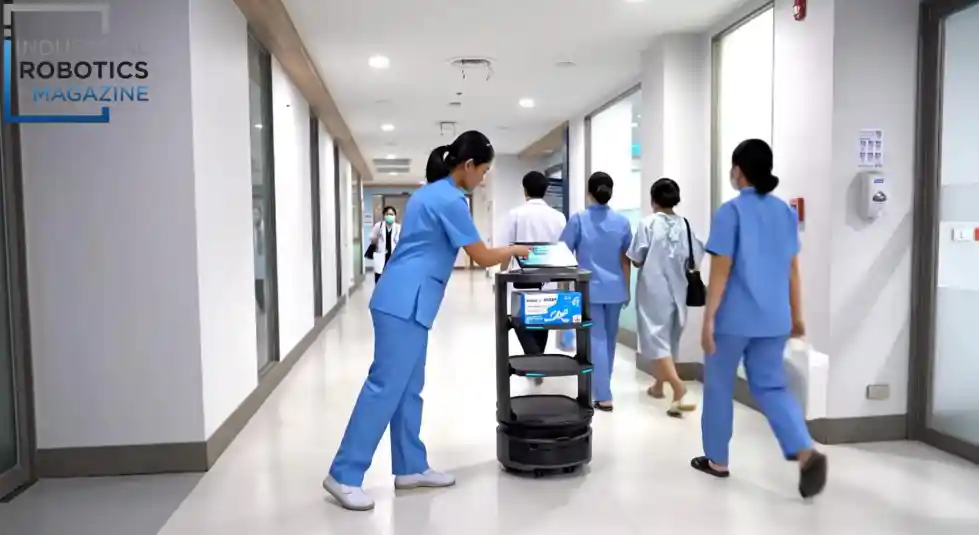
Smart hospital automation technologies are rapidly transforming modern healthcare by automating critical operations like cleaning, logistics, and patient monitoring. As hospitals face rising costs, staff shortages, and increasing infection risks, these technologies are no longer optional, they are essential for efficiency and safety.
Smart hospital automation technologies combine robotics, AI, IoT systems, and advanced navigation tools like SLAM and LiDAR to streamline hospital workflows. By reducing manual workload and improving operational accuracy, they allow healthcare professionals to focus more on patient care while maintaining high standards of safety and performance.
What Are Smart Hospital Automation Technologies?
Smart hospital automation refers to connected systems that automate repetitive, high-risk, and operational tasks across healthcare facilities.
Core components include:
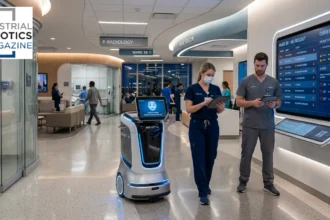
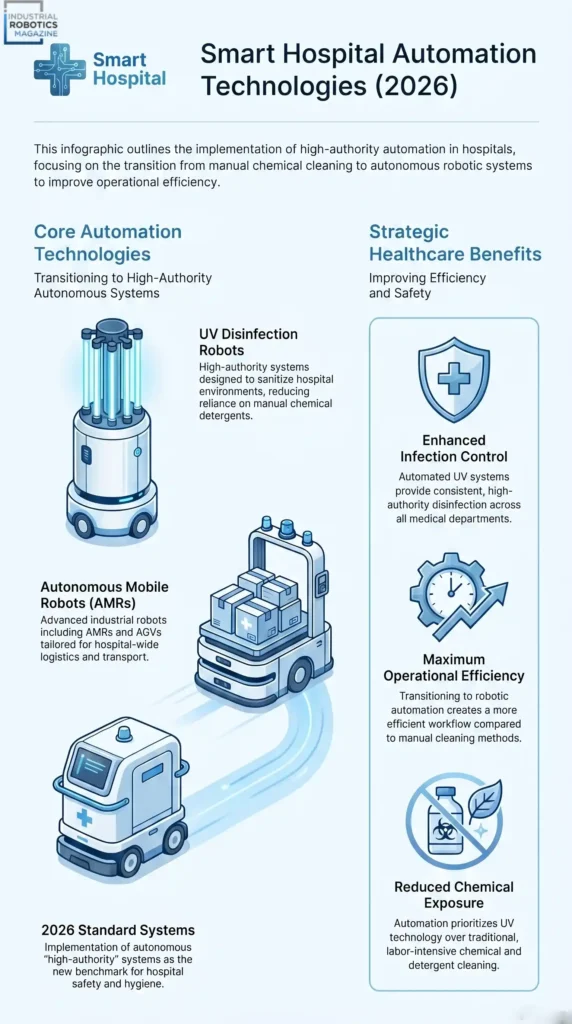
- Autonomous Mobile Robots (AMRs) for internal transport
- Robotic cleaning systems for sanitation
- IoT-based monitoring systems for real-time data
- AI decision-support tools
- Advanced navigation systems (SLAM and LiDAR)
These are not standalone tools, they function as integrated hospital ecosystems.
Why Are Smart Hospital Automation Technologies Being Adopted?
1. Severe Staff Shortages
Healthcare systems are understaffed globally. Automation handles non-clinical workloads, freeing staff for patient care.
2. Infection Control Pressure
Hospital-acquired infections (HAIs) remain a major risk. Automated disinfection ensures consistent and contact-free sanitation.
3. Operational Inefficiency
Manual logistics slow everything down:
- Medication transport
- Lab sample movement
- Waste handling
Automation removes these bottlenecks.
4. Long-Term Cost Efficiency
While upfront costs are high, hospitals see ROI through:
- Reduced labor dependency
- Fewer operational errors
- Lower infection-related costs
How Do Automated Technologies Navigate Hospitals?
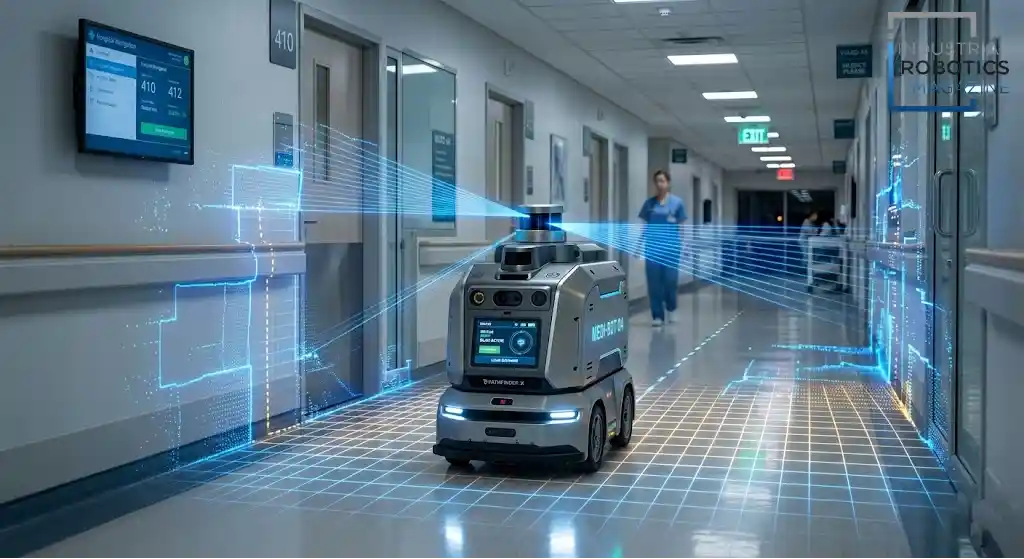
Hospitals are unpredictable environments with constant movement, obstacles, and changing layouts. Navigation is the backbone of automation, supported by ongoing IEEE robotics research in healthcare.
Key Technologies
SLAM (Simultaneous Localization and Mapping)
Enables robots to build and update maps in real time while tracking their position.
LiDAR (Light Detection and Ranging)
Uses laser-based sensing to detect distances and obstacles with high precision.
SLAM vs LiDAR: Quick Comparison
| Feature | SLAM | LiDAR |
|---|---|---|
| Role | Mapping + positioning | Distance sensing |
| Strength | Adaptability | Precision |
| Best Use Case | Dynamic navigation | Obstacle detection |
| Dependency | Software-driven | Sensor hardware |
Reality: Advanced hospital robots combine both for reliability.
Core Smart Hospital Innovated Advancements in Healthcare
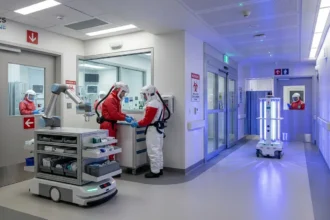
1. Cleaning and Disinfection Robots
- Autonomous floor-cleaning robots
- UV-C disinfection systems
Impact:
- Consistent sanitation
- Reduced infection spread
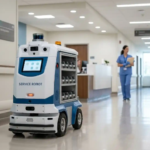
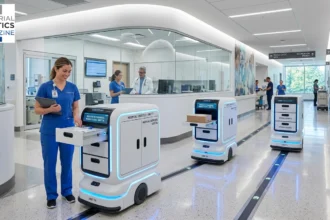
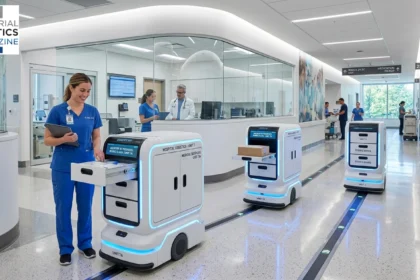
2. Autonomous Delivery Robots
Used for:
- Medications
- Lab samples
- Food and supplies
Result:
Saves several hours of staff time per shift.
3. Smart Monitoring Systems
- IoT-enabled patient tracking
- Real-time alerts
- Centralized dashboards
Outcome:
Faster response times and better care coordination.
4. Robotic Surgical Assistance
- Precision-controlled robotic systems
- Minimally invasive procedures
Benefit:
Reduced recovery time and improved surgical accuracy.
Real-World Example: Automation Impact
A mid-sized hospital deployed AMRs for logistics.
Before:
- Nurses spent ~20% of time on transport
After:
- Reduced to under 5%
- Faster internal deliveries
- Increased patient-facing time
Key Insight:
Automation doesn’t replace staff, it removes inefficiencies.
Challenges You Can’t Ignore
High Initial Costs
Infrastructure and robotics investment is significant.
Integration Issues
Legacy hospital systems often require upgrades.
Staff Adaptation
Training and mindset shifts are necessary.
Maintenance Demands
Requires ongoing technical support.
Future Trends in Hospital Automation
- AI-driven predictive operations
- Fully autonomous logistics networks
- Cloud-connected robot fleets
- Digital twins for hospital optimization
Hospitals are moving toward self-optimizing systems.
Conclusion
Smart hospital automation technologies are shifting from optional innovation to operational necessity.
Hospitals adopting early gain:
- Efficiency
- Cost control
- Better patient outcomes
Late adopters will struggle to compete.
FAQ
Are hospital robots safe around patients?
Yes. They use sensors like LiDAR and real-time mapping to avoid collisions.
Do automation systems replace hospital jobs?
No. They reduce repetitive workload and support staff efficiency.
What’s the most important technology in hospital robots?
Navigation systems like SLAM and LiDAR are critical for real-world deployment.
Is hospital automation worth the cost?
Yes, long-term savings and efficiency gains outweigh initial investment.