Introduction
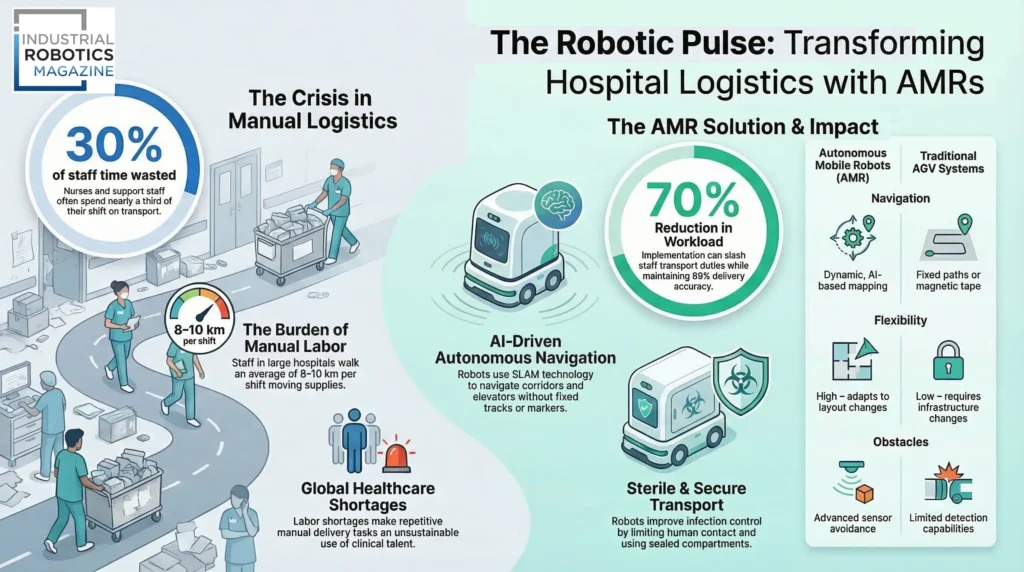
Hospitals move thousands of items every day—medications, linens, lab samples, meals, sterile supplies. According to healthcare logistics studies, up to 30% of hospital staff time is spent on transport tasks rather than patient care. This inefficiency is one reason hospitals are turning to automation.
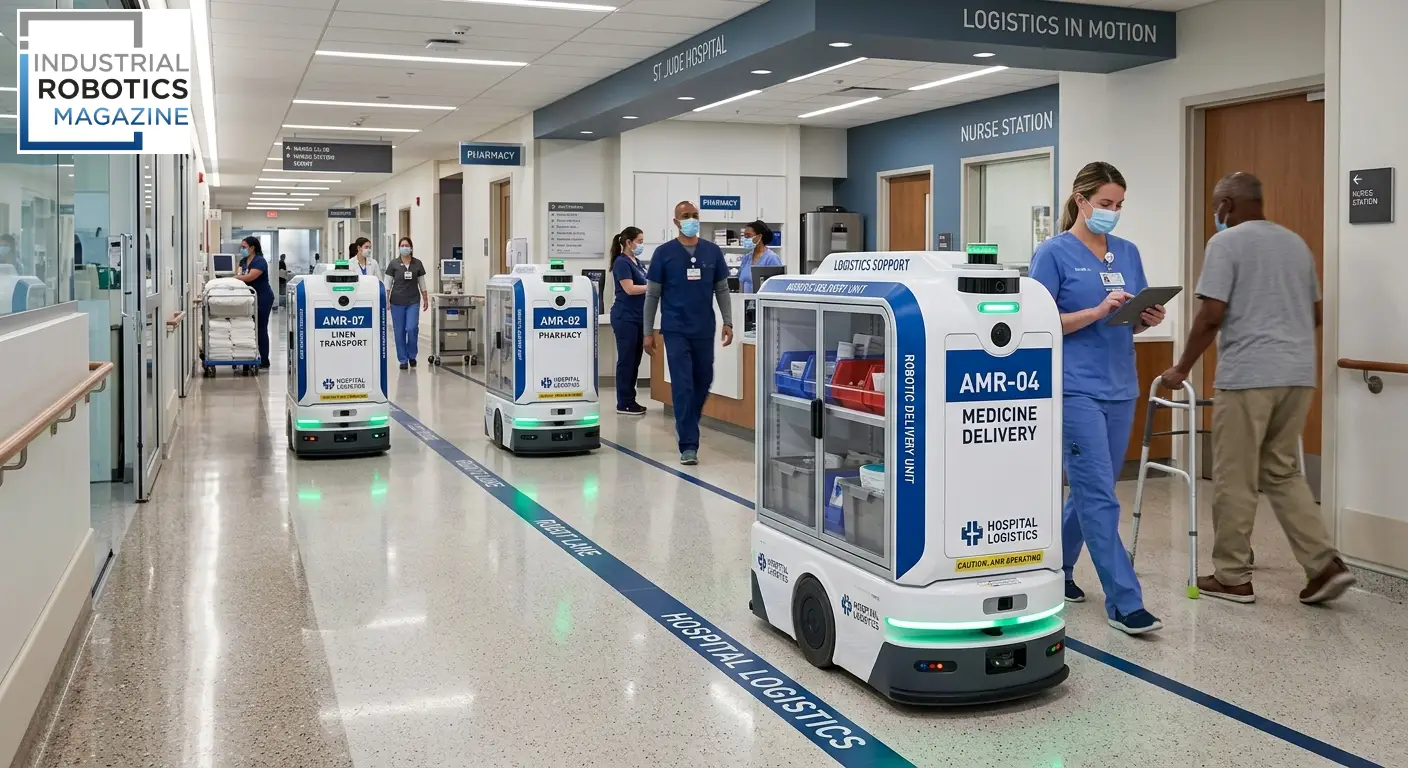
Autonomous mobile robots are self-navigating robots used in hospital logistics to transport supplies, medications, waste, and equipment across healthcare facilities. They improve hospital intralogistics automation by reducing manual transport tasks, lowering operational costs, improving delivery accuracy, and allowing healthcare staff to focus more on patient care instead of routine logistics.
What Are Autonomous Mobile Robots in Hospitals?
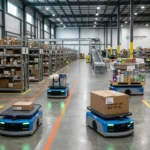
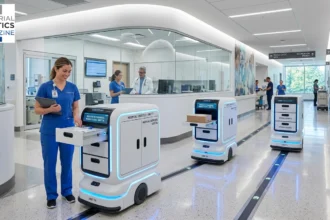
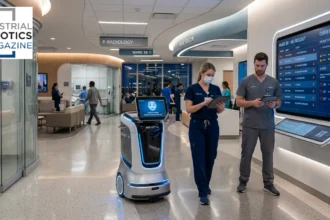
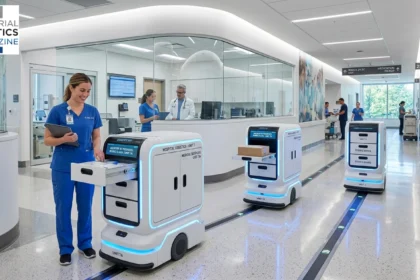
Autonomous mobile robots (AMRs) are intelligent robots that navigate hospital environments without fixed tracks or markers. Unlike traditional automated systems, they use AI-based navigation, sensors, and mapping technology to move safely through complex spaces like corridors, elevators, and patient areas.
In healthcare environments, these robots are primarily used for hospital intralogistics automation—the internal movement of goods within a facility.
Typical items transported include:
- Medications from pharmacy to wards
- Lab samples to testing departments
- Sterile instruments to operating rooms
- Meals to patient rooms
- Linen and waste materials
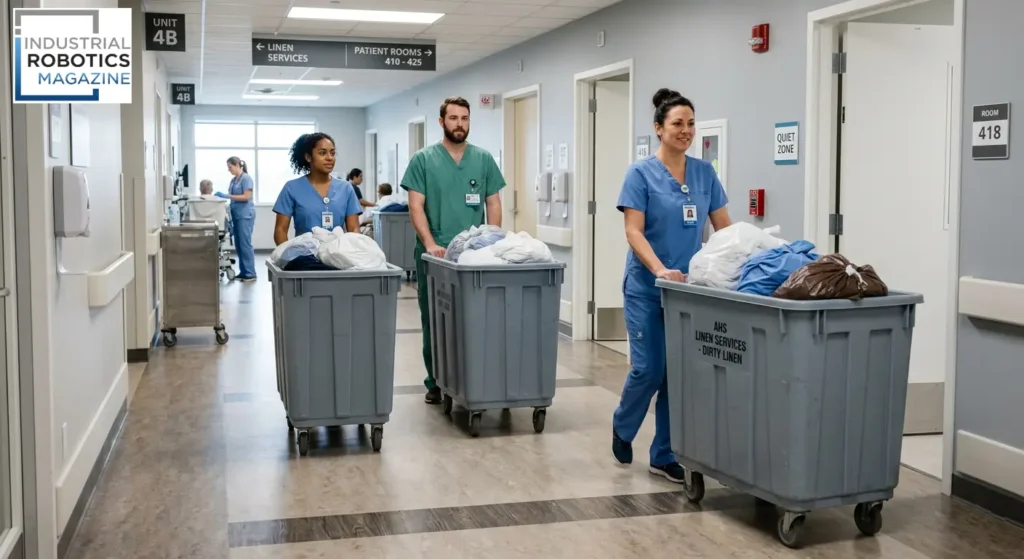
Instead of staff manually pushing carts between departments, robots handle repetitive logistics tasks autonomously.
Why Hospitals Are Turning to Robots for Intralogistics Automation
Hospital logistics is complex. Large hospitals may operate across multiple floors, buildings, and departments with constant demand for supply movement.
Autonomous mobile robots solve several key operational challenges.
1. Staff Shortages
Healthcare worker shortages are a global issue. Nurses and support staff often spend time transporting items rather than caring for patients.
AMRs free staff from repetitive transport duties so they can focus on higher-value clinical work.
2. 24/7 Operations
Hospitals operate around the clock. Robots provide consistent, nonstop logistics operations, even during night shifts when staffing levels are lower.
3. Reduced Operational Costs
Although robots require upfront investment, they reduce costs by:
- lowering manual transport labor
- improving delivery accuracy
- reducing lost or delayed supplies
4. Improved Infection Control
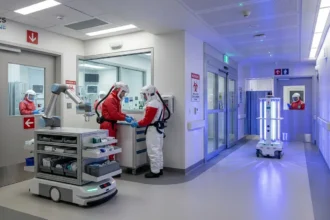
Robots can help maintain strict hygiene standards by:
- limiting human contact during transport
- using UV disinfection or sealed compartments
- separating clean and contaminated materials
How Do Autonomous Mobile Robots Work in Hospitals?
Modern hospital robots rely on advanced navigation and coordination technologies.
Core Technologies Behind AMRs
1. SLAM Navigation
Simultaneous Localization and Mapping allows robots to map hospital environments and navigate safely.
2. AI Path Planning
Robots dynamically adjust routes to avoid obstacles like patients, stretchers, or staff.
3. Elevator and Door Integration
AMRs can connect with hospital infrastructure systems to automatically call elevators or open secure doors.
4. Fleet Management Software
Multiple robots coordinate through centralized software that assigns tasks and optimizes routes.
Typical Workflow Example
- A pharmacy technician loads medication into the robot.
- The robot receives the delivery task through logistics software.
- It navigates corridors, elevators, and doors autonomously.
- The robot arrives at the nursing station.
- Staff unlock the compartment and retrieve the delivery.
This process eliminates the need for manual transport across long hospital corridors.
Autonomous Mobile Robots vs Traditional Hospital Transport Systems
| Feature | Autonomous Mobile Robots | Traditional AGV Systems |
|---|---|---|
| Navigation | Dynamic, AI-based | Fixed paths or magnetic tape |
| Flexibility | High – adapts to layout changes | Low – requires infrastructure changes |
| Deployment Time | Weeks | Months |
| Scalability | Easy to add more robots | Infrastructure expansion required |
| Obstacle Avoidance | Advanced sensors | Limited |
Because hospitals constantly evolve—new wards, temporary units, changing layouts—flexible robotic systems are far more practical than fixed automation systems.
Autonomous Mobile Robots Case Study
Real-World Example: Hospital Logistics Automation
A large European hospital implemented 15 autonomous mobile robots to automate internal supply transport across its campus.
Before implementation:
- Staff walked an average of 8–10 km per shift
- Transport tasks consumed 25–30% of support staff time
After implementation:
- Over 600 deliveries per day handled by robots
- Staff transport workload reduced by 70%
- Delivery accuracy improved to 99%
Robots were integrated with elevators, automatic doors, and hospital logistics software. The result was faster supply movement and significantly improved workflow efficiency.
Key Applications of Robots in Hospital Logistics
Autonomous mobile robots are now being used in several critical hospital operations.
1. Pharmacy Deliveries
Robots transport medications securely from pharmacies to patient wards, reducing delays and improving medication management.
2. Laboratory Sample Transport
Fast, reliable delivery of lab samples is critical. Robots minimize delays and maintain chain-of-custody accuracy.
3. Linen and Waste Handling
Hospitals generate large volumes of linen and waste. Robots can transport these materials safely while minimizing contamination risks.
4. Meal Delivery
In some hospitals, robots deliver meals directly to patient floors, improving efficiency in food service operations.
5. Sterile Supply Distribution
Operating rooms require constant access to sterile instruments. Robots ensure reliable and timely delivery.
Benefits of Hospital Intralogistics Automation
Implementing autonomous mobile robots delivers measurable improvements across hospital operations.
Operational Benefits
- Reduced staff workload
- Faster delivery times
- Lower operational costs
- Improved logistics visibility
Clinical Benefits
- More staff time for patient care
- Reduced errors in supply delivery
- Better infection control
Strategic Benefits
- Scalable automation infrastructure
- Future-ready smart hospital systems
- Integration with digital hospital platforms
Implementation Considerations for Hospitals
While AMRs offer major advantages, hospitals must evaluate several factors before deployment.
Infrastructure Integration
Robots must integrate with:
- elevators
- access control systems
- hospital information systems
- logistics management software
Safety Compliance
Hospitals require strict safety standards. AMRs must include:
- obstacle detection
- emergency stop systems
- collision avoidance sensors
Workflow Optimization
Automation works best when hospitals redesign logistics processes rather than simply replacing manual transport with robots.
Final Verdict
Autonomous mobile robots are quickly becoming a core component of hospital intralogistics automation. By handling repetitive transport tasks, these robots improve operational efficiency, reduce staff workload, and enable healthcare professionals to focus on what matters most—patient care.
As hospitals face growing pressure from labor shortages, rising costs, and increasing patient demand, robotics offers a scalable, reliable solution for modern healthcare logistics.
Facilities that invest early in automation will likely gain a significant operational advantage as smart hospital infrastructure continues to evolve.